Artificial Knee Joint Material
Applications:
Medical: Orthopedic implants (hip stems, knee components), surgical instruments.
Dental: Crowns, bridges, partial denture frameworks.
Industrial: Valve bodies, pump components, turbine parts.
Specification: YY 0117.3-2024, ASTM F75, ISO 5832-4.
CoCrMo Artificial Knee Joint Material — Medical-Grade Casting Solutions for Long-Term Implant Performance
Artificial Knee Joint Material is one of the most exactingly needed specialties in the medical equipment business around the world. To make a implant-grade alloy that meets all the requirements of YY 0117.3-2024, ASTM F75, and ISO 5832-4, CoCrMo alloy combines stable mechanical strength, physiological corrosion resistance, and clinical biocompatibility. It can fully meet the long-term service needs of orthopedic implant devices. Luoyang Sunrui Titanium Precision Casting Co., Ltd. has been professionally casting metals for more than 60 years and makes high-integrity CoCrMo precision casts that are perfect for knee femur components and other implant situations that need to hold weight.
What Makes CoCrMo the Preferred Choice for Knee Implant Components?
Material choice directly affects the service life and clinical effect after surgery of movable bearing surfaces on knee replacement implants. This is the most important part of product quality control. CoCrMo alloy is better than other metal implant materials because it is very hard, doesn't scratch easily, and makes a steady passive oxide layer on its own. This layer can successfully stop corrosion and wear from human joint fluid.
Titanium alloy is biocompatible and is often used for tibial base structures and porous fixed parts. However, because it is not very hard, it can't handle the long-term rubbing of knee joint bearing surfaces. On the other hand, CoCrMo alloy is very hard and strong against fatigue, making it perfect for the repeated friction and cyclic load working state between HXLPE tibial inserts and femoral components.
When people do everyday things like climbing stairs and twisting, their knee joints will bear up to six times their own weight. Our CoCrMo parts have a fatigue strength of more than 500 MPa, which means they can safely handle millions of cycle loads without deforming or breaking. This means implants will work well for decades to come.
Key Material Properties and Technical Specifications
Standardized and stable technical parameters help global procurement engineers and clinical researchers accurately evaluate product performance and make purchasing decisions. Our Artificial Knee Joint Material features standardized and verifiable core indicators as follows:
| Property | Detail |
|---|---|
| Alloy Type | Cobalt-Chromium-Molybdenum (CoCrMo) |
| Applicable Standards | YY 0117.3-2024, ASTM F75, ISO 5832-4 |
| Fatigue Strength | >500 MPa |
| Bearing Surface Roughness (Ra) | <0.05 μm |
| Corrosion Behavior | Stable passive film in physiological environments |
| Biocompatibility | Non-toxic, non-immunogenic, clinically verified |
| Primary Application | Femoral knee components, orthopedic implants |
| Secondary Applications | Dental crowns, bridges, valve bodies, pump components |
All above parameters are fully verified through strict in-house quality inspection, including professional surface roughness profilometry and 5–10 million cycle fatigue tests based on ISO 14801 standards, ensuring consistent batch stability of finished products.
Artificial Knee Joint Material Applications: Where This Material Performs
As mature and Artificial Knee Joint Material, CoCrMo precision castings are widely applied in three mainstream knee replacement surgical scenarios, with stable performance fully verified by clinical practice.
Total Knee Arthroplasty (TKA)
Conventional total knee replacement adopts CoCrMo femoral components paired with HXLPE tibial inserts. The material’s wear resistance and fatigue strength can bear long-term full-load weight-bearing movement, meeting the decades-long stable service requirements of implanted knee joints.
Unicompartmental Knee Arthroplasty (UKA)
Minimally invasive single-compartment knee replacement requires thinner and higher-strength precision components. Our strict dimensional control and consistent material precision ensure accurate joint kinematics, effectively improving postoperative recovery effect of patients.
Revision Surgery
Knee revision surgery is usually accompanied by bone loss and complex lesion environments, bringing higher requirements for implant stability. Matching with 60–80% interconnected porous titanium scaffold structures, our CoCrMo components maintain precise dimensions and surfaces, assisting rapid osseointegration and realizing functional reconstruction.
In addition to knee implant scenarios, this CoCrMo alloy is also universally applicable for hip joint components, surgical instruments, dental prosthetics and industrial parts such as turbine components and valve bodies, proving its adaptability in high-demand scenarios.

Quality Control: How Consistency Is Ensured
Full-process manufacturing control, not just a random inspection at the end, is what makes medical-grade implant castings good. For every batch of CoCrMo knee joint casts, we use strict multidimensional inspection standards to make sure they meet all clinical application requirements.
Surface Roughness Verification: Professional profilometer testing makes sure that the bearing surface roughness stays below Ra 0.05 μm. This keeps the friction and wear between the metal surface and polymer inserts to a minimum so that complications from wear debris after surgery don't happen.
Fatigue Cycle Testing: All products are put through 5–10 million cyclic stress tests that are in line with ISO 14801 standards. These tests simulate long-term movement in the body and make sure that implants are structurally stable over time.
Trace Element Analysis: Finding cobalt, chromium, nickel, and other trace elements correctly makes sure that all signs are within safe limits. This keeps sensitive patients from having allergic responses.
Porous Coating Integrity Testing: To make sure that the coating sticks well to cementless implant surfaces, shear and tensile tests are done according to ASTM F1147 guidelines. This makes sure that there are no risks of the coating coming off.
Controlling Dimensional Accuracy: When we make medical implants, we use aerospace-grade precise casting tolerance standards to get to a level of high accuracy called CT8. Strict dimensional inspection makes sure that product tolerances are always the same and that joint motion coordination is stable.

Why Source CoCrMo Castings from Sunrui Titanium?
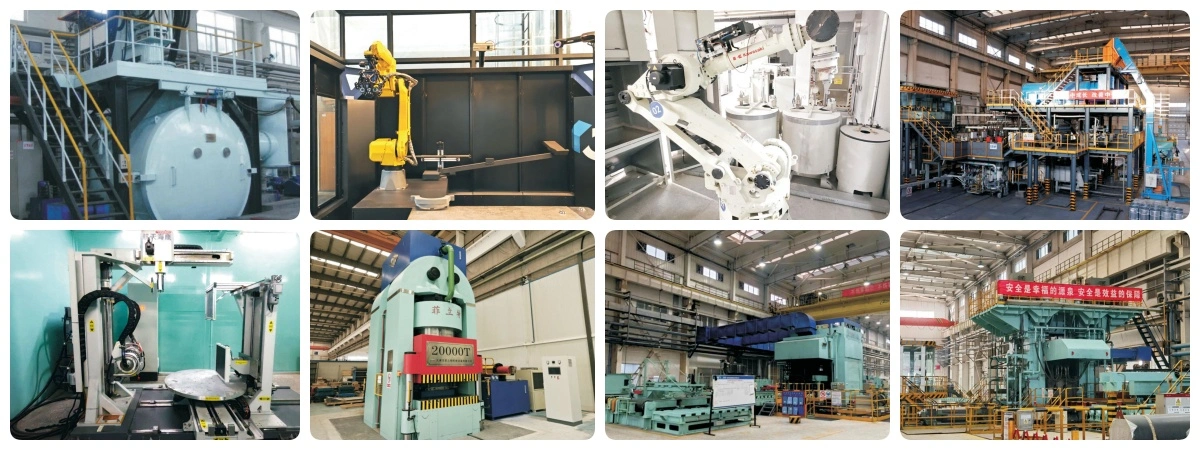
Originated from CSSC Luoyang Ship Material Research Institute, Sunrui Titanium has more than 60 years of professional accumulation in titanium alloy and special precision casting manufacturing. We are equipped with advanced vacuum casting furnaces, precision machining equipment and full-set ultrasonic testing devices, realizing fully enclosed and monitored standardized production.
We hold authoritative international certifications including AS9100, NADCAP, PED, ABS, TUV and NORSOK, providing complete product traceability documents and qualification reports that fully meet the quality audit requirements of global medical device manufacturers.
Stable semi-finished product inventory effectively shortens delivery cycles. We fully support OEM customization and personalized structural casting design for special implant specifications. All products come with complete traceability system and 12-month quality warranty, providing supply chain guarantee for global customers.
FAQ
Q1: Why should you use CoCrMo instead of titanium metal for the femur parts of your knee?
A: CoCrMo is much harder and less likely to scratch, which is important for surfaces that rub against the knee joint. Titanium alloy is pretty soft, so it works well for tibial base structures and porous fixation parts. But it can't meet the long-term wear resistance needs of femoral articulating parts.
Q2: What standards do your medical-grade CoCrMo materials have to meet?
A: Our products strictly follow the rules set by YY 0117.3-2024, ASTM F75, and ISO 5832-4. These rules cover all the important things that make up implant-grade castings, such as the alloy's composition, microstructure, mechanical properties, and accuracy in measurements.
Q3: Are CoCrMo implants available for people who are allergic to nickel?
A: Standard CoCrMo metal has a small amount of nickel in it. For people who are very sensitive to nickel, we can offer better options, like a TiN coating treatment or zirconium ceramic materials that are hypoallergenic and keep working as well as the originals.
Q4: How do you verify the long-term fatigue life of knee implant components?
A: We adopt ISO 14801 standard testing protocol to conduct 5–10 million simulated loading cycles, restoring real long-term movement of human knee joints and verifying the fatigue resistance and structural stability of finished components.
Q5: What surface finish is required for qualified knee bearing surfaces?
A: The friction bearing surface must reach a mirror finish with Ra roughness below 0.05 μm, which is quantitatively verified by professional profilometry equipment to reduce abrasive wear with HXLPE inserts.
Q6: Do you support customized implant casting geometries?
A: Yes. We provide one-stop services including OEM customized design, drawing evaluation, sample production and batch production to meet personalized structural and dimensional requirements of different implant products.
Contact Us
If you have demands for technical consultation, sample testing, customized design and batch procurement of Artificial Knee Joint Material castings, please contact our professional technical team via srt@sunrui-ti.com.
