Cobalt-Chromium-Molybdenum Casting
Applications:
Medical: Orthopedic implants (hip stems, knee components), surgical instruments.
Dental: Crowns, bridges, partial denture frameworks.
Industrial: Valve bodies, pump components, turbine parts.
Specification: YY 0117.3-2024, ASTM F75, ISO 5832-4.
Cobalt-Chromium-Molybdenum Casting for Medical, Dental & Industrial Applications — Precision, Performance, and Reliability
Premium CoCrMo superalloys are used to make Cobalt-Chromium-Molybdenum Casting, a high-precision investment casting method that fully meets ASTM F75, ISO 5832-4, and YY 0117.3-2024 industry standards. The metal is made up of 60–65% cobalt, 27–30% chromium, and 5–7% molybdenum. It has a mix of high mechanical strength, great rust protection, and biocompatibility. Sunrui Titanium has been casting precise parts for more than 60 years and has full-process quality monitoring systems to make sure their high-performance CoCrMo cast parts meet the strict needs of medical, dental, and industrial applications.
What Makes CoCrMo Alloy So Technically Valuable?
The performance of CoCrMo components stems from its stable metallurgical properties. Classified as a high-grade superalloy, the material features a density of around 8.3 g/cm³ and a melting point ranging from 1,330°C to 1,450°C, delivering stable performance under extreme working conditions.
| Property | Value |
|---|---|
| Ultimate Tensile Strength | >655 MPa |
| Yield Strength | >450 MPa |
| Hardness | 30–45 HRC |
| Density | ~8.3 g/cm³ |
| Melting Point Range | 1,330°C – 1,450°C |
| Applicable Standards | ASTM F75, ISO 5832-4, YY 0117.3-2024 |
| Nickel Content (Medical Grade) | ≤0.5% |
A dense Cr₂O₃ passive oxide film forms naturally on the alloy surface, providing strong resistance to corrosion from chloride-rich media and human physiological fluids. Molybdenum elements refine the internal grain structure and realize solid-solution strengthening, effectively improving the alloy’s creep resistance and long-term high-temperature structural stability.
Core Material Advantages
Cobalt-Chromium-Molybdenum Casting stands out from conventional metal castings with three core competitive strengths, perfectly suited for high-standard precision scenarios.
1. Mechanical Properties
The alloy has strong structural strength, steady hardness and good creep resistance. These inherent characteristics are very required for load bearing precision components, such as artificial hip and knee prosthesis, where long term structural rigidity and service endurance are needed.
2. Corrosion Resistance
In a complicated physiological environment, the stable passivation coating on the alloy surface may successfully resist corrosion from human body fluids. It inhibits the aging and deterioration of material, which offers long-term service of implanted medical components over the whole clinical life cycle.
3. Confirmed Biocompatibility
The CoCrMo alloy has a proven biosafety record from many years of clinical use worldwide. It is extensively used in dental prosthesis, cardiovascular stents and orthopedic implants, with mature and consistent application performance.
Where CoCrMo Castings Are Applied
With integrated advantages of mechanical stability, corrosion resistance and biocompatibility, CoCrMo cast components cover core application scenarios in medical, dental and high-end industrial fields.
Medical — Orthopedic and Surgical
CoCrMo alloy is the industry benchmark for joint replacement friction surfaces. Knee joint femoral components and hip replacement acetabular cups rely on its low wear rate and biocompatibility to avoid osteolysis caused by wear debris. It is also widely used in high-precision surgical instruments for its stable hardness and repeated sterilization resistance.
Dental — Prosthetic Frameworks
Dental crowns, bridges and removable partial denture frameworks require strict dimensional accuracy, fatigue resistance and long-term stability in complex oral environments. CoCrMo investment castings fully meet these requirements, making them the preferred material for dental laboratories and prosthetic manufacturers.

Precision Investment Casting: Process and Near-Net-Shape Advantage
We adopt professional investment casting (lost-wax) technology to produce Cobalt-Chromium-Molybdenum Casting components. CoCrMo alloy features high hardness and obvious work-hardening characteristics, which bring high costs and great technical difficulties to traditional machining. The near-net-shape investment casting process perfectly solves these pain points.
This process supports the integrated forming of complex structures including internal runners, undercut structures and thin-walled parts, which are impossible or uneconomical to process with solid billet machining. Only key bearing and matching surfaces need subsequent fine grinding or EDM finishing.
All finished castings will undergo Hot Isostatic Pressing (HIP) post-treatment to eliminate internal shrinkage pores, unify internal microstructure, greatly improve fatigue resistance and ensure consistent overall structural performance of components.
Quality Control: A Multi-Tier Inspection Protocol
All Sunrui Titanium CoCrMo castings undergo rigorous multi-level inspection and testing. The quality of parts that are utilized in human implantation and major industrial equipment is never compromised.
Chemical composition: OES optical emission spectroscopy or ICP inductively coupled plasma detection to confirm that the alloy composition is completely compliant with the ASTM F75 and ISO 5832-4 standard standards.
X-Ray Radiographic Testing: Detect internal casting flaws such as shrinkage porosity, gas holes and inclusions to reduce hidden structural concerns of high melting point alloy castings.
Fluorescent Penetrant Inspection (FPI): Conduct Level II/III FPI inspection to identify fine surface cracks and hot tearing flaws to ensure 0% faulty delivery.
Microstructural evaluation. Internal carbide distribution and grain size must be considered to provide certified fatigue life and long-term service performance.
CMM Dimensional Verification: Perform high-accuracy dimensional calibration to guarantee all components satisfy the stringent tolerance standards of medical and aerospace assembly situations.
We give inspection documentation and full material traceability reports for each order to enable client compliance audit and quality assessment.

Why Source from Sunrui Titanium?
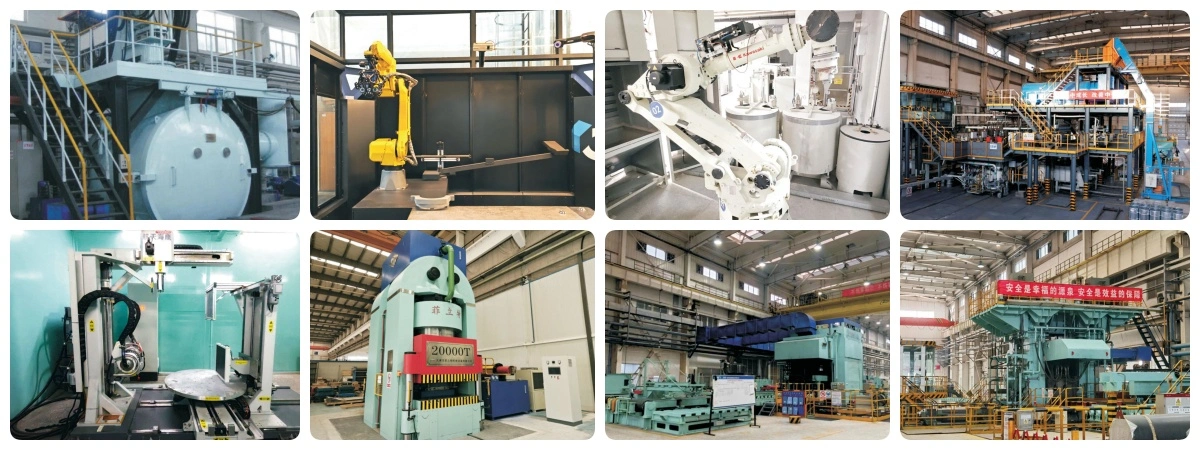
Backed by 60+ years of precision casting and metallurgical R&D experience, Sunrui Titanium inherits professional technical accumulation from CSSC Luoyang Ship Material Research Institute. Our fully automated investment casting production line, multi-robot shell-making system and 1500kg-capacity vacuum casting equipment ensure stable mass production and consistent product quality.
We hold authoritative global certifications including AS9100, NADCAP, PED, ABS, TUV and NORSOK, fully meeting the strict quality compliance requirements of international high-end markets.
We support customized OEM production, personalized alloy formula adjustment and flexible delivery cycles to match diverse project demands of global customers.
Cobalt-Chromium-Molybdenum Casting FAQ
Q1: Why use CoCrMo rather than titanium for joint replacement articulating surfaces?
A: Titanium has a great osseointegration performance and CoCrMo alloy has a better hardness and wear resistance. CoCrMo is the clinical gold standard for joint prostheses with metal-on-metal friction bearing surfaces, successfully preventing postoperative problems caused by wear debris.
Q2: Can castings made of CoCrMo be machined after casting?
A: CoCrMo alloy has a high work hardening rate, which makes traditional machining expensive and inefficient. We use near net form investment casting to reduce post processing to a minimum, with only critical precision surfaces needing to be ground or finished with EDM.
Q3: Is there any Nickel in medical grade CoCrMo casting?
A: Medical-grade CoCrMo castings we manufacture are tightly regulated to include ≤0.5% nickel in compliance with ASTM F75 medical standards, lowering the danger of patient allergies.
Q4: How does the component function after HIP post-treatment?
A: Hot Isostatic Pressing (HIP) removes internal porosity and shrinkage flaws created during solidification of casting, enhances microstructure, and considerably improves the fatigue resistance and long-term load-bearing stability of components.
Q5: What surface finishes are available?
A: We provide a variety of surface treatments for diverse application circumstances, including as-cast finish (Rz 6.3), mirror polishing (Ra <0.05 μm) for bearing surfaces, and plasma spraying for bone ingrowth surfaces.
Q6: What certification papers are supplied with each order?
A: Each batch of goods is provided with material certification, chemical composition report, complete inspection records and dimensional test report, achieving the whole process of material traceability.
Contact Us
If you have any procurement or customization demands for Cobalt-Chromium-Molybdenum Casting products, feel free to consult our professional technical team via srt@sunrui-ti.com.
