Hip Prosthesis
Applications:
Medical: Orthopedic implants (hip stems, knee components), surgical instruments.
Dental: Crowns, bridges, partial denture frameworks.
Industrial: Valve bodies, pump components, turbine parts.
Specs: YY 0117.3-2024, ASTM F75, ISO 5832-4.
Hip Prosthesis CoCrMo Precision Casting — High-Strength Orthopedic Implant Solutions
A Hip Prosthesis is a high-tech orthopedic medical device that replaces damaged or diseased hip joints. It helps patients regain their mobility and ease their chronic joint pain. Having been in the titanium alloy and precision casting business for more than 60 years, Luoyang Sunrui Titanium Precision Casting Co., Ltd. makes high-performance CoCrMo castings that meet all industry standards, including YY 0117.3-2024, ASTM F75, and ISO 5832-4. Our goods have CT8 high dimensional accuracy and a normal surface roughness of 6.3µm. The bearing surfaces are polished to Ra below 0.05µm. Our precision casts provide material solutions for both regular and complicated repair surgeries. They effectively solve common clinical problems like aseptic weakening, poor osseointegration, and not enough long-term stability.
What Makes CoCrMo the Right Material for Hip Implants?
CoCrMo alloy can handle millions of cycles of loads that come from walking and other daily activities because it is very hard, very strong, and doesn't creep. It keeps its shape and doesn't change over time, so it can fully meet the long-term load-bearing needs of core implant parts like hip stems and joint bearing parts.
Able to Stop Corrosion in the Body
On the surface of CoCrMo alloy in human body environments, a thick and stable passive oxide film will form on its own. This layer effectively stops body fluids from corroding and wearing away the implant, keeping its chemical stability over time. It fits perfectly with the need for long-term implants that last 20–25 years or more for clinical hip prostheses.
Biocompatibility Proven in Clinical Trials
The CoCrMo metal has been used in artificial joints, oral implants, and heart valves for many years. Long-term clinical use has fully confirmed that it is biosafe and compatible with tissue, making it a material choice for permanent human implantation.
Hip Prosthesis Specifications
| Parameter | Details |
|---|---|
| Material | CoCrMo Alloy |
| Applicable Standards | YY 0117.3-2024, ASTM F75, ISO 5832-4 |
| Dimensional Accuracy | CT8 (exceeding standard CT9 requirement) |
| Surface Roughness | Ra6.3μm |
| Bearing Surface Ra | Typically below 0.05μm for bearing couples |
| Manufacturing Process | Precision investment casting |
| Customization | OEM and custom geometry available |
Applications: Where These Castings Are Used
Sunrui's CoCrMo precision molds are used in high-end medical, dental, and industrial settings. They provide stable and long-lasting performance in a wide range of high-standard situations. Our castings, which are the primary raw materials used in Hip Prosthesis production, perform admirably in orthopedic clinical treatment situations requiring extreme precision and dependability.
Medical—surgery and orthopedics
When used in orthopedic surgery, prosthetic parts like femoral stems, femoral heads, and acetabular shells need to be very durable and stable over time. A lot of high-precision knee joint parts and long-lasting surgical instruments are also made from CoCrMo castings.
For difficult hip repair surgeries, our modular CoCrMo parts successfully fix bone loss and structure flaws caused by old implants that didn't work. The optional high-porosity structure speeds up the growth of bone tissue and makes secondary fixation.
For young, busy patients who work out a lot, ceramic-on-ceramic and ceramic-on-CoCrMo matched options can handle high-frequency cycle friction, meeting the long-term service performance needs of groups with a lot of activity.
Dental: Frameworks for prosthetics
The high hardness and stable dimensional performance of CoCrMo alloy make sure that the fitting is accurate over time even when the mouth is moving back and forth. It is commonly used to make custom dental crowns, bridges, and frameworks for partial dentures, and it has a stable clinical effect when used in the mouth.

Quality Control: What You Should Know Before Purchasing
Medical hip implant casts have very strict standards for quality. Every batch of Hip Prosthesis parts goes through full-process standardized inspection and verification to make sure they meet all global medical device access standards.
Fatigue Testing (ISO 7206-4/6): To test the fatigue resistance of femur stems and necks, a human physiological load must be simulated. This makes sure that the structure stays stable over millions of cycles of load.
Wear Rate Analysis (ISO 14242): Use professional hip joint simulation tools to find the volumetric wear of bearing pairs and check how well implants will perform over time in terms of friction and wear.
Surface Topography Inspection: Check the sphericity of femoral heads and the porosity of acetabular shells to make sure that the parts fit correctly and that the bone integration effect happens afterward.
Cleanliness and Sterility Validation: Strictly follow the ISO 11137 standard to make sure the product's sterility guarantee level hits SAL 10°C, which is the minimum level required for implanted medical devices to be safe.
Test for Taper Integrity: Find out exactly how well the head-neck connection trunnion was machined to avoid electrochemical corrosion and trunnionosis risks during long-term implantation.
Full-process production monitoring, ultrasonic non-destructive testing, and full batch traceability are all things we offer. We also provide full qualification documents for customer audit and registration.

Why Source From Sunrui Titanium?
Sunrui Titanium was founded from the Titanium R&D Department of the Luoyang Ship Material Research Institute (CSSC). It has more than 60 years of experience in researching and making special alloys. We have strong global certifications from AS9100, NADCAP, PED, ABS, TUV, and NORSOK, and our quality management system meets the highest standards for medical and industrial markets all over the world.
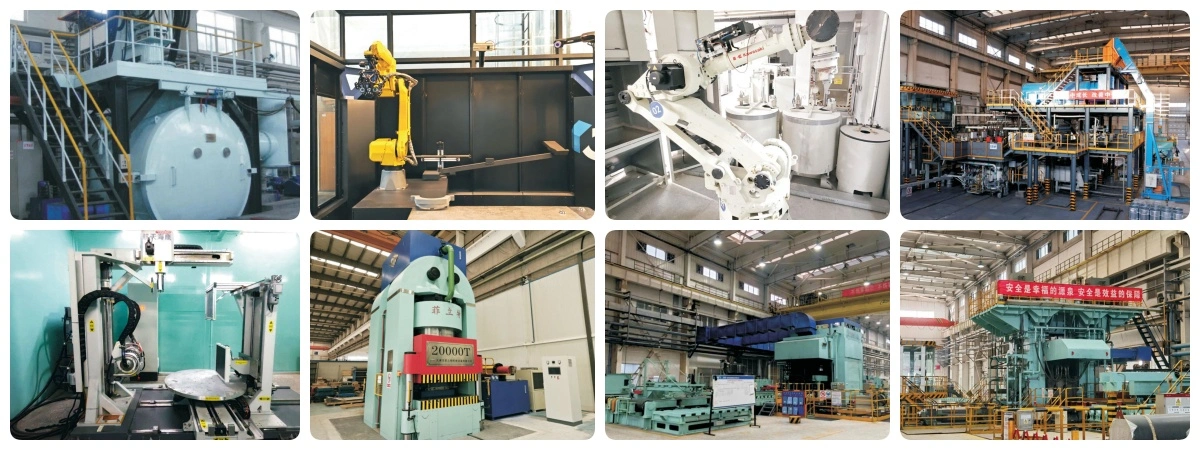
We use fully automated robot shell-making production lines with multi-equipment joint tracking to make sure that the dimensions of the castings we make are always accurate and that we always get the right number of castings. We offer OEM processing and custom geometric design to fit the implant design needs of our customers.
We guaranty a steady supply of raw materials, professional technical support 24 hours a day, seven days a week, and a 12-month warranty on all of our products. This includes testing samples and buying large batches.
FAQ
Q1: What is the difference between cemented and cementless hip implant fixation?
A: Cemented fixation adopts PMMA bone cement for immediate stability, suitable for elderly patients with osteoporosis. Cementless fixation relies on porous structure osseointegration, ideal for young and active patients for long-term stable fixation.
Q2: How does surface roughness affect hip implant service life?
A: Bearing surfaces with Ra below 0.05μm effectively reduce wear debris generation, lower the risk of postoperative osteolysis, and greatly extend the overall service life of hip implants.
Q3: What causes implant squeaking and how to avoid it?
A: Squeaking mostly occurs in ceramic-on-ceramic bearing systems, caused by component deviation or insufficient lubrication. Standard surgical alignment and reasonable material pairing can effectively avoid this problem.
Q4: How to reduce postoperative dislocation risk of hip prostheses?
A: Adopting large-diameter femoral heads (32mm/36mm) can the head-to-neck ratio and increase the movement limit distance, reducing postoperative dislocation probability.
Q5: Are metal-on-metal hip implant structures still widely used?
A: Due to potential metal ion precipitation and tissue reaction risks, metal-on-metal structures have been mostly replaced by ceramic-on-polyethylene and ceramic-on-ceramic matching solutions in the global market.
Q6: Do you support custom products casting geometries?
A: Yes. We provide full OEM customized casting services according to customer drawings, with complete dimensional inspection reports and material compliance certificates delivered.
Contact Us
If you have technical consultation, sample testing and bulk procurement demands for high-precision Hip Prosthesis CoCrMo castings, please feel free to contact our professional team via srt@sunrui-ti.com.
