

 Chinese
 English
Characteristics of titanium tube/pipes and hydrogen content control, heat treatment
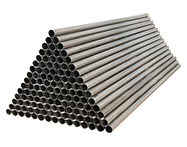
Main Performance Characteristics of Titanium Pipe Fittings
1. Corrosion Resistance: Although titanium is a thermodynamically active metal with a low equilibrium potential, it exhibits good stability and excellent corrosion resistance in oxidizing, neutral, and weakly reducing media.
2. Heat Resistance: It can be used for extended periods at temperatures of 300°C or even higher.
3. Non-magnetic and Non-toxic: It will not be magnetized in a large magnetic field and is non-toxic.
4. Low Elastic Modulus: Approximately 57% that of steel.
5. Gas Absorption: At high temperatures, it readily reacts with various elements and compounds, exhibiting the characteristic of absorbing gases.
Hydrogen Content Control
Titanium is highly sensitive to hydrogen; improper control can lead to hydrogen embrittlement (which means the material will becomes brittle). This is one of the core challenges in the processing of titanium tubes. Hydrogen content control must be addressed from both the source and the process.
To ensure performance, the hydrogen content in commercial pure titanium tubes is generally required to be no higher than 0.015%. For common titanium alloys like Gr5, the acceptable hydrogen content in the parent material is also generally around 0.015%. Titanium readily absorbs hydrogen at high temperatures, mainly from sources such as moisture and grease. If the tubes are not strictly cleaned before welding, residual oil contamination will decompose at high temperatures, producing hydrogen and leading to porosity in the weld seam.
Therefore, to reduce hydrogen absorption during heat treatment, the surface of the pipe fittings must be thoroughly wiped with acetone or alcohol before welding or heat treatment to remove all organic residues such as fingerprints, oil, and markings. They must then be dried, and the furnace must be free of water vapor. Studies have shown that titanium pipes welded without strict cleaning exhibit significant porosity on X-ray inspection, severely reducing weld strength and density, while those that are well-cleaned show no such phenomenon.
If the hydrogen content exceeds the limit, vacuum annealing must be performed for dehydrogenation treatment. The specific method involves placing the titanium tubes in a high-vacuum furnace and heating them. Typical process parameters are: temperature 538–760°C, pressure below 0.066 Pa, held for 2–4 hours. This effectively "pumps out" the internal hydrogen.
Oxidation Contamination Control and Heat Treatment Process
Heat treatment is key to adjusting the performance of titanium tubes. However, at high temperatures, titanium not only absorbs hydrogen but also readily reacts with oxygen and nitrogen, forming a hard and brittle "contamination layer" that can lead to surface cracking. Therefore, the core of heat treatment lies in "isolation" and "precision."
The first is "isolation": Heating must never be performed in a standard air furnace. A vacuum furnace, which prevents both oxidation and removes hydrogen, must be used. Alternatively, an inert gas protection furnace, filled with high-purity argon to create a protective atmosphere, can be used.
The second is "precision": The heat treatment temperature directly affects the final performance. If the temperature is too low, work hardening cannot be eliminated. If the temperature is too high, grain growth occurs, and strength drops significantly. When the heat treatment temperature does not exceed 540°C, the surface oxide layer on titanium tubes/pipes thickens slowly. Above this temperature, the oxidation rate accelerates significantly, and the resulting oxygen-contaminated internal diffusion layer becomes highly brittle, easily leading to surface cracks and even failure of the component. Methods for removing the oxygen-contaminated layer include mechanical machining, pickling, and chemical lapping/grinding. To mitigate oxidative contamination, the heating time should be minimized while still meeting process requirements.
Case 1 (Pure Titanium Gr2): For cold-worked tube/pipe materials with a large degree of deformation, vacuum annealing at 500–600°C for 120 minutes results in a fine equiaxed grain structure (approximately 5 micrometers) and excellent mechanical properties. If the temperature is raised to 700°C, the strength drops sharply, directly rendering the product unqualified.
Case 2 (Pure Titanium Gr3): Vacuum annealing at 510°C for 90 minutes yields a finished product with a uniform structure and stable performance.
Case 3 (Gr5 Titanium Alloy):For Gr5 tube blanks requiring cold rolling, a higher temperature (860°C) with an 1-hour hold is necessary for softening annealing. At this temperature, the material exhibits its highest elongation and lowest hardness, making it most suitable for further plastic deformation.
PREVIOUS:Main Application of Titanium Alloy Forgings
NEXT:Back To List