EB Ingot
EB ingot: 200x1290/1090x(1000~6200)
Grade: GR1, GR2, GR3, GR4
Specification: GB, GJB, ASTM, ASME, AMS, DIN, JIS standards or industry standards and enterprise standards
EB Ingot for Titanium Slab Production — Advanced EB Furnace Solutions from Sunrui Titanium
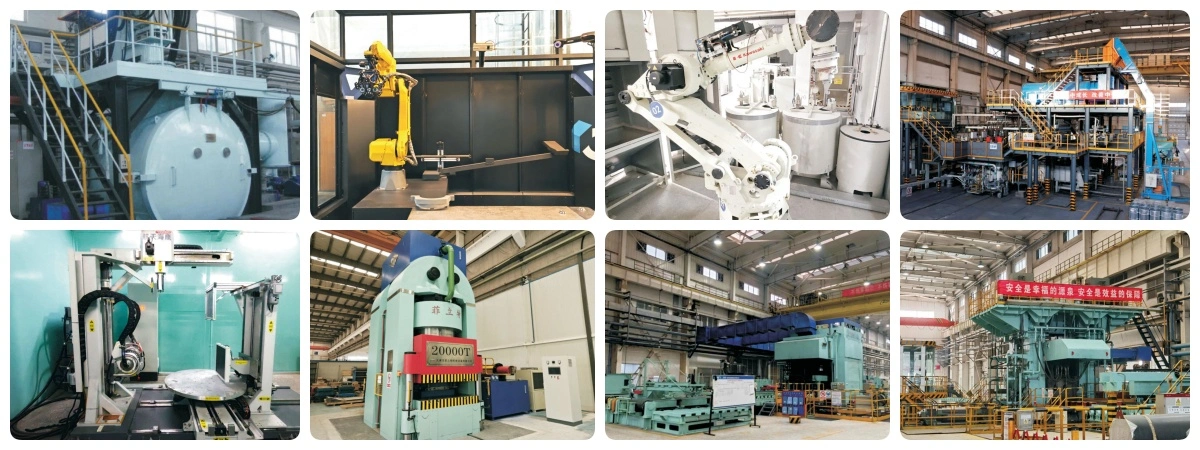
Sunrui Titanium makes EB Ingots with imported 3600 KW EB melting furnaces that are very advanced. Each year, they make 5,000 tons of titanium slabs. Our EB melted slabs are used as raw materials to make titanium plates, sheets, and coils that are used in many industries, including aerospace, marine, medicine, and general manufacturing. Our titanium goods fully meet high international standards in terms of material purity, internal regularity, and structural stability. We have been making them professionally for more than 60 years and have earned certifications from AS9100, NADCAP, ABS, and NORSOK.
What Is EB Ingot and Why Does It Matter?
Electron beam melting (EBM) is a professional vacuum metallurgy method that uses high-energy electron beams as the heat source in high-vacuum conditions to make EB Ingots, which are blocks of pure titanium metal.
Two big problems with the way titanium is usually made are high-density inclusions (HDIs) and low-density inclusions (LDIs). This targeted melting process fixes them both. These impurity inclusions are common flaws in traditional VAR (Vacuum Arc Remelting) technology. They can easily cause fatigue cracks in important load-bearing parts, which could be dangerous.
The EB method has a cold hearth melting device that lets the melted titanium be fully mixed and spread out. It gets rid of volatile impurities like oxygen, nitrogen, and hydrogen by volatilizing them at high temperatures. This creates titanium ingots with a uniform chemical composition and an extremely clean internal structure, which can then be used as a raw material for precision manufacturing.
Key Technical Properties
EB-melted titanium ingots have better technical performance because of special process benefits that make the material qualities stable and for high-end uses.
The interstitial content is very low because titanium reacts chemically with oxygen, nitrogen, and carbon when it is heated up. The high-vacuum melting environment of EB equipment effectively releases and gets rid of these intermediate elements, keeping the impurity content much lower than when titanium is heated in the usual way.
Chemical Homogeneity: The cold hearth structure makes sure that the liquid metal is fully mixed, so that no parts separate. Every batch of EB Ingot has the same chemical make-up and the same stable mechanical properties all over.
As-Cast Surface Quality: Better melting and shaping technology greatly lowers surface flaws and the amount of room for subsequent machining, which makes downstream processing more efficient. There is full material traceability and compliance certification for all products, and they all meet major industry standards like ASTM B348, ASTM B367, and AMS 4928.
Sunrui Titanium EB Furnace Specifications
| Parameter | Details |
|---|---|
| Furnace Type | Imported EB Furnace |
| Power Rating | 3,600 KW |
| Annual Capacity | 5,000 tons of titanium slabs |
| Primary Output | EB Titanium Slabs |
| Main Application | Feedstock for titanium plates, sheets, and coils |
Quality Control Process
For every batch of EB titanium ingots, we do a full multidimensional inspection to make sure they meet the strict quality standards used in aerospace and high-end industrial applications.
Ultrasonic Testing (UT): Use professional immersion ultrasonic testing to find all internal holes, gaps, and leftover inclusions to make sure the structure is defect-free.
Chemical Analysis: We use ICP-OES spectral detection and LECO gas analysis equipment to precisely control the interstitial element content at the ppm level. This gives us accurate and traceable chemical data for every batch of products we make.
Macrostructure Evaluation: Use cross-section etching to check the size and arrangement of the internal grains to get rid of component segregation and structural problems.
Surface Inspection: Use a liquid penetrant inspection (LPI) to find all cracks and holes in the surface and make sure the quality is good before delivering the item.
Every batch of products comes with a full CMTR-certified material test report that includes full chemical composition and trace element analysis data. This makes it possible to track the quality of the products all the way from the raw materials used to make the slabs to the finished products.

Application Scenarios
For high-standard situations that don't allow structural failure, EB-melted titanium cast billets and forging blanks are the best choice.
Aerospace Engineering: Because they are very clean on the inside and don't have any impurities, EB-melted cast billets are perfect for spinning parts of aero engines and structural parts of airplanes. They also keep fatigue cracks from forming during long-term high-stress cycle operation.
Medical Implants: Hip joints, spinal implants, and dental devices are all made of Grade 5 and Grade 23 ELI titanium, which is refined from EB-melted cast billets. Biocompatibility and stable osseointegration over time are guarantyd by high material purity. There are no risks of biological contamination.
Marine and Industrial Uses: Our EB-melted forging blanks are approved by NORSOK, ABS, and other offshore organizations. They can handle the harsh conditions of offshore engineering, shipbuilding, and petrochemicals, providing corrosion resistance and mechanical stability.
Titanium Sheet and Coil Manufacturing: Our EB-melted forging blanks are the main raw material used for rolling and processing different titanium plates, thin sheets, and coils, which are used in many high-performance industrial manufacturing fields.

FAQ
Q1: What is the core difference between EB-melted cast billet and VAR-melted cast billet?
A1: The EB melting process with cold hearth design can effectively remove HDI and LDI inclusions, producing cleaner titanium raw materials. VAR process is more suitable for scenarios that need to retain volatile alloy elements.
Q2: Is secondary melting required for EB-melted titanium?
A2: Conventional applications can use EB-melted cast billets directly. For high-end aero-engine rotating parts, secondary VAR finishing melting can be adopted to further grain structure and improve component stability.
Q3: Can the EB melting process recycle titanium scrap?
A3: Yes. The EB process features powerful refining capacity, which can convert various titanium scrap materials into high-purity qualified cast billets, realizing energy-saving and sustainable closed-loop production.
Q4: How to ensure vacuum stability during melting?
A4: We adopt professional diffusion and cryogenic vacuum pumps to maintain a stable vacuum environment of 0.1–1.0 Pa throughout the process, completely avoiding oxidation and contamination of molten titanium.
Q5: What quality documents can be provided?
A5: All orders are equipped with official CMTR material test reports, including full chemical composition analysis and ppm-level trace element detection data with complete traceability.
Q6: What industry certifications does Sunrui Titanium own?
A6: We hold complete authoritative certifications such as AS9100, NADCAP, PED, ABS, TUV and NORSOK, supporting supply for aerospace, marine, pressure vessel and offshore engineering projects.
Contact Us
For technical consultation, parameter confirmation and customized procurement of EB Ingot and titanium slabs, please get in touch with our professional team viasrt@sunrui-ti.com.
