GR12 Titanium Bar
Grades: Gr1, Gr2, Gr4, Gr5, Gr23
Diameter: 3.175 ~ 400 mm
Specs: ASTM B348, ASTM B381, ASTM F67, AMS 4928, GB/T 2965, ASTM F136
GR12 Titanium Bar for Corrosive Environments — Cost-Effective Alloy with Crevice Corrosion Resistance
GR12 Titanium Bar (UNS R53400) is a near-alpha titanium alloy that has 0.3% molybdenum and 0.8% nickel added to it. It was specifically made to stop crevice corrosion failure in high-temperature brine and chloride-rich environments. With a density of 4.51 g/cm³, which is about 60% of regular steel, it has a great strength-to-weight ratio and works well as a lightweight building material. We give full circle measurements for sizes from 3.17 mm to 400 mm. This titanium alloy bridges the performance and price gap between standard Gr2 pure titanium and expensive Gr7 titanium that contains palladium. It is a very cost-effective material for chemical processing, marine engineering, and harsh industrial environments.
What Makes GR12 Titanium Bar Different from Other Titanium Grades?
Standard Gr2 economically pure titanium has good basic corrosion protection, but it can rust in small cracks in neutral brines above 80°C and slightly acidic conditions. Even though Gr7 titanium fixes this problem perfectly, it is very expensive to buy because it contains palladium. This makes it hard to promote and use on a large scale in industry.
This gap in the market is exactly filled by our product. The 0.8% nickel makes the material's depassivation properties better, which keeps the surface oxide film whole and solid in low-pH and high-temperature settings. Adding 0.3% molybdenum to the metal makes it stronger and more resistant to reducing media. It also creates a long-lasting, self-healing passivation layer that works better than regular pure titanium grades.
When used in real life, GR12 titanium can resist crevice corrosion up to 300°C, which is much higher than the 80°C limit of Gr2 pure titanium. It has almost the same corrosion resistance as Gr7 titanium but costs a lot less, making it a good choice for industrial projects that need high cost performance.
Technical Specifications
| Parameter | Details |
|---|---|
| Grade | GR12 (UNS R53400) |
| Alloy Composition | Ti – 0.3% Mo – 0.8% Ni |
| Alloy Type | Near-alpha, low-alloy titanium |
| Diameter Range | 3.175 mm – 400 mm |
| Applicable Standards | ASTM B348, ASTM B381, ASTM F67, AMS 4928, GB/T 2965, ASTM F136 |
| Density | ~4.51 g/cm³ (approx. 60% of steel) |
| Max Operating Temperature | Up to ~315°C (600°F) per ASME codes |
Key Material Characteristics
High strength & lightweight structure: GR12 Titanium Bar has stronger mechanical strength than commercially pure titanium grades due to the molybdenum alloying strengthening effect. It is excellently suited to the dual working circumstances of mechanical load and chemical corrosion, appropriate for pump shafts, agitator shafts, structural tie rods and other essential stressed components.
corrosion resistance in aggressive media: The alloy is stable in high temperature chloride solution, moist chlorine, dilute reducing acid and high salinity brine conditions. It may be successfully used in nitric acid and other oxidizing media and has distinct benefits in mixed environment with chloride and mild reducing components, where pure titanium is easy to pitting and crevice corrosion failure.
Stable weldability: The welding performance of GR12 titanium is equivalent to Gr2 pure titanium. It is advised to use ERTi-12 special welding wire and complete argon or helium inert gas shielding during welding. Titanium is chemically active at high temperatures and readily interacts with oxygen, nitrogen and carbon. Strict protection measures are needed to prevent welding embrittlement and to guaranty the structural stability of the weld.
Good ductility and biocompatibility: GR12 titanium has ductility and formability, while emphasizing industrial anti-corrosion performance, enabling precise machining and forming of diverse complicated structural parts with stable complete performance.
Where Is GR12 Titanium Bar Applied?
Chemical Heat Exchangers: Widely used for structural tie rods and tube sheets of shell-and-tube heat exchangers, applicable to medium environments such as hot chloride solution, wet chlorine and dilute reducing acid. Balancing thermal conductivity and ultra-high corrosion resistance, it effectively makes up for the performance deficiencies of Gr2 titanium in high-temperature corrosive working conditions.
Marine and Desalination Systems: Applied to pump shafts and valve stems of multi-stage flash seawater desalination equipment. It resists erosion and corrosion of superheated seawater for a long time, ensuring continuous and stable operation of large-scale desalination systems and extending equipment service life.
Hydrometallurgy Equipment: Used for agitator shafts of acid leaching autoclaves in hydrometallurgical production. It stably withstands extreme working conditions of high pressure, high temperature and metal slurry composite corrosion, meeting the long-term operation requirements of core metallurgical equipment.

Why Source GR12 Titanium Bar from Sunrui Titanium?
Originating from the Titanium R&D Department of CSSC Luoyang Ship Material Research Institute, Sunrui Titanium owns more than 60 years of professional titanium material R&D and manufacturing experience, providing stable and customized material solutions for global industrial customers.
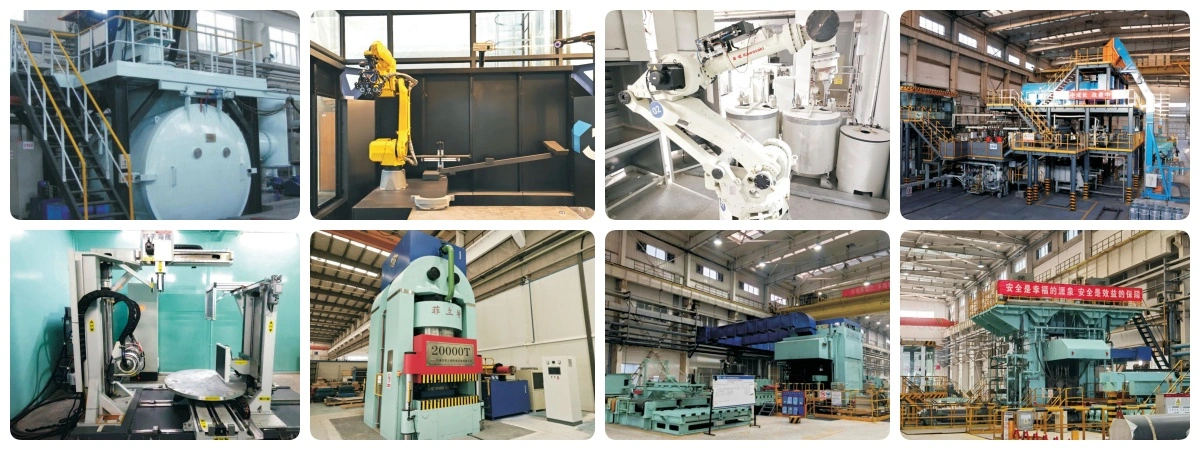
We hold authoritative international certifications including AS9100, NADCAP, PED, ABS, TUV and NORSOK, with complete product traceability and compliance documents to meet the audit requirements of various regulated industries. Equipped with EB smelting furnaces, vacuum casting equipment, professional forging and rolling production lines and full-set ultrasonic testing equipment, we implement full-process quality monitoring to ensure consistent batch stability of GR12 Titanium Bar.
We support OEM customization and bulk batch orders with sufficient semi-finished product inventory. Equipped with mature global logistics channels, we provide door-to-door delivery services. All products are covered by a 12-month quality warranty, with 24/7 professional technical support throughout the cooperation cycle.

FAQ
Q1: What is the performance and cost gap between GR12 and Grade 7 titanium?
A1: Grade 7 titanium with palladium additive delivers top-tier corrosion resistance, while GR12 achieves around 90% of its anti-corrosion performance in hot chloride and reducing acid environments at only 50%-60% of the cost, with cost performance for industrial mass application.
Q2: What is the maximum service temperature of the product?
A2: In accordance with ASME industry codes, GR12 titanium is applicable for pressure vessel working conditions up to 315°C (600°F), with better high-temperature creep resistance than ordinary Grade 2 pure titanium.
Q3: Is GR12 titanium easy to weld and process?
A3: Yes. Its welding performance is consistent with Grade 2 titanium. It needs matched ERTi-12 welding wire and full inert gas shielding during welding to avoid material embrittlement and ensure welding quality.
Q4: What are the functions of nickel and molybdenum in GR12 alloy?
A4: Nickel stabilizes the surface passivation film under low pH conditions to improve crevice corrosion resistance; molybdenum enhances alloy strength and resistance to reducing media. The two elements work together to form a self-healing protective layer to pure titanium.
Q5: Is GR12 suitable for oxidizing acid working environments?
A5: Absolutely. It performs excellently in oxidizing media such as nitric acid. Its core advantage lies in mixed environments with chloride and mild reducing substances, where ordinary pure titanium is prone to corrosion failure.
Q6: What specifications and standards can you supply?
A6: We supply products with diameters from 3.175 mm to 400 mm, fully compliant with ASTM B348, ASTM B381, AMS 4928 and other mainstream international standards.
Contact Us
If you need high corrosion-resistant, cost-effective GR12 Titanium Bar for chemical, marine and hydrometallurgy projects, please contact our professional team via srt@sunrui-ti.com.
