Gr5 Titanium Rod
Grade: Gr1, Gr2, Gr4, Gr5, Gr23
Size (diameter): 3.175 ~ 400 mm
Specification: ASTM B348, ASTM B381, ASTM F67, AMS 4928, GB/T 2965, ASTM F136
Gr5 Titanium Rod for Aerospace, Medical & Marine — High-Strength Ti-6Al-4V Supply Solutions
Over half of the titanium market is consumed by Gr5 Titanium Rod (Ti-6Al-4V), the most widely utilized titanium alloy worldwide. 90% titanium, 6% aluminum, and 4% vanadium make up the well-known alloy composition. Its low density of 4.51 g/cm³, good structural strength, and consistent tolerance to high temperatures up to 400°C all contribute to its resistance to corrosion. With more than 60 years of experience in titanium production and research and development, Sunrui Titanium was founded at the CSSC Luoyang Ship Material Research Institute. We offer precision titanium round bars with diameters ranging from 3.175 mm to 400 mm that are fully compliant with ASTM B348, AMS 4928, and other respectable international industry standards.
What Makes Ti-6Al-4V the Industry's First Choice?
The wide industrial application of Ti-6Al-4V, a conventional alpha-beta dual-phase titanium alloy, is mainly due to its characteristic microstructure. The beta phase optimizes the mechanical strength and flexibility of the material, while the alpha phase endows it with thermal stability and corrosion resistance. The two phases have compatibility, which enables Gr5 Titanium Rod to maintain a steady performance in demanding settings when conventional metal materials would easily fail.
For comparison, Grade 5 titanium has a tensile strength of around 895 MPa, nearly three times more than the 345 MPa of Grade 2 pure titanium. It is also 45% lighter than standard steel of the same characteristics. This strength to weight ratio provides engineers the greatest lightweight design solution for the manufacture of high demand equipment.
, Grade 5 titanium alloy is non-magnetic, a critical need for high-precision ship electrical systems and MRI medical equipment, which must be free from magnetic interference.
Gr5 Titanium Rod Specifications
| Parameter | Details |
|---|---|
| Grade | Gr1, Gr2, Gr4, Gr5 (Ti-6Al-4V), Gr23 |
| Diameter Range | 3.175 mm – 400 mm |
| Density | Approximately 4.51 g/cm³ |
| Max Operating Temperature | Up to 400°C (750°F) |
| Tensile Strength (Gr5) | ~895 MPa |
| Elastic Modulus | ~110 GPa |
| Applicable Standards | ASTM B348, ASTM B381, ASTM F67, AMS 4928, GB/T 2965, ASTM F136 |
| Surface Finishes | Peeled, Polished, Centerless Ground |
| Certifications | AS9100, NADCAP, PED, ABS, TUV, NORSOK |
Key Application Areas
In aerospace and aviation, the materials that are used must be light and able to withstand heat stress, cyclic fatigue, and long-term alternating loads. Gr5 Titanium Rod is often used for jet engine compressor blades, landing gear shafts, and structural parts of an airplane's fuselage. Its high strength-to-weight ratio makes sure that the structure is safe during operations at high altitudes while also reducing the amount of fuel that the aircraft needs.
Biomedical & Orthopedics: The ELI-grade Gr23 form of Ti-6Al-4V is designed for use in medical implants. It stops long-term bone resorption and reduces the stress shielding effect by a lot because its elastic modulus of 110 GPa is much closer to human bone than stainless steel's 200 GPa. It meets all the requirements for implant-grade ASTM F136 and ASTM F67, and is biocompatible and resistant to fatigue. This makes it a good choice for femoral stems, dental implants, and orthopedic bone screws.
Offshore Oil & Gas: The high amounts of hydrogen sulfur and chloride, as well as the high hydraulic pressure, in deep-sea work environments make steel materials more likely to split and crack. Because they can handle saltwater that doesn't move at temperatures as high as 260°C, Grade 5 titanium alloy bars are core parts for subsea pipeline systems, valve stems, and downhole drilling equipment.
Chemical Processing and Marine Engineering: Titanium is chemically active at high temperatures and can react with carbon, nitrogen, and oxygen. This means that it is important to choose the right materials and keep an eye on the production process. Standardized production and strict quality control make Grade 5 titanium bars work reliably in high-temperature and chemically harmful environments. They last a lot longer than regular construction metals.

Quality Control Process
For important medical and industrial uses, high-end titanium bars need to be strictly checked for quality throughout the whole process. For every batch of goods, Sunrui Titanium uses a thorough checking process:
According to AMS 2631 Class A/A1 standards, ultrasonic testing (UT) is done to find internal pores, high-density inclusions, and micro cracks. This makes sure that aerospace and rotating mechanical parts have no internal defects.
Metallographic inspection at 100x and 500x magnification confirms even distribution of the alpha and beta phases (microstructure analysis). We carefully find and remove weak oxygen-rich alpha-case layers to stop cracks from starting and make the product more resistant to wear.
Validation of Chemical Composition: Use optical emission spectroscopy and inert gas fusion technology to test parts. To make sure that medical-grade goods have great fracture toughness, we closely control ELI low interstitial standards with oxygen level below 0.13%.
Testing for Mechanical Properties: Tensile, yield, and elongation tests are done in batches in line with ASTM E8 standards. Products made for aerospace use macro-etching inspection to make sure the grains flow smoothly and stop parts from segregating.
In order to meet the requirements of AS9100, NADCAP, and other international certifications, we keep full full-process material traceability for all of our products.

Why Source from Sunrui Titanium?
Backed by the technical accumulation of CSSC professional research institute, Sunrui Titanium has 60+ years of exclusive titanium manufacturing experience, with technical advantages that ordinary commodity suppliers cannot match.
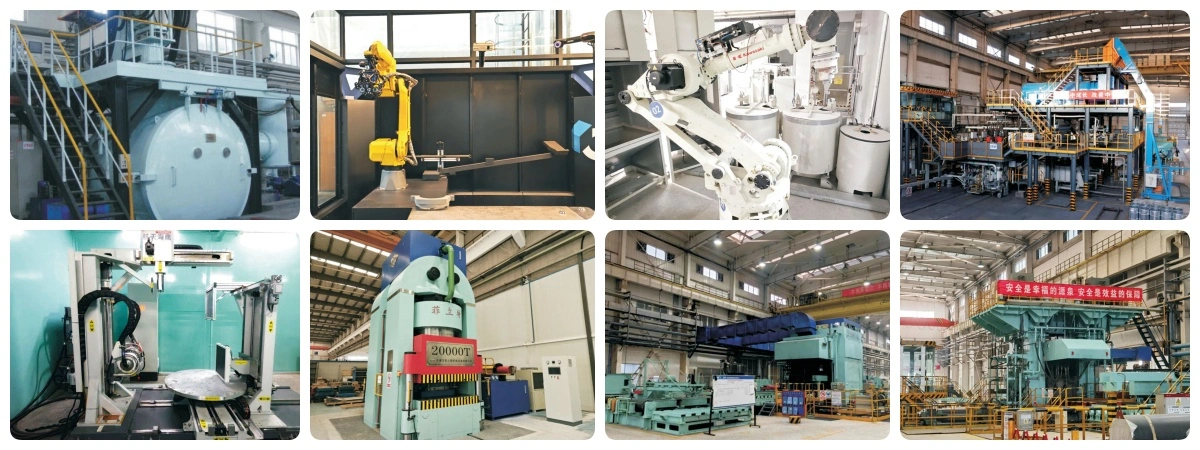
We own complete production equipment including EB furnaces, 1500kg vacuum casting furnaces, forging and rolling production lines and full-set ultrasonic testing equipment, realizing integrated production from titanium sponge, ingot smelting to finished precision bars. The one-stop industrial chain ensures stable chemical composition and consistent mechanical properties of products.
Sufficient semi-finished product inventory supports large-batch orders and short lead-time delivery. We provide customized OEM processing solutions, 24/7 professional technical support and 12-month official product warranty for global customers.
FAQ
Q1: What is the main difference between Gr5 and Gr23 titanium rod?
A1: Standard Gr5 (Ti-6Al-4V) is for usage mostly in aircraft industry. Gr23 is a form of ELI ultra-low interstitial with improved fracture toughness and biocompatibility, with tighter oxygen and iron control, designed for medical implant applications.
Q2: Is it possible to weld Gr5 titanium round bars?
A2: Yes. The welding should be done in pure argon inert environment to prevent oxygen contamination and embrittlement of the material. At the industrial level, the two major high-precision welding methods for titanium bars are electron beam welding and friction stir welding.
Q3: What kind of surface finish do you have?
A3: We have three normal finishes: peeled surface for removing the oxide layer, polished surface for high accuracy and esthetic situations, and centerless ground surface for rigorous dimensional tolerance needs.
Q4: What diameter range can you give ?
A4: Our product diameter includes 3.175 mm to 400 mm, which completely meets the production and application of tiny precision parts and big structural components.
Q5: Is Titanium Grade 5 Magnetic?
A5: No, it is totally non-magnetic, which can efficiently prevent magnetic interference, appropriate for MRI medical equipment and precise maritime electrical systems.
Q6: What are the industry norms that your goods comply with?
A6: Our titanium rods are produced according to ASTM B348, ASTM B381, ASTM F67, AMS 4928, GB/T 2965, ASTM F136 and other standards, and are widely used in aerospace, medical, marine and chemical industries.
Contact Us
If you are looking for high-strength and standard-compliant Gr5 Titanium Rod for aerospace, medical, marine and chemical projects, please get in touch with our professional team via srt@sunrui-ti.com.
