Titanium Billet
Billet:
Material grade: All grades involved in corresponding domestic and international standards
Specification: GB, GJB, ASTM, ASME, AMS, DIN, JIS standards or industry standards and enterprise standards
Titanium Billet for Aerospace & Industrial Forging — High-Purity EB Melted Supply Solutions
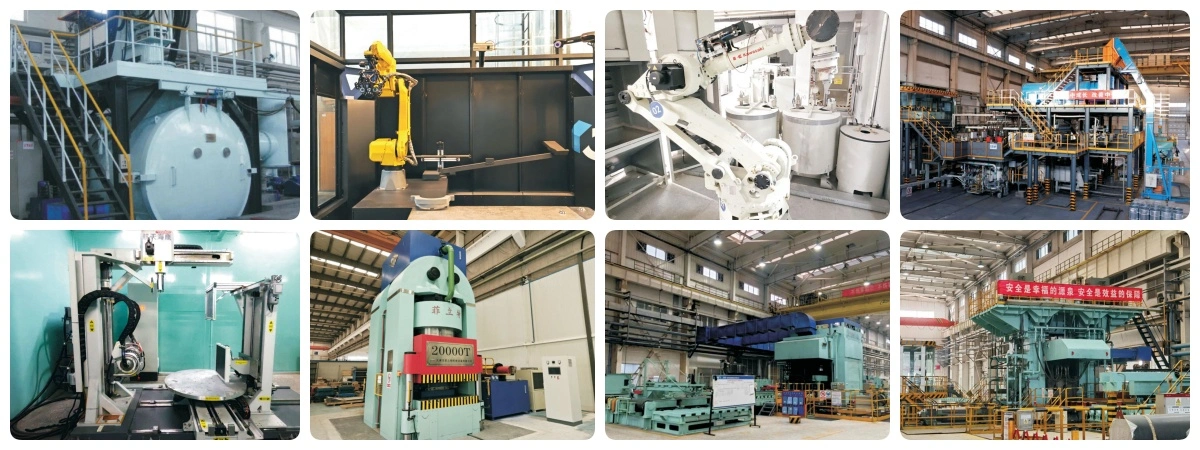
Sunrui Titanium manufactures high-purity Titanium Billet with advanced imported 3600 KW EB melting furnaces, supporting an annual output of 5,000 tons of titanium slabs and billets. Drawing on over 60 years of professional titanium R&D and manufacturing experience from CSSC Luoyang Ship Material Research Institute, we deliver billets with precise chemical composition control, uniform internal grain structure and complete product traceability. Certified with AS9100, NADCAP, ABS, TUV and NORSOK, our products serve as bulk feedstock for aerospace forging, medical bar processing and industrial extrusion projects, enabling stable large-scale supply for global B-end clients.
What Is Titanium Billet and Why Does It Matter?
A common type of semi-finished titanium is titanium, which comes in both cylinder and rectangular shapes. Titanium sponge is melted using VAR or EB melting technology, and then it is professionally forged and rolled.
Titanium Billet is the primary upstream raw material used in the production of titanium forgings, bars, and extruded profiles in the titanium processing supply chain. It fixes a lot of problems that industrial buyers have with buying and making things, like unreliable batch material performance, a high rate of production loss in aircraft precision processing, and materials that don't hold together well enough during extreme thermomechanical treatment. It is important that qualified billets don't have any internal holes or component segregation, so the quality of the work that comes after is steady.
It is very important to choose the right provider for long-term batch purchases because the quality stability of the raw billets affects the ability to machine, the output of the finished product, compliance with industry standards, and full-process tracking of all final parts that come after.
Key Material Properties
When combined, our titanium's great mechanical, physical, and chemical qualities make it the best material for high-end industry and aircraft manufacturing.
The tensile strength of Mechanical Performance Grade 5 (Ti-6Al-4V) billets is between 895 MPa and 1000 MPa, and the material density is about 4.43 g/cm³. These billets have a great strength-to-weight ratio, which allows for lightweight design while still ensuring structural strength.
Pros in terms of chemistry and physical The product has great resistance to corrosion and can be used for a long time in environments that are salty, acidic, or high-pressure. In addition to having a low thermal expansion coefficient, it is stable against fatigue under cyclic alternating load and is biocompatible and non-toxic. It also osseointegrates well.
Note on Important Processing Titanium reacts easily with oxygen, nitrogen, and carbon in the air and has a lot of chemical activity when it is hot. During forging and heat treatment, strict atmosphere control is needed to stop the formation of brittle oxygen-rich alpha case layers and keep final parts from having surface cracks.
Technical Specifications
| Parameter | Details |
|---|---|
| Melting Method | Electron Beam (EB) Melting |
| EB Furnace Power | 3,600 KW |
| Annual Output Capacity | 5,000 tons/year |
| Product Form | Slab / Billet (Cylindrical or Rectangular) |
| Downstream Applications | Plates, sheets, coils, forgings, bars, extrusions |
| Applicable Standards | ASTM B348, AMS 4928, ISO 5832 |
| Certifications | AS9100, NADCAP, PED, ABS, TUV, NORSOK |
| Customization | OEM available; alloy and dimension customizable |
| Documentation | Mill Test Report (MTR) per EN 10204 3.1 |
Quality Control: What Sets Sunrui Apart
All of our Titanium Billet products go through a strict, multi-stage, full-process quality inspection to make sure they meet the high standards of the aerospace, medical, and marine industries.
Ultrasonic Testing (UT): This is done according to the AMS 2631 Class AA standard to find all internal porosity, inclusions, and voids. This makes sure that all raw materials are good enough for forging production.
Chemical Composition Analysis: Use ICP-OES precision detection technology to tightly manage interstitial elements like oxygen, nitrogen, and hydrogen. This will keep the material from becoming less flexible and tough when hit.
Macro-Etching Inspection: Find internal chemical segregation and beta fleck flaws to keep forged parts from breaking down when they are put under repeated loads and high temperatures.
Microstructural Examination: Make sure the grains are all the same size (up to G10 or smaller), that there is no alpha-case contamination, and that the material meets the strict requirements for use in aircraft and medical implants.
Dimensional Inspection: Make sure that the product's tolerances are strictly controlled so that they match automated forging and machining lines. This will lower the number of scrap pieces and raise the yield of finished products further down the line.
For full quality tracking, every batch of goods comes with full EN 10204 3.1 standard MTR mill test records that include full temperature analysis and mechanical performance test data.

Applications Across High-Performance Industries
Aerospace Engineering: Titanium are core raw materials for processing aero-engine compressor discs, aircraft structural frames and landing gear components. Our EB-melted billets feature uniform chemical composition and ultra-clean internal structure, stably adapting to high-stress and high-temperature extreme working conditions of aerospace equipment.
Medical Device Manufacturing: Processed into precision titanium bars and wires, our billets are widely used in orthopedic implants and spinal fixation systems. The material’s non-toxic property and osseointegration capability ensure long-term stable service of implantable medical devices.
Subsea Oil & Gas: Suitable for manufacturing deep-sea valve bodies, subsea manifolds and connector components. It maintains stable structural integrity for decades in high-salinity and high-pressure deep-sea environments, resisting pitting corrosion and stress corrosion cracking.
Shipbuilding & Marine Engineering: Benefiting from CSSC’s professional marine technology accumulation, our titanium are widely applied in naval and commercial ship structural parts, providing corrosion resistance for long-term marine service.

FAQ
Q1: What is the key difference between EB-melted and VAR-melted products?
A1: VAR melting excels in chemical homogeneity and is widely recognized in the aerospace industry, while EB melting effectively removes high-density impurities such as tungsten inclusions. Our 3600 KW EB furnace delivers ultra-high-purity billets for high-precision scenarios.
Q2: How does grain size affect downstream forging quality?
A2: Finer and uniform grain structure optimizes material forgeability and improves the accuracy of non-destructive testing. We control grain size at G10 or finer to fully support customers’ high-standard production requirements.
Q3: Can you customize billets with specific beta-transus temperatures?
A3: Yes. We can adjust alloy composition and cooling parameters to customize beta-transus temperature, optimizing billet performance for high-temperature aerospace and industrial applications.
Q4: What are the main causes of billet surface cracking during forging?
A4: Surface cracking is mainly caused by insufficient preheating or alpha case layer contamination. Strict atmosphere and temperature control in thermal processing can effectively avoid such defects.
Q5: Are MTR documents provided for every order?
A5: Yes. All shipments are equipped with complete EN 10204 3.1 certified MTR reports, covering chemical composition, mechanical properties and full heat batch traceability data.
Q6: Do you support OEM customization and small-batch orders?
A6: We support standard batch procurement and personalized OEM customization including alloy grades and dimensions. Our team can provide targeted solutions according to your actual order volume and technical requirements.
Contact Us
If you are looking for high-purity, high-performance titanium billets for aerospace forging, medical equipment, marine engineering and industrial projects, feel free to contact our professional team via srt@sunrui-ti.com.
