Titanium Ingot
Forged slab: (70~300)x1400x10000
EB ingot: 200x1290/1090x(1000~6200)
Hot rolled plate: (2.5~60)x(600~2500)x(1000~8000)
Cold rolled plate: (0.4~4.0)x(600~2500)x(1000~4000)
Hot rolled coil: (3.0~12)x(1000-1500), max coil weight 7 ton
Cold rolled coil: (0.4~4.0)x(1000~1500), max coil weight 6 ton
Material grade: All grades involved in corresponding domestic and international standards
Specification: GB, GJB, ASTM, ASME, AMS, DIN, JIS standards or industry standards and enterprise standards
Titanium Ingot for Aerospace & Industrial Use — High-Purity EB Slab Solutions by Sunrui Titanium
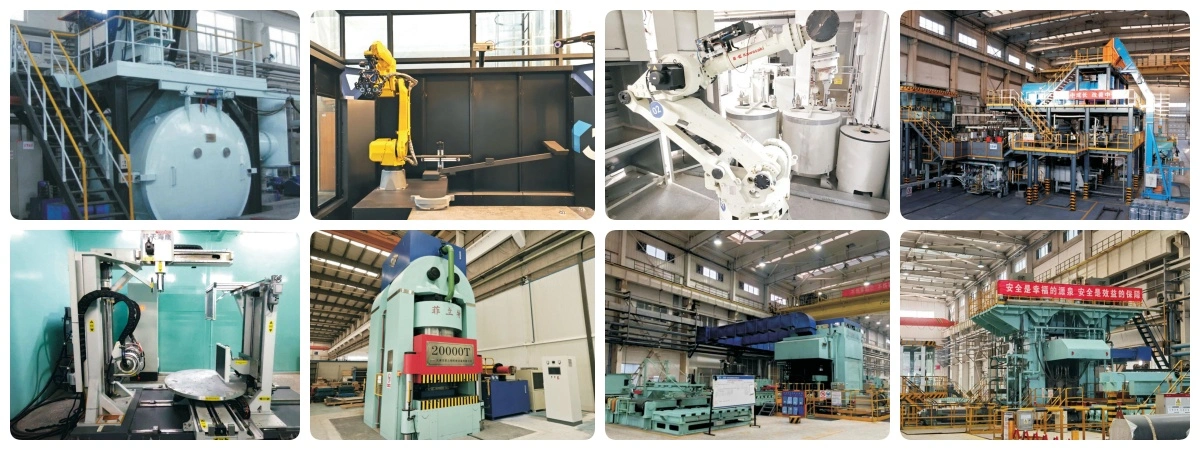
Titanium Ingot produced by Sunrui Titanium adopts advanced 3600 KW imported electron beam melting equipment for manufacturing. Backed by over 60 years of professional titanium R&D and production experience inherited from CSSC, we maintain a stable annual output of 5,000 tons of high-purity EB titanium slabs. As core upstream raw materials, our ingots are widely processed into titanium plates, sheets and coils, serving aerospace, marine engineering, medical equipment and chemical processing industries worldwide.
What Is a Titanium Ingot and Why Does It Matter?
A titanium is a core semi-finished metallurgical product, manufactured by melting titanium sponge (with or without alloying elements) and solidifying into dense and uniform metal blocks. It acts as the fundamental upstream raw material for all wrought titanium products, including titanium plates, bars, billets, forgings and tubes.
Ingot quality determines the final performance of all downstream titanium products. The industry’s most common defects — chemical segregation and uneven microstructure — are usually formed in the melting stage and will be inherited by subsequent processed parts. High-Density Inclusions (HDI) and Low-Density Inclusions (LDI) caused by unqualified smelting will seriously damage the structural stability of safety-critical components.
Sunrui’s professional EB melting process effectively eliminates internal inclusions and achieves precise chemical composition control, making our Titanium Ingot fully compliant with strict manufacturing standards for aerospace-grade and high-precision industrial applications.
Technical Specifications
| Parameter | Details |
|---|---|
| Production Method | Electron Beam (EB) Melting |
| Furnace Rating | 3,600 KW (imported advanced EB furnace) |
| Annual Capacity | 5,000 tons |
| Primary Application | Downstream titanium plates, sheets, and coils |
| Surface Treatment | Mechanical skin removal (alpha case elimination) |
| NDT Method | Ultrasonic testing |
| Quality Documentation | Full mill test certificate available (EN 10204 3.1) |
| Certifications | AS9100, NADCAP, PED, ABS, TUV, NORSOK |
Key Titanium Ingot Features
Sunrui Titanium makes all of its EB titanium slabs under strict whole-process control. They perform as well as regular products on the market in terms of stability and dependability.
Exclusive EB Melting Technology: Our Electron Beam Cold Hearth Melting (EBCHM) technology gets rid of HDIs and LDIs inside titanium very well. In contrast to the VAR process, EB melting uses focused high-vacuum electron beam smelting and cold hearth residence separation, which makes the material much more pure and compact. It is the process most often used to make high-precision industrial parts and rotating parts for aerospace.
Titanium reacts easily with oxygen, nitrogen, and carbon at high temperatures and is very active at those temperatures. These intermediate elements have a direct effect on the mechanical qualities of finished goods. For example, more oxygen in the material makes it harder and stronger, but less flexible. We carefully control the elements in every batch of products, and we can support both standard commercial grades and ELI ultra-low interstitial grades with oxygen contents below 0.13% for use in medicine and cryogenics.
Stable Grain Structure for Processing Further Downstream: As-cast ingots have large, columnar grains. Our improved EB melting process creates a uniform internal structure that makes forging, rolling, and cogging more efficient. This helps finished wrought titanium products get a finer microstructure and consistent mechanical properties.
Alpha Case Management: Processing at high temperatures makes it easy to create a thin, brittle layer of oxygen-rich alpha case on the titanium surface. We take off the top layer of skin using a professional lathe and then test it thoroughly with ultrasonic waves to make sure there are no alpha case defects and the slabs are ready for direct precision processing.
Where Titanium Ingot Is Used
Reasonable specification selection based on application scenarios can effectively improve production efficiency and component service life.
Aerospace Engineering: As the core raw material of aero-engine compressor blades, discs and structural frames, Titanium Ingot needs to withstand extreme centrifugal force and alternating thermal cycles. Our aerospace-grade EB slabs meet ultra-high structural homogeneity requirements and fully adapt to the harsh working conditions of key rotating parts.
Dental implants and orthopedic joint parts can be made from Grade 5 (Ti-6Al-4V) and Grade 23 ELI titanium. Titanium is the only metal that can be used for long-term implant applications because it is biologically inert and has great fatigue resistance. In vivo medical parts made from ELI-grade low-interstitial material must be able to bend and break without breaking easily.
Processing chemicals and desalination: Big EB titanium slabs are turned into heat exchanger tubes and pressure vessels that can work in harsh chemical and marine environments. Unlike stainless steel, which can pit and corrode under stress, titanium keeps working well over time. This saves customers money on equipment repair costs and boosts the economy as a whole.

B2B Supply Advantages
For industrial procurement and engineering customers, stable supply capacity and complete after-sales service are as important as product quality.
Sunrui Titanium has complete industrial chain layout covering titanium sponge raw materials to finished products, with sufficient semi-finished product inventory. Since 2010, our integrated production system has ensured stable batch quality and fast delivery for large-scale global orders.
We provide complete quality certification documents including EN 10204 3.1 factory test reports, covering melt batch number, multi-point chemical composition analysis, smelting process records and non-destructive testing results. We also support OEM and customized production of special alloy grades and specifications to meet personalized engineering needs.

FAQ
Q1: What are the advantages of EB melting compared with VAR process?
A1: EB melting performs better in removing internal high and low-density inclusions and recycling raw materials, ideal for high-standard aerospace critical parts. VAR process is more suitable for alloy titanium with high requirements on chemical homogeneity.
Q2: Can titanium cast billets be directly machined for use?
A2: No. As-cast billets have coarse grain structure and cannot be directly precision machined. They need forging and cogging treatment to refine the microstructure into qualified wrought state before subsequent processing.
Q3: Why is oxygen content strictly controlled in titanium cast billets?
A3: Oxygen is a key interstitial strengthening element. Proper oxygen content improves material strength and hardness, while excessive oxygen will reduce ductility. ELI ultra-low interstitial grades strictly control oxygen below 0.13% to meet the toughness requirements of medical implantation and cryogenic applications.
Q4: How do you eliminate alpha case on titanium cast billet surface?
A4: We adopt professional mechanical turning to completely remove the brittle oxygen-enriched surface layer, and conduct ultrasonic flaw detection after surface treatment to ensure no defective products are delivered.
Q5: What quality documents can you provide for each order?
A5: Complete EN 10204 3.1 MTC mill test reports are available, including melt batch information, full chemical composition analysis, process records and NDT test data with full product traceability.
Q6: Do you support customized specifications and OEM orders?
A6: Yes. We support customized production of special alloy grades, dimensions and surface treatments, providing one-stop OEM solutions for global industrial customers.
Contact Us
If you are looking for high-performance Titanium Ingot for aerospace, medical, chemical and industrial projects, please contact our professional technical team via srt@sunrui-ti.com.
