Aerospace Titanium Castings
Grades: Gr2, Gr3, Gr5, Gr1, Gr12, Gr7, Gr9, Gr23
Minimum casting wall thickness: 2.0mm
Maximum casting size: 2500 x 2000 x 1000mm
Casting weight: 0.5-1500kg
Surface finish: Ra 6.3-12.5 μm
Standards: AMS4985C, ASTM B367, GB/T 15073, GB/T 6614, GJB 2896A-2007, Q/W 67A-2007, BMS 7-310, BMS7-336
Application fields: Chemical processing, marine engineering, medical & healthcare, general industrial, energy sector, automotive industry, infrastructure & transport, aviation industry
Aerospace Titanium Castings for Critical Flight Applications — Precision, Strength & Certified Quality
For aerospace titanium castings, there is no room for error. The best way to make a single part that is strong, light, and heat-resistant is to cast it in titanium. They have been working with titanium for more than 60 years and are based at the Luoyang Ship Material Research Institute (CSSC). Titanium casts from Sunrui Titanium can have walls as thin as 2 mm, be as big as 2500 x 2000 x 1000 mm, and weigh anywhere from 0.5 kg to 1,500 kg. We follow the strictest aviation standards when we make our castings, like AMS4985C, ASTM B367, and GJB 2896A-2007. Plus, they are very exact; the surface is only 6.3μm rough, and the level of accuracy is CT8.
What Makes Titanium the Right Choice for Aerospace Castings?
TiO2 is very strong for how light it is. Its density is about 4.5 g/cm3. It is about as strong when pulled apart as many steel alloys, but it is a lot lighter. How to make buildings lighter without lowering their performance has been a problem in engineering for a long time. This set of parts solves that problem.
Titanium quickly changes into oxygen, nitrogen, and carbon when it gets hot. 8. This is why all casts made of titanium used in space have to be cooked and filled in a vacuum. With this process, a nanoscale is made that is flawless and meets the needs for materials that are essential for flight.
Aerospace titanium castings also has the benefit of making an oxide film on its surface that is always there and keeps growing. The metal won't rust in hydraulic fluids, the sea, or the air because of this film. Parts that are heated and filled with fluids that eat away at metal, like turbine housings and hydraulic valve bodies, need to be able to handle chemicals.
Aerospace Titanium Castings Specifications
| Parameter | Details |
|---|---|
| Available Grades | Gr1, Gr2, Gr3, Gr5, Gr7, Gr9, Gr12, Gr23 |
| Minimum Wall Thickness | 2.0 mm |
| Maximum Casting Size | 2500 × 2000 × 1000 mm |
| Casting Weight Range | 0.5 – 1,500 kg |
| Surface Roughness | Ra 6.3 – 12.5 μm |
| Dimensional Accuracy | CT8 (exceeding original CT9 requirements) |
| Execution Standards | AMS4985C, ASTM B367, GB/T 15073, GB/T 6614, GJB 2896A-2007, Q/W 67A-2007, BMS 7-310, BMS7-336 |
| Casting Technology | Graphite mold casting, vacuum investment casting |
| Post-Processing | Full CNC machining available |
Key Material Advantages
Sunrui's aircraft Titanium Castings combine a number of basic performance traits for difficult and complicated aircraft working conditions:
High strength and low weight: Titanium has a high specific strength, which means that it can be used to make aerospace structures lighter without lowering their load-bearing capacity. This can help aircraft save energy and run more efficiently.
Resistance to Corrosion: The natural protective oxide layer stays strong against saltwater, aviation fuel, and hydraulic media for a long time. This keeps fuselage structures and fluid system parts working properly even when the weather is bad.
Ultra-Wide Temperature Adaptability: Custom titanium alloy molds keep their shape at temperatures as high as 600°C and also safely work in cold environments, meeting the needs of high-temperature engine parts and outer aircraft parts.
Better Resistance to Fatigue and Creep: When skilled HIP hot isostatic pressing treatment is used, the fatigue performance of castings can get as high as 80% to 90% of forged parts. This means that they can fully meet the long-term cycle load working requirements of main and secondary aircraft structural components.
Aerospace Applications: Where These Castings Perform
Our high-performance titanium castings are widely applied in core aerospace flight-critical scenarios, covering engine systems, fuselage structures and hydraulic control equipment.
Turbine Engine Components
Engine compressor casings, fan frames and bearing housings bear alternating thermal and mechanical loads for a long time. Titanium castings feature stable high-temperature resistance and dimensional stability, effectively avoiding structural deformation and failure of core engine parts.
Airframe Structural Elements
Large-size castings such as cargo door frames, pylon ribs and wing fairings take full advantage of titanium’s lightweight and high fatigue resistance. Our maximum super-large casting size supports the integrated forming of complex aerospace structural geometries, reducing assembly procedures.
Fluid Power and Control Systems
Hydraulic valve bodies and pump shell parts require precise internal complex flow channels and long-term high-pressure leak-proof performance. Professional aerospace titanium castings technology realizes integral forming of special-shaped structures, while matching environmental corrosion resistance to adapt to altitude-changing flight conditions.

Quality Control: Built for Flight-Critical Standards
We do a full, multi-stage review of every batch of aerospace castings to make sure they meet all flight safety standards:
X-ray/CT Radiographic Inspection: Find accurately the inside holes, shrinking spaces, and impurity spots that you can't see with the naked eye. This gets rid of the secret risks inside flight-critical parts.
FPI Fluorescent Penetrant Inspection: Find surface flaws according to the ASTM E1417 standard to make sure there are no micro-cracks or structural breaks on the surface. This will protect the surface's structural integrity under stress.
HIP Densification Treatment: High temperature and high pressure are used to get rid of any remaining voids inside castings. This improves the microstructure inside and makes the material much more resistant to fatigue and stable.
Alpha Case Complete Removal: Getting rid of all the brittle, oxygen-rich surface layers that formed during high-temperature casting so that cracks don't start and spread during the service cycle. This is a step that must be taken for aviation-grade parts.
High-accuracy Dimensional Verification: For full-size testing, use a CMM and a 3D laser scanner to consistently reach CT8 high accuracy and meet the strict tolerance standards of the aerospace industry.
Sunrui has authority certificates from AS9100, NADCAP, ABS, TUV, PED, and NORSOK, which means it can provide standard qualification documentation for all orders and make sure that the whole product can be tracked.

Intelligent Manufacturing & Customization Capability
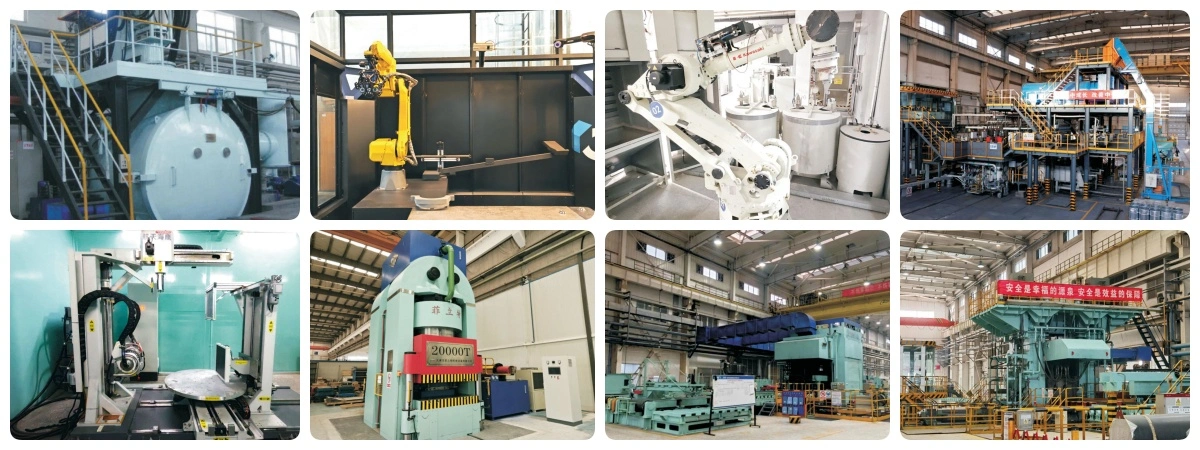
We are equipped with fully automatic robot investment casting production lines, adopting multi-robot collaborative processing and full-process intelligent monitoring. It effectively reduces manual operation errors, ensures stable batch quality and high yield rate, and meets the standardized production requirements of regulated aerospace projects.
We provide full-range OEM customization services, covering prototype trial production and mass batch orders. Our professional engineering team provides one-stop support including grade selection, custom tolerance setting and structural optimization. 3D printing rapid prototyping technology is available to shorten the project verification cycle and accelerate project progress.
FAQ
Q1: Which grades of titanium work best for casting in aerospace?
A: Gr5 (Ti-6Al-4V) is the most common aerospace grade because it is strong, light, and doesn't rust. For special situations where rust resistance and biocompatibility are needed, Gr2, Gr7, and Gr23 can be used instead. We offer all common grades of aerospace titanium, from Gr1 to Gr23.
Q2: Why is vacuum melting necessary for castings used in spacecraft?
A: Oxygen, nitrogen, and carbon react easily with molten titanium at high temperatures, weakening the material. Air contamination can't get into vacuum-melted metal, and the structure is pure, which is the most important thing for making sure flight-critical parts are safe.
Q3: Can the items be joined together?
A: The products can be welded well. TIG and electron beam welding are both fully compliant with the AMS 2694 aviation welding standards and can be used to put parts together and fix small flaws.
Q4: How does alpha case affect aircraft parts?
A: The alpha case is a thin, brittle layer of oxygen-rich material that forms during high-temperature casting. The cracks are likely to get bigger when the load changes. Professional methods are used to get rid of the alpha case layer completely so that aviation parts can keep working well for a long time.
Q5: How does HIP treatment make casting work better?
A: Hot isostatic pressing (HIP) gets rid of tiny holes inside materials to make them denser. When the casts are treated, they get 80% to 90% of the mechanical qualities of formed parts. This makes them much more resistant to wear and opens up more aircraft applications.
Q6: How long does it take to make a custom casting for aerospace?
A: It usually takes between 18 and 30 weeks to make a new mold and start mass production. With 3D fast modeling, the trial production cycle can be cut down and projects can be checked out quickly.
Contact Us
With 60+ years of titanium manufacturing experience, NADCAP-certified production processes and intelligent manufacturing systems, our Aerospace Titanium Castings fully support all types of aerospace equipment projects. Email: srt@sunrui-ti.com.
