Casting Titanium
Grades: Gr2, Gr3, Gr5, Gr1, Gr12, Gr7, Gr9, Gr23
Minimum casting wall thickness: 2.0mm
Maximum casting size: 2500 x 2000 x 1000mm
Casting weight: 0.5-1500kg
Surface finish: Ra 6.3-12.5 μm
Standards: AMS4985C, ASTM B367, GB/T 15073, GB/T 6614, GJB 2896A-2007, Q/W 67A-2007, BMS 7-310, BMS7-336
Application fields: Chemical processing, marine engineering, medical & healthcare, general industrial, energy sector, automotive industry, infrastructure & transport, aviation industry
Casting Titanium for High-Performance Industries — Precision Graphite Mold Solutions by Sunrui Titanium
Sunrui Titanium specializes in Casting Titanium that is specifically made for high-end industrial and precision engineering uses. The Luoyang Ship Material Research Institute (CSSC) gave us over 60 years of professional experience in metallic casting, which we have used to improve the graphite mold titanium casting process. We can make one-piece castings that weigh between 0.5 kg and 1500 kg, have a maximum forming size of 2500 × 2000 × 1000 mm, and have a minimum wall thickness of 2 mm. All Cast Titanium has exact dimensions and stable structure performance, meeting the high standards for use in the medical, chemical, aircraft, and marine industries.
What Makes Casting Titanium Casting Different?
If you want to make medium to large titanium parts, graphite mold titanium casting is better than traditional investment casting in many ways. This method reliably copies complicated geometric shapes while providing better surface finish and tighter control over dimensional tolerances. The surface roughness is kept at a steady level between Ra 6.3 μm and Ra 12.5 μm.
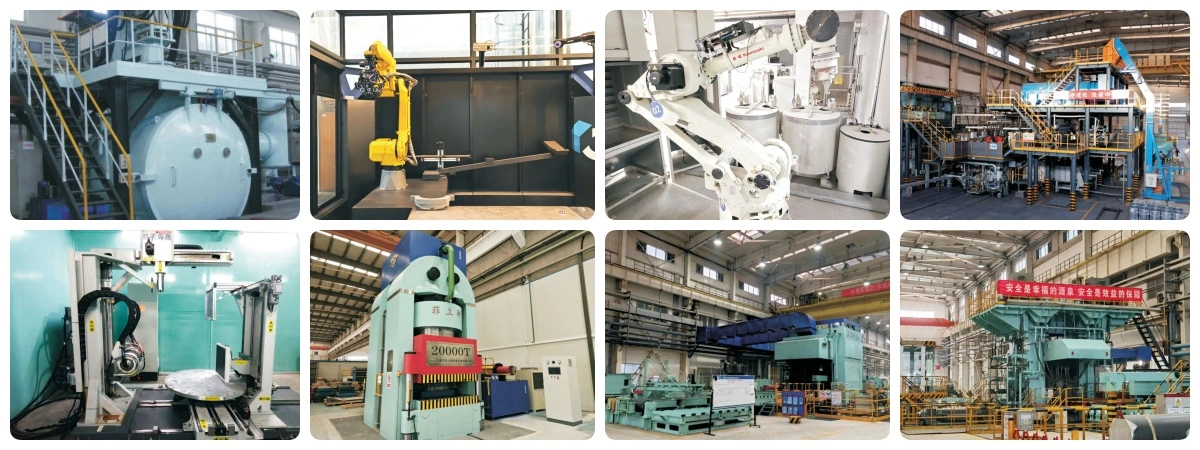
Titanium metal is very active at high temperatures and easily reacts chemically with oxygen, nitrogen, and carbon in the air. This has a direct effect on how stable the final parts are structurally. Because of this, the whole process of melting and pouring must happen in a completely empty space. At Sunrui Titanium, they have professional 1500 kg vacuum casting furnaces that get rid of all impurities and casting flaws.
The near-net-shape forming feature of this process effectively lowers the waste of raw materials, improves the buy-to-fly ratio, and greatly lowers the costs of customers' subsequent secondary machining, making it possible to produce a lot of titanium castings at a low cost.
Material Grades and Technical Specifications
We supply a complete range of titanium material grades to match diverse engineering working conditions, covering corrosion-resistant pure titanium and high-strength titanium alloys, to meet different structural and functional design requirements.
| Parameter | Details |
|---|---|
| Available Grades | Gr1, Gr2, Gr3, Gr5, Gr7, Gr9, Gr12, Gr23 |
| Min. Casting Wall Thickness | 2.0 mm |
| Max. Casting Size | 2,500 × 2,000 × 1,000 mm |
| Casting Weight Range | 0.5 – 1,500 kg |
| Surface Roughness | Ra 6.3 – 12.5 μm |
| Execution Standards | AMS4985C, ASTM B367, GB/T 15073, GB/T 6614, GJB 2896A-2007, Q/W 67A-2007, BMS 7-310, BMS7-336 |
For its high strength-to-weight ratio and stable resistance to high temperatures up to 600°C, Gr5 (Ti-6Al-4V) is the most commonly used grade of titanium alloy casting material. For chemical and sea environments that need better rust protection, Gr2 and Gr3 pure titanium are best. Due to its better biocompatibility and ability to bend, Gr23 biomedical-grade titanium is often used to make medical implants.
Core Material Advantages
High Strength & Lightweight Structure
Titanium material has a density of about 4.5 g/cm³, only 60% of steel, while possessing ultra-high specific strength. It effectively reduces the overall weight of equipment and structural parts without sacrificing bearing capacity, which is irreplaceable for lightweight design of high-end equipment.
Corrosion Resistance
On the top of the titanium, a thick, steady inactive oxide film will form on its own. Seawater, chlorine gas, dilute sulfuric acid, and other harsh corrosive media can't wear it down over time. This keeps it from pitting and stress corrosion failure, which can happen to carbon steel and stainless steel parts.
Dual Stability of High Temperature & Cryogenic Environment
Custom Casting Titanium maintain stable mechanical properties in both high-temperature thermal environments and ultra-low temperature cryogenic scenarios, adapting to complex working conditions in aerospace, energy and other fields.
Fatigue & Creep Resistance
Titanium castings maintain stable dimensional accuracy and structural integrity under long-term cyclic load operation, perfectly suitable for manufacturing core parts such as pump housings, impellers and structural support brackets.
Application Industries
Our precision titanium casting parts deliver stable performance advantages in multiple high-performance industrial sectors:
Aerospace and Defense
Used for aerospace fuselage support brackets, compressor blades and engine core components, meeting the dual requirements of high-temperature resistance and lightweight design. We have independently developed China’s first super-large thin-walled titanium alloy frame structure for aerospace electromechanical equipment.
Marine and Chemical Engineering
Applied to marine pump housings, valve bodies and impeller parts. Titanium’s corrosion resistance solves the durability problems of traditional steel materials in seawater and corrosive chemical environments, reducing equipment maintenance costs.
Medical and Healthcare
Gr5 and Gr23 titanium castings are used for orthopedic implants, dental prosthetics and precision surgical instruments. The material’s non-toxic property and good osseointegration ability ensure long-term safe service of medical implanted devices.
Energy, Automotive, and General Industrial
Serving core precision components such as industrial heat exchangers and structural connectors, widely covering petrochemical, power generation, transportation and other industrial fields.

Quality Control and Manufacturing Reliability
Sunrui Casting Titanium implements full-process closed-loop quality monitoring for all titanium casting products. We adopt multi-robot collaborative automated production lines to ensure stable batch yield and consistent dimensional accuracy of finished parts.
After casting, we adopt professional chemical pickling and finishing processes to completely remove the brittle oxygen-enriched alpha-case layer on the surface, eliminating potential crack risks of parts. All finished products will undergo ultrasonic non-destructive testing and precision dimensional calibration before delivery.
Our factory holds authoritative certifications including AS9100, NADCAP, PED, ABS, TUV and NORSOK, fully complying with the market access standards of aerospace, offshore engineering and pressure vessel equipment. The whole production process supports complete product traceability to meet customer quality audit and filing requirements.

FAQ
Q1: Why must titanium casting be completed in a vacuum environment?
A: Molten titanium is highly active at high temperatures and will react violently with oxygen, nitrogen and carbon in the air. Vacuum melting and pouring can effectively avoid element pollution and material embrittlement, ensuring the structural stability and mechanical performance of castings.
Q2: Do you provide HIP post-processing service?
A: Yes. Hot Isostatic Pressing (HIP) treatment is available. This process eliminates internal pores and voids of castings, greatly improving product fatigue resistance and overall mechanical consistency.
Q3: How do you handle the alpha-case layer on castings?
A: We adopt standardized chemical pickling and precision machining processes to completely remove the brittle surface alpha-case layer, effectively avoiding surface defects and crack initiation points.
Q4: Is welding repair available for defective titanium castings?
A: Yes. We support professional GTAW/TIG inert gas welding repair. With standardized process control, the welding position can maintain consistent mechanical properties with the base material.
Q5: What dimensional accuracy can your titanium castings achieve?
A: Our standard castings reach CT4–CT6 tolerance level, and high-precision customized products can achieve CT8 dimensional accuracy to meet ultra-precision engineering requirements.
Q6: What grade is recommended for seawater corrosion-resistant pump parts?
A: Gr2 or Gr12 pure titanium is preferred for conventional seawater anti-corrosion scenarios. Gr5 titanium alloy is recommended if high structural strength is required.
Contact Us
If you are looking for manufacturers of high-precision Casting Titanium for aerospace, marine, medical and industrial projects, please send your drawings and technical requirements to our professional team via srt@sunrui-ti.com.
