Titanium Cast
Available grades: Gr2, Gr3, Gr5, Gr1, Gr12, Gr7, Gr9, Gr23
Min. wall thickness: 2.0mm
Max. casting size: 2500 x 2000 x 1000mm
Weight range: 0.5-1500kg
Surface roughness: Ra 6.3-12.5 μm
Executive standards: AMS4985C, ASTM B367, GB/T 15073, GB/T 6614, GJB 2896A-2007, Q/W 67A-2007, BMS 7-310, BMS7-336
Applications: Chemical processing, marine engineering, medical & healthcare, general industrial, energy sector, automotive industry, infrastructure & transport, aviation
Titanium Cast Components for High-Performance Engineering — Precision, Strength & Corrosion Resistance
Titanium Cast production is a option for sectors requiring complicated shape, low weight and material performance. Luoyang Sunrui Titanium Precision Casting Co., Ltd. every casting is backed up by knowledge and experience of over 60 years in the titanium business. Sunrui manufactures titanium parts in near-net-shape up to 2,500 x 2,000 x 1,000 mm and 0.5 to 1,500 kg, and with a minimum wall thickness of 2.0 mm. Our quality is up to the world’s most stringent standards such AS9100, NADCAP, ABS and NORSOK.
What Makes Titanium Graphite Mold Casting Different
Sunrui has focused on the R&D and optimization of titanium graphite mold casting technology for more than 50 years. This mature process injects molten titanium into precision graphite molds to form integral parts with internal structures, which cannot be realized by conventional forging and full CNC machining processes. It effectively solves the structural limitations of traditional metal processing.
Titanium features extremely high chemical activity under high temperature and is prone to reaction with oxygen, nitrogen and carbon in the air, resulting in defective products. We adopt full vacuum protective casting environments to isolate air contamination, completely guaranteeing the complete metallurgical structure and stable mechanical properties of finished parts.
The finished near-net-shape cast components achieve standard surface roughness of Ra 6.3 to 12.5 μm, which greatly reduces subsequent CNC machining workload, lowers raw material waste and effectively controls overall project costs for B-end customers.
Technical Specifications
| Parameter | Details |
|---|---|
| Available Grades | Gr1, Gr2, Gr3, Gr5, Gr7, Gr9, Gr12, Gr23 |
| Min. Wall Thickness | 2.0 mm |
| Max. Casting Size | 2,500 x 2,000 x 1,000 mm |
| Casting Weight Range | 0.5 – 1,500 kg |
| Surface Roughness | Ra 6.3 – 12.5 μm |
| Execution Standards | AMS4985C, ASTM B367, GB/T 15073, GB/T 6614, GJB 2896A-2007, Q/W 67A-2007, BMS 7-310, BMS7-336 |
Key Material Advantages
Titanium Cast Components combine lightweight design, high strength, and corrosion resistance, providing unrivaled overall benefits in high-end technical fields:
Lightweight & High Strength: Titanium’s density is 4.5 g/cm³, nearly 40% lighter than steel. The standard Gr5 (Ti-6Al-4V) titanium alloy can achieve tensile strength up to 895 MPa, and realize the lightweight optimization while without affecting the structural bearing capacity.
Corrosion Resistance: A thick oxide coating will stably develop on the titanium surface by self-healing, which can effectively protect titanium from saltwater, chloride media and different acidic conditions for a long time. This eliminates the pitting corrosion and stress corrosion cracking failure that is frequent in stainless steel parts.
Wide Temperature Adaptability: The structural performance of finished cast parts is stable from cryogenic environment to 500°C high temperature working circumstances, adapting to harsh working situations such as deep sea equipment and high-altitude aircraft gear.
Fatigue & Creep Resistance: It has cycle load resistance and high temperature creep resistance. This is especially important for parts such as compressor blades and pump impellers, as it helps prolong the life of the equipment and decreases the costs of subsequent maintenance and replacement.
Where Titanium Cast Components Are Used
Aerospace Industry
Widely used in aerospace compressor blades, structural housings and electromechanical support frames. The lightweight property effectively reduces overall equipment weight and improves fuel efficiency. Sunrui has independently developed super-large thin-walled titanium alloy frame cast parts for aerospace, with mature ultra-precision casting technology and stable mass production capacity.
Marine Engineering
Suitable for marine pump impellers, valve bodies and seawater circulation system structural parts. Cast parts require no anti-corrosion coating and can maintain stable performance in long-term saltwater corrosion environments, far exceeding the service life of conventional alloy materials.
Chemical Processing & Energy
Applied to chemical reactor accessories, heat exchanger components and pipeline fittings. The resistance to acidic and oxidizing corrosive media makes cast parts the preferred material for long-term stable operation of chemical industrial equipment.
Medical & Healthcare
Qualified biocompatible castings are used for medical implants and surgical precision parts. Our Titanium Cast reach CT8 high dimensional accuracy and Ra 6.3 μm high-precision surface finish, fully meeting the strict precision and safety standards of medical devices.
Automotive & Infrastructure
Ideal for high-performance automotive lightweight structural parts and engineering supporting components. The strength-to-weight ratio effectively improves structural stability and operational performance of terminal equipment.

Quality Control and Production Infrastructure
Sunrui implements full-process closed-loop quality monitoring from raw material incoming inspection to finished product delivery, realizing complete product traceability for every batch of castings. All quality documents and test reports fully meet the audit requirements of AS9100 and NADCAP industrial systems.
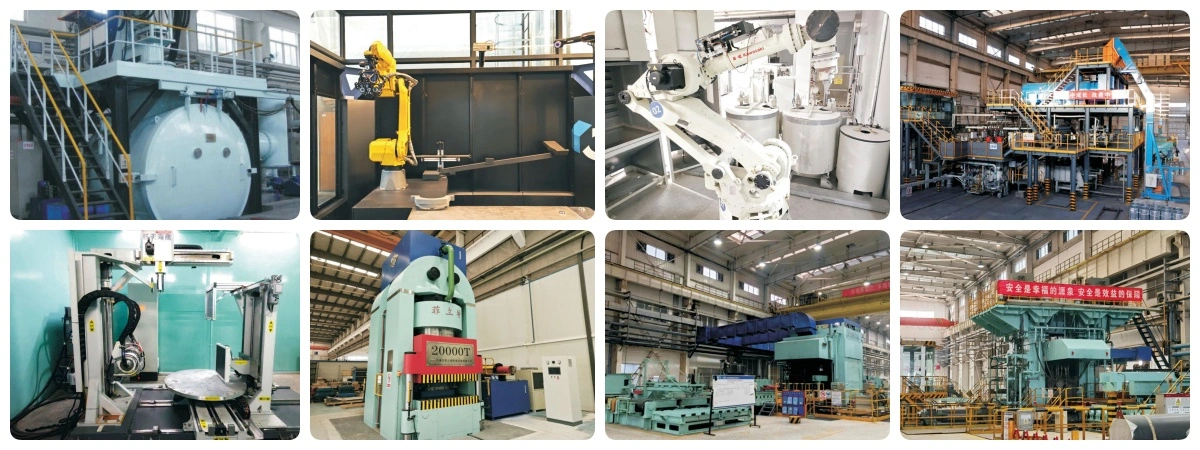
We are equipped with fully automatic robot investment casting shell-making production lines. Multi-robot collaborative processing eliminates manual errors, ensures consistent product quality in mass production and greatly improves finished product yield.
We provide one-stop post-processing services including precision CNC machining, vacuum heat treatment and ultrasonic non-destructive testing. Hot Isostatic Pressing (HIP) treatment is optional to eliminate internal micro-pores of castings, making the mechanical properties of cast parts close to forged titanium parts.

Customization and Supply Flexibility
We provide full-grade customisation for 8 popular titanium grades. Customers may choose from pure titanium grades (Gr1/Gr2) with good corrosion resistance or high-strength titanium alloy grades (Gr5/Gr23) for precise aerospace applications. We offer OEM customized service, such as structural design according to the drawings, choosing grades and precision machining of the final products.
With enough inventory of semi-finished products and established global logistics system, we handle large-volume batch orders with and controlled delivery cycle and provide worldwide door-to-door delivery service for global B-end customers.
FAQ
Q1: Why choose casting instead of forging for complex parts?
A: Casting supports near-net-shape forming of complex structures such as special-shaped inner cavities and thin-wall structures that cannot be achieved by forging. It reduces material loss and secondary processing procedures, helping customers cut production costs.
Q2: How do you control internal porosity of cast components?
A: We adopt professional HIP hot isostatic pressing technology. Through simultaneous high temperature and high pressure treatment, internal tiny pores are completely eliminated, and the density and mechanical properties of castings are greatly improved.
Q3: Is welding available for finished cast parts?
A: Yes. Welding construction must be carried out under high-purity argon protection to avoid material embrittlement caused by air contamination. Our technical team can provide targeted post-weld heat treatment solutions according to product grades and application scenarios.
Q4: What is the standard surface finish of graphite mold castings?
A: The standard surface roughness is Ra 6.3–12.5 μm. We can provide secondary polishing, machining and other surface treatment services according to customer precision requirements.
Q5: Do cast parts have the same performance as forged parts?
A: After standard HIP and heat treatment, the mechanical properties of castings can reach 90%–95% of forged products, fully meeting the load-bearing and service requirements of aerospace, marine and medical core components.
Q6: What industry certifications do your cast products have?
A: Our products hold authoritative certifications including AS9100, NADCAP, PED, ABS, TUV and NORSOK, covering all mainstream high-end industrial fields.
Contact Us
If you have customization and procurement demands for high-precision, high-stability Titanium Cast Components for engineering projects, please contact our professional technical team via srt@sunrui-ti.com.
