Titanium Standard Parts
Available grades: Gr2, Gr3, Gr5, Gr1, Gr12, Gr7, Gr9, Gr23
Min. wall thickness: 2.0mm
Max. casting size: 2500 x 2000 x 1000mm
Weight range: 0.5-1500kg
Surface roughness: Ra 6.3-12.5 μm
Executive standards: AMS4985C, ASTM B367, GB/T 15073, GB/T 6614, GJB 2896A-2007, Q/W 67A-2007, BMS 7-310, BMS7-336
Applications: Chemical processing, marine engineering, medical & healthcare, general industrial, energy sector, automotive industry, infrastructure & transport, aviation
Titanium Standard Parts for Precision Engineering — Corrosion-Resistant, Lightweight, Long-Life Fastening Solutions
Titanium Standard Parts provide a complete selection of high-precision fastening components such as titanium bolts, nuts, screws, washers and studs. All goods are made from high quality titanium alloys such as Gr2 and Gr5, completely conform with major international standards, including DIN, ISO, ASME/ANSI and JIS. With over 60 years of professional expertise in titanium fabrication, Sunrui Titanium provides 8 alternative titanium grades: Gr1, Gr2, Gr3, Gr5, Gr7, Gr9, Gr12 and Gr23. Our supporting casting and processing capacity includes minimum wall thickness of 2.0mm, maximum overall dimension of 2500 × 2000 × 1000mm, single-piece weight of 0.5-1500kg, and surface roughness controlled at Ra 6.3-12.5μm, which fully meets various high-standard and demanding industrial application scenarios.
What Makes Titanium the Right Material for Standard Parts?
Titanium alloy has complete mechanical qualities which cannot be replaced by regular engineering metals. Titanium density is 4.51 g/cm3 , which is 40%–45% less than typical steel . Grade 5 titanium (Ti-6Al-4V) provides steady tensile strength of 900–1000 MPa . It provides good structural rigidity of equipment without adding the additional weight burden. It solves the long-standing conflict between the structural strength and the light-weight design for the industrial fasteners.
On durability, titanium has the capacity to passively form a self-repairing TiO 2 oxide layer on its surface. The structure provides resistance to saltwater erosion, chloride corrosion and acidic oxidation, which effectively reduces quick rusting and failure problems of carbon steel and stainless steel fasteners in tough conditions. A wide working temperature range of 400°C to 600°C may be used for different grades of alloy, therefore suitable for high temperature working conditions and sustained thermal cycling.
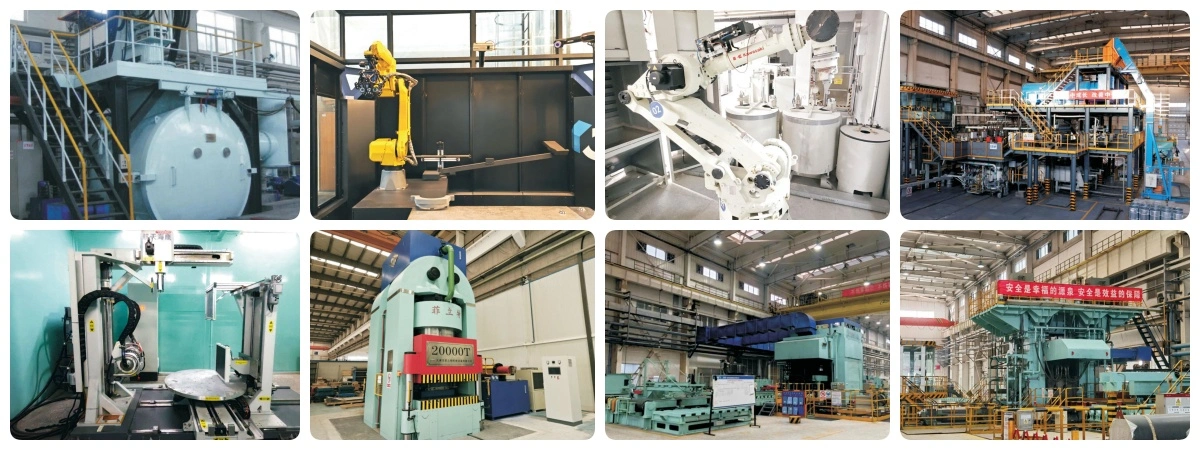
At high temperatures titanium is chemically active and interacts readily with carbon, nitrogen and oxygen. Sunrui Titanium uses expert vacuum casting furnaces and vacuum heat treatment equipment to carry out the full-process controlled production of Titanium Standard Parts to ensure pure metallurgical structure and stable performance, and eliminate the material defects caused by environmental contamination.
Titanium Standard Parts Specifications
| Parameter | Details |
|---|---|
| Available Grades | Gr1, Gr2, Gr3, Gr5, Gr7, Gr9, Gr12, Gr23 |
| Minimum Wall Thickness | 2.0 mm |
| Maximum Casting Size | 2,500 × 2,000 × 1,000 mm |
| Casting Weight Range | 0.5 – 1,500 kg |
| Surface Roughness | Ra 6.3 – 12.5 μm |
| Execution Standards | AMS4985C, ASTM B367, GB/T 15073, GB/T 6614, GJB 2896A-2007, BMS 7-310, BMS7-336 |
Key Performance Advantages
Specific Strength
Grade 5 titanium is stronger than steel but weighs less than half as much. Titanium Standard Parts are used to make aircraft frames, marine facilities, and motorsport equipment lighter, more energy-efficient, and better at handling loads and changing operations.
Better Resistance to Corrosion
The TiO₂ layer that protects against chloride pitting, crevice corrosion, and chemical weathering can fix itself. In chemical and offshore work environments, where stainless steel fasteners break easily, titanium fasteners can last for more than 20 years without any maintenance. This makes equipment much easier to use and lowers the cost of repairs.
Big Stability at Many Temperatures
Even when temperatures are very high or very low, titanium metals keep their mechanical traits constant. It is possible for grade 5 titanium to work in temperatures below 400°C for long periods of time, and pure titanium grades stay flexible in cryogenic environments, meeting the different temperature resistance needs of precision equipment.
Resistance to Fatigue and Creep
Titanium keeps its structural integrity after millions of cycles of load, which means it won't break or bend and will continue to work reliably for a long time in equipment systems that are subject to cyclic loads, like turbine shells, pressure tanks, and underwater connections.
Lack of magnetism
Because titanium isn't magnetic at all, it can't be used for anything else. This makes it perfect for medical MRI equipment, naval minesweeping devices, and precise electronic enclosures. It keeps electromagnetic interference out and makes sure equipment works correctly.
Where Titanium Standard Parts Perform Best
Defense and Aerospace
Used a lot in turbine peripheral parts, landing gear fasteners, and putting together the structure of an airplane. Throughout the service cycle, the advantages of being light and strong make the aircraft much more fuel-efficient and increase its cargo capacity by lowering its dead weight.
Engineering for the sea and offshore
Applies to offshore platform facilities, pump bodies in water plants, and ROV equipment that is undersea. If you use it instead of regular 316L stainless steel fasteners, it completely stops corrosion caused by seawater and ensures stable operation for decades without any maintenance.
Chemicals for processing
Ideal for use in nitric acid, chloride, and organic solvent environments with heat exchanger assemblies, pipeline flanges, and pressure vessels. It stops unplanned production stops and lowers the chance of leaks caused by rusty fasteners.
Industrial and medical high precision
Because they are nonmagnetic, safe, and lightweight, titanium standard screws are often used in medical imaging equipment, implant fixings, and precision tools. This is because they don't cause magnetic interference, material contamination, or problems with too much load.

Grade Selection: Choosing Between Gr2 and Gr5
Choosing a fair grade is necessary to meet the project success standards. Grade 2 titanium, which is commercially pure, is the best choice for heat exchangers, maritime fluid pipeline systems, and chemical processing equipment because it can be shaped so well and doesn't rust.
Although Grade 5 (Ti-6Al-4V) is stronger than Grade 2, which is usually used for high-load structural fastening tasks in aerospace, offshore engineering, and motorsports, Grade 5 is almost twice as strong. It is important to know that titanium has a lower elastic stiffness than steel. This will affect how often the system vibrates and how strong it is. When replacing Grade 12.9 steel bolts right away, it is best to get engineering confirmation.
We can also make special grades like Gr7, Gr12, Gr9, and medical-grade Gr23 (Ti-6Al-4V ELI) to meet the needs of specific applications.

FAQ
Q1: What is titanium fastener thread galling, and how may it be avoided?
A: During assembly, the surface oxide layer of titanium readily results in thread galling, or cold welding. By employing PTFE-coated threads, anodized surface treatment, or MoS₂ anti-seize lubricant, the problem can be successfully avoided.
Q2: Do typical titanium parts have magnetic properties?
A: No. Titanium is entirely non-magnetic, which is a major benefit for precision electronic instruments that need no electromagnetic interference, naval minesweeping systems, and MRI medical equipment.
Q3: Can Grade 12.9 steel bolts be immediately replaced by Grade 5 titanium bolts?
A: The strength of grade 5 titanium is comparable to that of 8.8–10.9 grade steel. Because titanium has a lower elastic modulus, which impacts joint stiffness and vibration performance, direct replacement of Grade 12.9 high-strength steel bolts requires expert engineering evaluation.
Q4: Is titanium more affordable than stainless steel?
A: Titanium goods are more expensive per unit than stainless steel, but they require no maintenance and have an extremely long corrosion-resistant service life. Titanium standard part can lower total operating expenses and provide more long-term economic benefits when viewed from the standpoint of whole life cycle cost.
Q5: Which standards and certifications do your products meet?
A: AMS4985C, ASTM B367, GJB 2896A-2007, and other international standards are met by our goods. Sunrui Titanium is certified in AS9100, NADCAP, PED, ABS, TUV, and NORSOK. It also has material traceability and compliance records for client audits.
Q6: Do you support customized titanium fastener solutions?
A: Yes. We support full OEM customization, including exclusive adjustment of alloy grade, dimensional tolerance, surface finish and execution standards to match your personalized project design requirements.
Contact Us
If you are looking for standard-compliant Titanium Standard Parts for precision engineering projects, please contact our professional technical team via srt@sunrui-ti.com.
