Bone Substitute
Grades: Gr2, Gr3, Gr5, Gr12
Minimum casting wall thickness: 0.4mm
Maximum casting size: φ 1500mm × 600mm
Casting weight: 0.1~100kg
Surface finish: Ra3.2~6.3μm
Standards: BMS 7-310, BMS 7-336, ASTM B367, GBIT 15073, GB/T 6614, GJB 2896A-2007, YY0117.3-2005, YY0117.1-2005
Bone Substitute — Precision-Cast Solutions for Medical Implant Applications
Bone substitutes have become the preferred gold-standard solution for modern medical implant manufacturing, thanks to exceptional biocompatibility, osseointegration performance and strength-to-weight ratio. These core properties fully match the strict clinical requirements of surgeons and medical device manufacturers. Backed by over 60 years of professional titanium R&D and manufacturing experience, Luoyang Sunrui Titanium delivers high-precision medical castings with a minimum wall thickness of 0.4mm, maximum forming size of φ1500mm × 600mm and single-piece weight ranging from 0.1kg to 100kg. All products are manufactured in strict accordance with mainstream medical industry specifications including YY0117.1-2005 and YY0117.3-2005, ensuring compliant and stable clinical application.
What Makes Titanium the Right Choice for Bone Substitute Implants?
Bone substitute materials are designed to fill skeletal defects and serve as stable biological scaffolds to support new bone tissue regeneration. The core challenge of clinical application lies in selecting materials that feature bone integration ability, long-term internal corrosion resistance and lasting structural stability.
Titanium perfectly solves all key pain points of implant materials. Its osseointegration performance enables direct and stable combination between implants and living bone tissues, with no fibrous tissue isolation at the bonding interface. This exclusive biological property makes titanium uniquely suitable for load-bearing medical implant scenarios.
In addition, titanium’s low-density and high-strength characteristics effectively reduce the overall weight of implant devices. For patients receiving joint replacement and bone repair surgery, lighter implants alleviate daily movement fatigue and improve mobility and rehabilitation experience.
Material Grades and Medical Suitability
| Grade | Key Characteristic | Typical Use |
|---|---|---|
| Gr1 | Highest ductility, softest | Non-load-bearing components |
| Gr2 | Balanced strength and formability | General medical implants |
| Gr3 | Higher strength than Gr2 | Structural implant parts |
| Gr23 (Ti-6Al-4V ELI) | High strength, biocompatibility | Load-bearing orthopedic implants |
Gr23 is the extra-low interstitial variant of Ti-6Al-4V, specifically developed for demanding medical implant applications where both mechanical performance and biological safety are non-negotiable.
Technical Specifications
| Parameter | Value |
|---|---|
| Available Grades | Gr1, Gr2, Gr3, Gr23 |
| Minimum Casting Wall Thickness | 0.4mm |
| Maximum Casting Size | φ1500mm × 600mm |
| Casting Weight Range | 0.1 ~ 100kg |
| Surface Roughness | Ra3.2 ~ 6.3μm |
| Executive Standards | BMS 7-310, BMS 7-336, ASTM B367, GB/T 15073, GB/T 6614, GJB 2896A-2007, YY0117.3-2005, YY0117.1-2005 |
Manufacturing Quality and Process Control
Molten titanium features extremely high chemical activity at high temperatures and is prone to reacting with oxygen, nitrogen and carbon in the air, which will cause material deterioration and affect implant safety. Therefore, medical-grade titanium casting requires strict full-process atmospheric control.
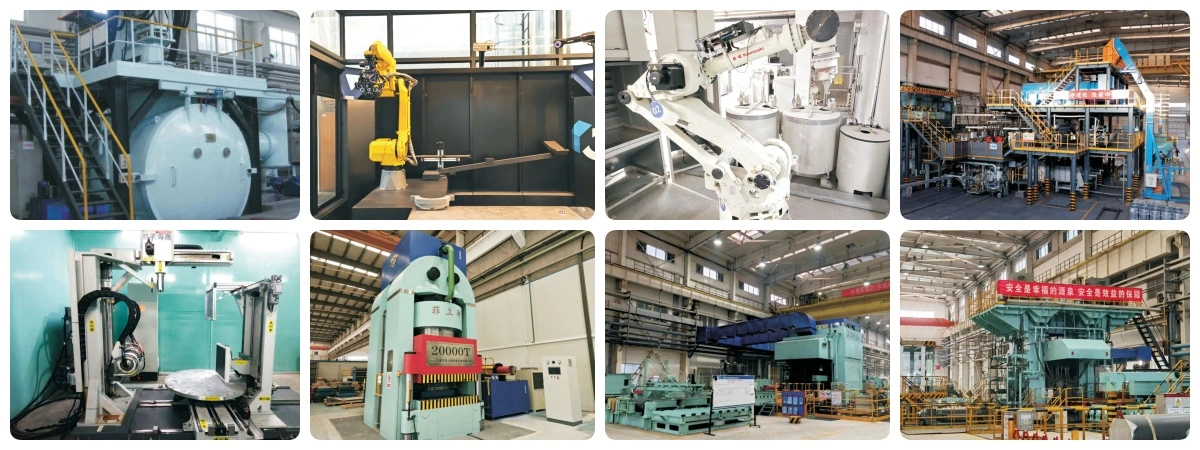
Sunrui Titanium adopts full vacuum casting environment and whole-process quality monitoring system to completely avoid material contamination. We are equipped with fully automated robot shell-making production lines. Multi-robot collaborative operation ensures consistent shell thickness and repeatable dimensional accuracy for each batch of products.
Our precision casting accuracy has steadily reached CT8 level, exceeding the traditional CT9 design standard for aerospace products, and we apply the same high-precision manufacturing standards to medical-grade components. We hold authoritative global certifications including AS9100, NADCAP, PED, ABS, TUV and NORSOK, realizing standardized, traceable and auditable full-link quality management.

Applications in Medical and Orthopedic Fields
Our Bone Substitutes are widely applied in multiple surgical and orthopedic fields, covering diversified clinical repair scenarios:
Oral and Maxillofacial Surgery: Precision thin-wall castings as low as 0.4mm wall thickness maintain stable dimensions under soft tissue pressure and low vascular conditions, perfectly adapting to sinus floor elevation and alveolar ridge augmentation procedures.
Orthopedic Trauma and Joint Replacement: Gr23 high-strength titanium components are applicable to large bone defect repair after fracture and tumor resection. With strength-to-weight ratio, they cooperate with internal fixation systems to provide long-term stable load-bearing support.
Spinal Fusion: Titanium interbody fusion cages rely on standardized Ra3.2~6.3μm surface finish to promote bone cell attachment and osteogenesis, effectively assisting spinal bone fusion and maintaining long-term spinal structural stability.
Dental Implants: Titanium’s physiological corrosion resistance enables long-term stable service in the complex electrochemical environment of human oral cavity and body, avoiding material degradation and ensuring permanent implant effect.

Customization and Supply Advantages
We support full personalized customization, including titanium grade selection, part geometry optimization, wall thickness adjustment, surface finish treatment and designated standard compliance. Stable OEM customized services are provided for global professional medical device manufacturers.
We maintain sufficient semi-finished product inventory to respond to customers’ large-scale procurement and urgent order demands. The whole industrial chain from titanium raw materials, ingot smelting, precision casting to finished products is independently controlled in-house, which shortens delivery cycles and realizes full-process product traceability.
FAQ
Q1: What is the difference between osteoinduction and osteoconduction implants?
A: Osteoconduction means making a structure for bone cells to move and grow on. Bioactive factors can be used to turn stem cells into osteoblasts, which is what osteoinduction means. Most of the material's osteoconductive effects come from its stable biocompatible surface, which helps bones grow and fuse together.
Q2: What effect does the surface finish have on the osseointegration of a titanium implant?
A: Surface roughness directly affects how well bone cells stick to a surface. Our carefully controlled Ra3.2~6.3µm finish makes sure that cells stick well while preventing local stress concentration. This makes the best conditions for stable osseointegration.
Q3: What type of titanium is best for use in hip implants that hold weight?
A: As for the best choice, Gr23 (Ti-6Al-4V ELI) is it. It has very few intermediate elements, so it is very strong mechanically and safe for living things. It can fully meet the long-term cycle load-bearing needs of joints and spinal implants.
Q4: Can your castings meet the global standards for medical devices?
A: Assuredly. We make sure that our goods meet international standards for medical implants (YY0117.1-2005 and YY0117.3-2005) and ASTM B367. We also provide full approval papers to help with global medical device certification and purchase.
Q5: What is the thinnest wall that your precision castings can have?
A: Stably reaching a minimum casting wall thickness of 0.4mm allows the creation of very thin and complicated implant structures that can't be made with normal machining methods.
Q6: Do you allow OEM customization for companies that make medical devices?
A: Yes, of course. To meet your specific product design and legal needs, we offer one-stop OEM customization that includes material grade, geometric structure, surface treatment, and quality papers.
Contact Us
If you are looking for high-precision, medical-grade Bone Substitute for product development and batch procurement, feel free to contact our professional technical team via srt@sunrui-ti.com.
