Ti-Alloy Investment Molded Parts
Grades: Gr2, Gr3, Gr5, Gr1, Gr12, Gr7, Gr9, Gr23
Minimum casting wall thickness: 0.4mm
Maximum casting size: φ 1500mm × 600mm
Casting weight: 0.1~100kg
Surface finish: Ra3.2~6.3μm
Standards: BMS 7-310, BMS 7-336, ASTM B367, GBIT 15073, GB/T 6614, GJB 2896A-2007, YY0117.3-2005, YY0117.1-2005
Ti-Alloy Investment Molded Parts — Precision Titanium Casting Solutions for Demanding Industries
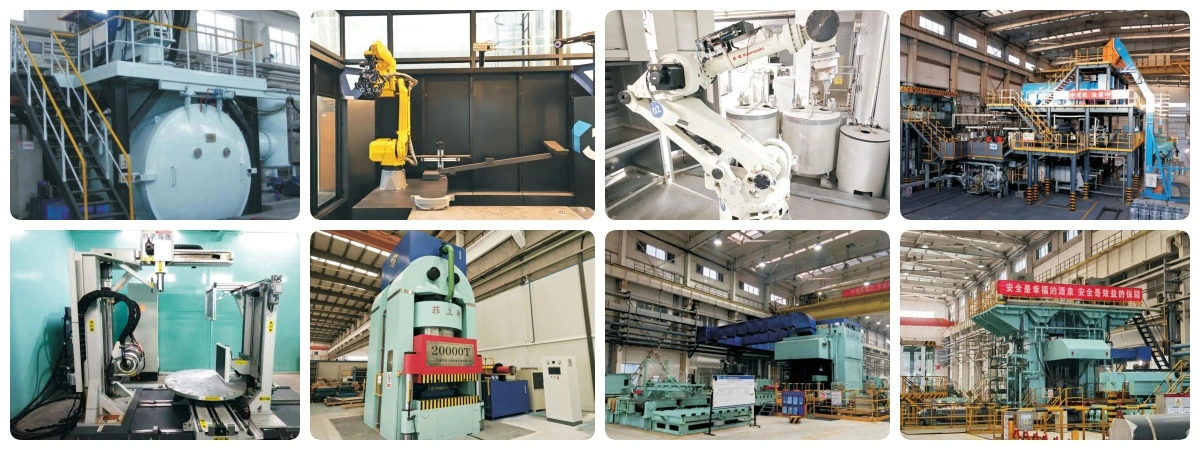
Sunrui Titanium has been improving and fine-tuning its titanium precision casting technologies to serve high-end industrial markets since 1994. Our Ti-Alloy Investment Molded Parts support a steady annual output of 3 million precision castings, which are used all over the world in the medical device, aerospace, marine engineering, and sports equipment industries. Our production range includes walls as thin as 0.4 mm, single pieces weighing between 0.1 kg and 100 kg, and castings with a maximum size of 1500 mm x 600 mm. Ra3.2–6.3μm is a stable range for the normal as-cast surface roughness. We sell all grades of titanium, such as Gr1, Gr2, Gr3, Gr5, Gr7, Gr9, Gr12, and Gr23. All of the products are made on fully automated robot shell-making production lines that strictly follow the official quality certification standards set by AS9100 and NADCAP. These meet all the needs for high-precision and high-stability structure applications.
What Are Ti-Alloy Investment Molded Parts?
Professional vacuum lost-wax casting technology is used to make Ti-Alloy Investment Molded Parts, which are very precise industrial parts. In the manufacturing process, handmade wax models are used to make molds that are made of clay shells. High-purity liquid titanium alloy (usually Ti-6Al-4V Gr5) is put into the mold hole for integral making after the wax has been melted and taken out.
This well-developed method fixes many of the problems that come up with standard titanium processing. Investment casting cuts down on wasteful waste of raw materials and overall production costs a lot compared to direct CNC machining of titanium billets. It can make complex, one-time structures with shapes that can't be made with regular forging technology. Multiple scattered parts can be combined into a single casting part. This lowers the weight of the whole assembly while keeping the great high strength-to-weight ratio of titanium alloys.
For titanium casting, full vacuum melting is one of the most important steps. Titanium is very chemically active when it is molten at high temperatures, and it reacts quickly with oxygen, nitrogen, and carbon in the air. Our whole-process vacuum induction melting keeps the material from getting contaminated, so the finished parts are made of pure alloy and have stable mechanical performance.
Technical Specifications
| Parameter | Details |
|---|---|
| Available Grades | Gr1, Gr2, Gr3, Gr5, Gr7, Gr9, Gr12, Gr23 |
| Min. Casting Wall Thickness | 0.4 mm |
| Max. Casting Size | φ1,500 mm × 600 mm |
| Casting Weight | 0.1 – 100 kg |
| Surface Roughness | Ra3.2 – 6.3 μm |
| Tensile Strength | 860 – 960 MPa |
| Density | ~4.43 g/cm³ |
| Max. Service Temperature | Up to 400°C |
| Executive Standards | BMS 7-310, BMS 7-336, ASTM B367, GB/T 15073, GB/T 6614, GJB 2896A-2007, YY0117.1-2005, YY0117.3-2005 |
Key Material Advantages
Regular metals can't give as many performance benefits as Ti-Alloy Investment Molded Parts, but they can be used in a lot of tough working situations because:
Titanium alloy is strong and light. It has the best strength-to-weight ratio in the business. Its density is 4.43 g/cm³ and its tensile strength is 860–960 MPa. The lighter structure for military and aerospace equipment doesn't lower its ability to hold weight, so the gear works better and uses less energy.
Titanium's surface naturally forms a thick, steady passive oxide film that makes it very resistant to corrosion. Long-lasting defense against seawater, salt spray, and acidic, corrosive environments that keep stainless steel parts from breaking down too quickly in these conditions.
There are two kinds of thermal and cryogenic stability: standard castings keep their shape at temperatures up to 400°C, and ELI ultra-low interstitial grades stay tough and flexible in very cold places, which makes them perfect for use in spacecraft and cryogenic industrial settings.
Better Resistance to Fatigue and Creep: Titanium casts are very good at keeping their shape and not cracking when they are under constant high-temperature stress and repetitive loads for a long time. In other words, they make sure that turbine parts, structural brackets, and other core parts work well and last a long time.
Quality Control Process
For high-precision titanium casting output, you need quality control systems with more than one level. Sunrui Titanium uses strict quality control throughout the whole production process to make sure that the finished products are stable and of high quality.
X-ray testing: This is a good way to make sure that casts are solid on the inside by finding internal holes, inclusions, and flaws in the structure that can't be seen.
Flaws in the surface are eliminated by fluorescent penetrant inspection (FPI), which looks for small cracks and breaks in the structure.
The brittle oxygen-rich layer that forms during casting is taken away completely by chemical milling technology. This keeps parts from breaking down over time.
After the casting process, HIP uses hot isostatic pressing to get rid of any small holes inside the casts. This also makes the structure work better and the mechanical properties more even.
As part of ASTM E8 standard mechanical testing, coordinate measuring machines (CMMs) check the accuracy of the tolerances for dimensions. This is done to make sure that every batch of goods meets the standard minimum yield strength and stretch signs.
The AS9100 and NADCAP quality systems let us keep track of all of our products as they are made, so we can be sure that the quality of each batch is the same.

Application Scenarios
Aerospace Industry: Suitable for aero-engine components, precision structural brackets and electromechanical frame structures that require ultra-high precision and lightweight design. We have developed China’s first super-large thin-walled titanium alloy frame for aerospace electromechanical systems. Our satellite-grade castings reach CT8 dimensional accuracy, exceeding the traditional CT9 design standard.
Medical Devices: Featuring biocompatibility and osseointegration performance with human bone, titanium castings are the preferred material for orthopedic implants and precision surgical instruments. We have achieved large-scale mass production of medical castings that fully comply with YY0117.1-2005 and YY0117.3-2005 industry standards.
Marine & Chemical Processing: Core components such as pump impellers, valve bodies and heat exchanger parts stably resist seawater erosion and chemical slurry corrosion relying on titanium’s passive protective film, with far longer service life than traditional steel parts.
Sports & Leisure Industry: As one of the world’s top three manufacturers of cast titanium alloy golf club head blanks, we fully prove our strong large-scale production and high-precision manufacturing capability for titanium castings.

FAQ
Q1: Why must titanium investment casting be produced in a vacuum environment?
A: Molten titanium is highly reactive with oxygen, nitrogen and carbon at high temperatures. Vacuum induction melting effectively isolates air contamination, maintains titanium alloy purity and prevents part embrittlement, ensuring stable mechanical properties of finished castings.
Q2: What are the advantages of investment casting over titanium CNC machining?
A: Although the initial tooling cost is slightly higher, investment casting greatly reduces raw material waste and subsequent machining workload for complex structural parts and medium-to-large batch orders, effectively lowering the overall procurement cost of high-value titanium parts.
Q3: What is the standard surface finish of your titanium castings?
A: The standard as-cast surface roughness is Ra3.2–6.3μm. We also provide customized surface treatments such as bead blasting and electropolishing to match different application requirements.
Q4: Can titanium investment castings be welded for assembly?
A: Yes. TIG welding and electron beam welding (EBW) are both applicable. Welding construction under strict argon inert gas protection can effectively avoid surface embrittlement and meet assembly processing needs.
Q5: Are your titanium castings applicable for cryogenic working environments?
A: Absolutely. ELI-grade titanium castings maintain toughness and ductility in ultra-low temperature environments, which is ideal for space equipment and low-temperature industrial system applications.
Q6: What customized services can you provide?
A: We support personalized customization of titanium grade, part geometry, weight specification and industry compliance standards, providing professional OEM overall solutions for global customers.
Contact Us
If you are looking for stable and high-performance Ti-Alloy Investment Molded Parts for industrial projects and batch procurement, feel free to contact our professional technical and sales team via srt@sunrui-ti.com for solutions and project support.
