Titanium Alloy Investment Casting
Grade: Gr2, Gr3, Gr5, Gr1, Gr12, Gr7, Gr9, Gr23
Min. casting wall thickness: 0.4mm
Max. casting size: φ 1500mm × 600mm
Casting weight: 0.1~100kg
Surface roughness: Ra3.2~6.3μm
Executive standards: BMS 7-310, BMS 7-336, ASTM B367, GBIT 15073, GB/T 6614, GJB 2896A-2007, YY0117.3-2005, YY0117.1-2005
Titanium Alloy Investment Casting for Aerospace, Medical & Marine Applications — Precision Near-Net-Shape Solutions
Titanium Alloy Investment Casting is a mature near-net-shape manufacturing solution designed for high-precision and high-reliability titanium components. This process minimizes raw material waste while delivering repeatability and dimensional accuracy for complex part structures. Backed by over 60 years of professional titanium technology inherited from CSSC Luoyang Ship Material Research Institute, Sunrui Titanium has stable mass production capacity with an annual output of 3 million precision castings. Our production capability covers a minimum wall thickness of 0.4 mm, maximum casting dimension of φ1500 mm × 600 mm, and as-cast surface roughness of Ra 3.2–6.3 μm. We supply certified custom Titanium Alloy Investment Cast components for aerospace, medical, marine and industrial engineering fields worldwide.
What Makes Titanium Alloy Investment Casting So Demanding?
Titanium features extremely high chemical activity under molten state. At high casting temperatures, it will violently react with oxygen, nitrogen and carbon in the air, resulting in surface contamination, material embrittlement and damaged structural performance. For this reason, traditional open-air casting is completely infeasible for titanium production.
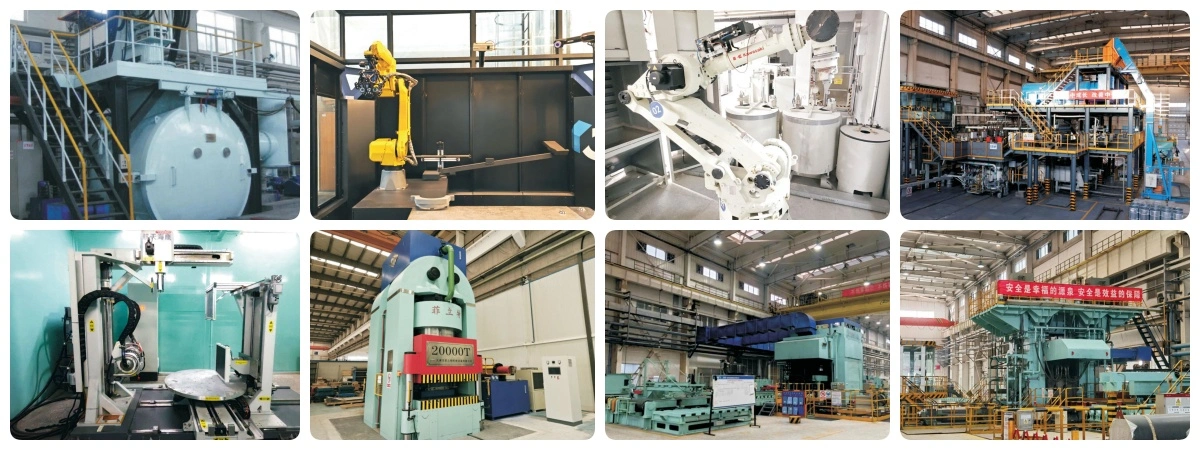
This high-standard manufacturing mode relies on advanced professional equipment, refined process control system and metallurgical accumulation — all core advantages that Sunrui Titanium has polished and stabilized through decades of production practice.
Material Grades & Technical Specifications
Sunrui Titanium supports a wide range of titanium alloy grades to match your specific application requirements. Whether you need commercially pure titanium for corrosion-critical environments or high-strength alloys for structural aerospace components, the right grade is available.
| Parameter | Details |
|---|---|
| Available Grades | Gr1, Gr2, Gr3, Gr5, Gr7, Gr9, Gr12, Gr23 |
| Min. Casting Wall Thickness | 0.4 mm |
| Max. Casting Size | φ 1,500 mm × 600 mm |
| Casting Weight Range | 0.1 – 100 kg |
| Surface Roughness | Ra 3.2 – 6.3 μm |
| Executive Standards | BMS 7-310, BMS 7-336, ASTM B367, GB/T 15073, GB/T 6614, GJB 2896A-2007, YY0117.1-2005, YY0117.3-2005 |
Core Material Advantages
Titanium Alloy Investment Casting components provide a set of performance benefits that are unmatched by stainless steel, aluminum and other common metallic materials, for a variety of severe, high-end industrial environments:
High Strength & Low Weight: Titanium has an ultra-high strength-to-weight ratio that can effectively lower the self-weight of equipment on the basis of guaranteeing structural integrity, and is a core material for lightweight upgrading of aerospace equipment.
Corrosion Resistance: The self-renewing thick oxide protective coating is created on the titanium surface, which can withstand the long-term erosion of saltwater, chloride media and acidic chemical solution, avoiding pitting corrosion and stress cracking failure of typical alloy materials.
Stable Thermal Performance: The material structure is intact and stable in ultra-low temperature cryogenic environment and high temperature working settings, and has ultra-wide temperature adaptability.
Fatigue & Creep Resistance: The finished castings can sustain long-term cycle load and continuous static stress without distortion, completely satisfying the long-service-life requirements of aerospace and marine essential structural elements.
Applications Across High-Demand Industries
Aerospace & Defense
Our Titanium Alloy Investment Casting are widely used in aero-engine brackets, fuselage structural parts and fuel system accessories. The one-time forming process of complex internal structures avoids secondary machining of inaccessible positions. We have independently developed China’s first super-large thin-walled titanium alloy frame components for aerospace electromechanical systems, with mature and large-scale manufacturing capacity.
Medical Devices & Implants
Applicable to hip joints, knee joint components, dental implants and other medical devices. Titanium’s biocompatibility promotes good osseointegration, and the casting process supports personalized complex structural customization. Our medical castings comply with YY0117.1-2005 and YY0117.3-2005 standards, covering mass production of titanium alloy and cobalt-chromium-molybdenum alloy implant parts.
Marine & Chemical Engineering
Custom cast pump impellers, valve bodies and offshore equipment accessories are widely used in marine and chemical corrosive environments. Titanium’s stable corrosion resistance ensures long-term operation of equipment in high-salinity and high-acid media, far exceeding the service life of conventional alloy parts.
Sports & Industrial Applications
Since 1994, we have independently researched and developed titanium alloy sports castings. Now we rank among China’s top three manufacturers of titanium alloy golf club head blanks, with stable high-volume delivery capacity.

Manufacturing Technology & Quality Control
We use fully automatic robot shell-making lines that allow multiple robots to work together and intelligent quality monitoring throughout the whole process. This basically makes sure that the quality of the shells and the batch yield stay the same for every production run.
All parts are put through ultrasonic testing and high-precision dimensional calibration after they are cast. Our casts for satellites are CT8 accurate in size, which is better than the usual CT9 standard, and have a stable Ra 6.3 εm surface finish.
We offer professional post-processing for HIP hot isostatic pressing. When metal is treated with high temperatures and pressures, tiny holes inside the metal are sealed off completely. This makes the castings last longer and be more flexible, almost like forged parts.
We have official global certifications from AS9100, NADCAP, PED, ABS, TUV, and NORSOK, which means we fully meet the compliance needs of the aerospace, pressure equipment, marine, and offshore engineering industries.

FAQ
Q1: Why must titanium investment casting be completed in a vacuum environment?
A: Molten titanium is highly active and will react rapidly with oxygen and nitrogen in the air, causing surface contamination and material embrittlement. Vacuum melting and pouring is the basic guarantee for pure material properties and qualified casting quality.
Q2: What dimensional tolerances can your titanium castings achieve?
A: Depending on part size and structure, our near-net-shape castings achieve a tolerance range of ±0.1 mm to ±0.5 mm. We reserve reasonable machining allowance for key matching surfaces to ensure final assembly accuracy.
Q3: How do you eliminate the alpha-case layer on castings?
A: We adopt non-reactive yttria and zirconia ceramic molds to inhibit alpha-case generation during production. The residual brittle surface layer is completely removed by precise chemical milling post-processing.
Q4: What is the tooling and sample lead time for new projects?
A: The whole cycle of wax mold development and first-piece sample verification is 8–12 weeks, and the specific time is adjusted according to part structural complexity.
Q5: Do you provide HIP treatment for titanium castings?
A: Yes. HIP processing is available for high-demand structural parts, which can eliminate internal porosity and improve fatigue resistance and material ductility for extreme working conditions.
Q6: What core industries do you mainly serve?
A: We focus on customized Titanium Alloy Investment Cast parts for aerospace & defense, medical devices, marine chemical engineering, offshore equipment and high-end sports equipment industries.
Get a Custom Casting Quote
If you have project consultation, sample customization and batch procurement demands for high-performance Titanium Alloy Investment Casting components, please contact our professional engineering team via srt@sunrui-ti.com.
