Titanium Autoparts
Grades: Gr2, Gr3, Gr5, Gr1, Gr12, Gr7, Gr9, Gr23
Minimum casting wall thickness: 0.4mm
Maximum casting size: φ 1500mm × 600mm
Casting weight: 0.1~100kg
Surface finish: Ra3.2~6.3μm
Standards: BMS 7-310, BMS 7-336, ASTM B367, GBIT 15073, GB/T 6614, GJB 2896A-2007, YY0117.3-2005, YY0117.1-2005
Titanium Autoparts — High-Strength Lightweight Solutions for Automotive Performance
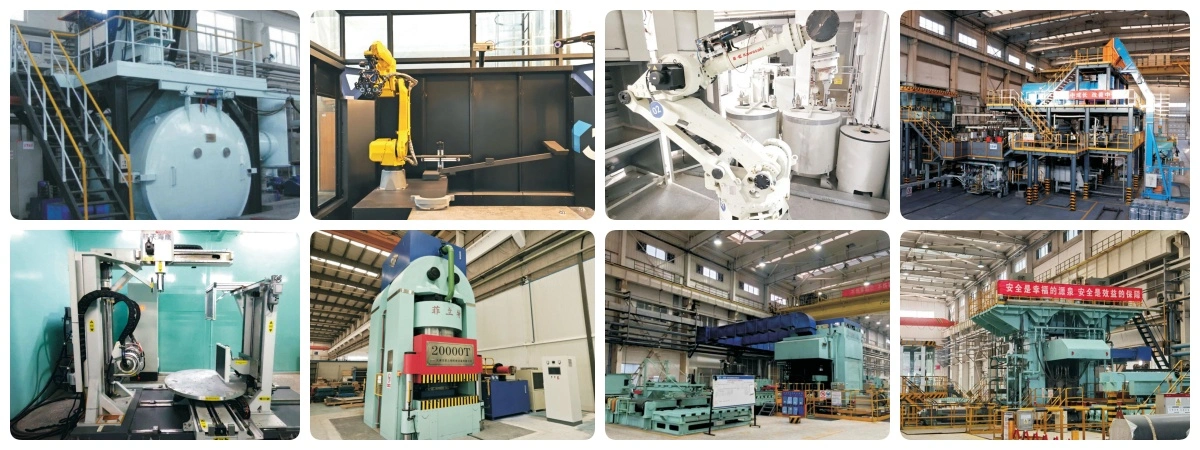
The main issue with modern auto manufacturing is how to balance extremely low weight, high structural strength, and long-term service life. Titanium Autoparts successfully address this issue. Sunrui Titanium has been making titanium professionally for over 60 years, thanks to the knowledge it got from the CSSC Luoyang Ship Material Research Institute. We make high-precision titanium casts for cars with walls that are at least 0.4 mm thick, a maximum making size of 1500 mm × 600 mm, and a weight range of 0.1 kg to 100 kg per piece. All of our products are made in strict accordance with international high-standard guidelines. They meet all of the strict performance and quality standards needed to make and modify high-end cars.
What Makes Titanium the Right Choice for Automotive Components?
Steel and aluminum auto parts can't balance being lightweight, strong, and resistant to corrosion at the same time. Titanium alloy, on the other hand, is the perfect material to break through this industry's technical barrier. Titanium has a mass of 4.5 g/cm³, which is only 56% of steel. Grade 5 (Ti-6Al-4V) titanium has a tensile strength of 895–1000 MPa.
The fatigue limit for titanium is stable, while the fatigue limit for aluminum alloys is not. Titanium Autoparts are much more for long-term vehicle operation because they can handle infinite cyclic loads below the standard stress range. This is very important for high-vibration and reciprocating operating parts in automotive systems.
Key Titanium Autoparts Characteristics
High Specific Strength
Titanium castings make structures as rigid as steel ones but are much lighter. The optimized body weight makes the vehicle more fuel-efficient, better at handling, and better overall in terms of performance. This is commonly used to improve performance cars and luxury vehicles.
Better resistance to corrosion
Titanium parts don't need any extra covering because they naturally make a safe oxide layer. Their performance stays stable in exhaust systems, underbody chassis, and wet seaside areas. They can stand up to electrical rust and natural damage for a long time.
Stability at High and Low Temperatures
Titanium keeps its mechanical properties stable even when the temperature changes from very high to very low. It can withstand high temperatures above 800°C for a long time in an exhaust system without rust or performance loss, and it's about 40% lighter than standard stainless steel parts.
resistance to fatigue and creep
Titanium is much better at resisting fatigue and creep than aluminum alloy, which means that engine connecting rods, valve parts, suspension parts, and other parts that are subjected to long-term thermal cycling, high-speed vibration, and high-RPM load won't deform or break after a long time of use.
Natural Performance for Damping Vibrations
Titanium's natural vibration damping properties make it harder for noise and vibration to travel through the chassis and transmission systems. This improves the NVH performance of high-end vehicles and makes driving more comfortable.
Titanium Autoparts Specifications
| Parameter | Details |
|---|---|
| Available Grades | Gr1, Gr2, Gr3, Gr5, Gr7, Gr9, Gr12, Gr23 |
| Minimum Casting Wall Thickness | 0.4 mm |
| Maximum Casting Size | φ 1,500 mm × 600 mm |
| Casting Weight Range | 0.1 – 100 kg |
| Surface Roughness | Ra 3.2 – 6.3 μm |
| Executive Standards | BMS 7-310, BMS 7-336, ASTM B367, GB/T 15073, GB/T 6614, GJB 2896A-2007, YY0117.3-2005, YY0117.1-2005 |
We adopt targeted grade matching for different automotive application scenarios. Grade 5 (Ti-6Al-4V) is the mainstream choice for structural fasteners, engine components and suspension parts due to its tensile and yield strength. Grade 2 titanium with formability is more suitable for corrosion-resistant pipe fittings and exhaust system accessories that do not require ultra-high strength.
Where Are These Components Applied?
High-Performance Exhaust Systems
Our Titanium Autoparts can withstand long-term high temperature above 800°C without oxidation and performance loss. Compared with stainless steel exhaust systems, it reduces 40% of overall weight, optimizing vehicle power performance and lightweight level, and is the preferred solution for sports cars and performance modified vehicles.
Valvetrain & Engine Reciprocating Parts
Titanium connecting rods, valves and other reciprocating parts effectively reduce engine moving mass, increase engine RPM limit and improve throttle response speed, bringing obvious competitive advantages for racing engines and high-power performance vehicles.
Suspension & Unsprung Components
Titanium wheel bolts, wheel nuts, coil springs and other unsprung parts reduce hub load. It optimizes damper response speed and steering precision, keeping the tire contact area stable under high-G cornering and extreme driving conditions, greatly improving vehicle handling performance.

Quality Control You Can Rely On
Sunrui Titanium uses a full-process, multi-dimensional, and strict checking system for every batch of car casts to make sure that the quality of each batch is stable and uniform.
Alloy Composition Verification: XRF and OES spectral analysis are used to carefully check the composition of titanium alloys to make sure they meet all the requirements of the grade standard.
Precision Dimensional Inspection: A CMM coordinate measuring machine does full-size adjustment to make sure that the product's tolerances fully match the requirements set out in the design plan.
Finding Surface and Internal Defects: Dye penetrant inspection (DPI) and ultrasonic testing (UT) are good ways to find internal inclusions and micro-cracks that could be dangerous to the structure.
Hardness Performance Testing: Rockwell C hardness testing confirms the usual effect of heat treatment to keep mechanical properties stable.
Full Batch Traceability: For full production traceability, full material certification and inspection documents are sent with every order.
We have official certifications from AS9100, NADCAP, PED, ABS, TUV, and NORSOK, which means we fully meet the quality audit standards of the international automotive and aerospace industries.

FAQ
Q1: Why should structural parts for cars be made of Grade 5 titanium instead of Grade 2?
A: Grade 5 titanium is an alpha-beta alloy that has a lot more tensile and yield strength. It is perfect for high-load parts like connecting rods and structural fasteners. Grade 2 is better for exhaust pipe fittings that need to be flexible instead of strong because it is more malleable and resistant to corrosion.
Q2: Do titanium automotive fasteners need anti-seize lubricant?
A: Yes. For all threaded titanium connections, you need a molybdenum disulfide or nickel-based anti-seize agent to keep the threads from galling and cold welding during installation.
Q3: How does the wear life of titanium compare to that of aluminum alloy?
A: Titanium has a set limit for wear and can handle an unlimited number of cycles of load within the limit. Because aluminum metal doesn't have a wear limit, it will break down over time when stressed over and over again. This means that titanium is a better material for high-cycle car parts.
Q4: Can titanium auto parts be colored by anodizing them?
A: Yes. Electrolytic anodization can change the color of a titanium part's surface to mark pressure or make it look better without affecting its structural integrity.
Q5: Can Grade 5 titanium bolts be used to put together brake calipers?
A: Yes. Brake calipers can use Grade 5 titanium nuts that are strong enough to meet ISO 898-1 codes. Because it doesn't conduct heat well, it also keeps heat from moving to brake fluid, which makes driving safer.
Q6: Do you support customized titanium casting specifications?
A: Absolutely. We support full OEM customization of all titanium grades, with customizable casting size (max φ1500mm × 600mm) and weight (0.1–100kg) to match personalized project requirements.
Contact Us
If you have procurement and customized development demands for high-performance Titanium Autoparts for automotive projects, feel free to contact our professional engineering team via srt@sunrui-ti.com.
