Titanium Casting Process
Grades: Gr2, Gr3, Gr5, Gr1, Gr12, Gr7, Gr9, Gr23
Minimum casting wall thickness: 0.4mm
Maximum casting size: φ 1500mm × 600mm
Casting weight: 0.1~100kg
Surface finish: Ra3.2~6.3μm
Standards: BMS 7-310, BMS 7-336, ASTM B367, GBIT 15073, GB/T 6614, GJB 2896A-2007, YY0117.3-2005, YY0117.1-2005
Titanium Casting Process: Precision Titanium Components for Aerospace, Medical & Marine Applications
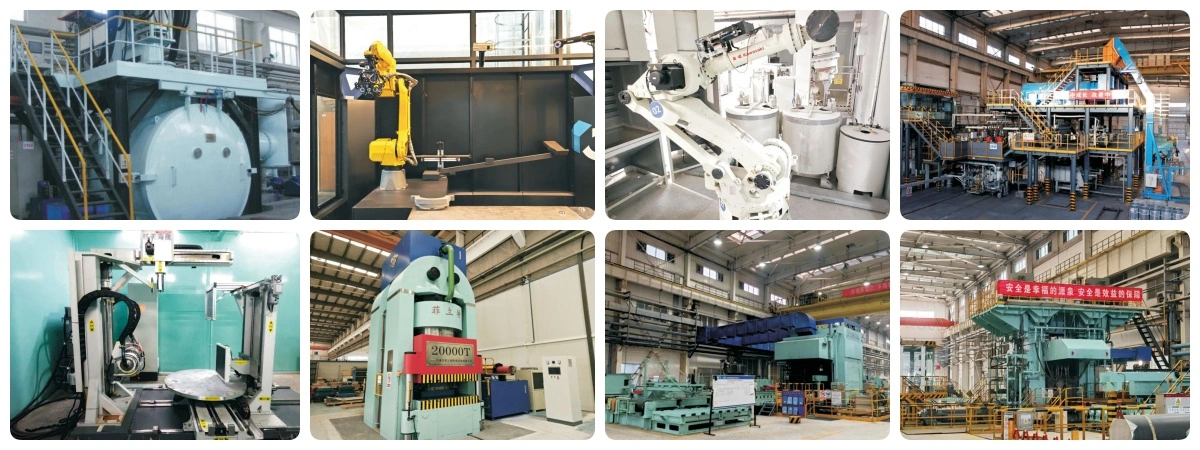
Sunrui Titanium was founded in 1994, and has long been engaged in R&D and mass production of mature and dependable Titanium Casting Process, supported by more than 60 years professional titanium technology accumulation from CSSC Luoyang Ship Material Research Institute. We are one of the top 3 producers of cast titanium alloy golf club blanks in the world, producing 3 million quality titanium castings each year. Our manufacturing capability is minimum wall thickness of 0.4 mm, maximum casting size of φ1500 mm × 600 mm, and single piece weight from 0.1 kg to 100 kg. We provide high consistency precise titanium components in scale for Aerospace, Marine, Medical and Sports Equipment sectors with stable and standardized Titanium.
What Is the Titanium Casting Process?
Titanium investment casting is a professional and established metal forming method for the manufacturing of high precision titanium parts. Manufacturers melt titanium and titanium alloys using Vacuum Arc Remelting (VAR) or Induction Skull Melting (ISM), and then pour the molten titanium into specialized ceramic molds under stringent vacuum conditions to accomplish near-net-shape integrated shaping.
Titanium has significant chemical activity at high temperature, and is easy to react with oxygen, nitrogen and carbon in air, which will produce brittle oxygen-rich alpha case layers and degrade part structural performance. We overcome this industrial pain point by using full vacuum casting conditions and high-stability yttria and zirconia refractory shell materials to effectively restrict the development of alpha case.
The completed cast parts have exact dimensional tolerance, smooth surface quality and steady mechanical qualities, which completely fulfill the specifications of the mission essential equipment. For complicated structural elements which can not be forged or the machining cost is excessive by solid billet processing, our titanium investment casting has clear cost and process benefits.
Material Grades & Technical Specifications
We supply a full range of mainstream titanium grades and support customized selection to match different industrial working conditions and performance requirements. Complete technical parameters are as follows:
| Parameter | Details |
|---|---|
| Available Grades | Gr1, Gr2, Gr3, Gr5, Gr7, Gr9, Gr12, Gr23 |
| Min. Casting Wall Thickness | 0.4 mm |
| Max. Casting Size | φ1,500 mm × 600 mm |
| Casting Weight Range | 0.1 – 100 kg |
| Surface Roughness | Ra 3.2 – 6.3 μm |
| Dimensional Accuracy | Up to CT8 |
| Annual Capacity | 3 million precision castings |
| Executive Standards | BMS 7-310, BMS 7-336, ASTM B367, GB/T 15073, GB/T 6614, GJB 2896A-2007, YY0117.3-2005, YY0117.1-2005 |
In actual grade selection, Gr2 and Gr3 are widely used for marine and chemical corrosion-resistant scenarios; Gr5 (Ti-6Al-4V) is the preferred high-strength grade for aerospace structural parts and industrial components; medical-grade Gr23 (Ti-6Al-4V ELI) features ductility and biocompatibility, specially customized for human implant devices.
Core Material Advantages
The products of our mature Titanium Casting Process possess all the qualities of titanium materials, guaranteeing long-term steady operation of high-end industrial equipment:
High Strength to Weight Ratio Titanium may be as strong as steel in terms of structure but decreases its self-weight by about 45%. This feature is very important for lightweight upgrading of aeronautical and mechanical structural elements.
Corrosion Resistance: It can maintain stable performance in harsh media such as saltwater, chlorine gas and sulfuric acid, successfully avoiding the pitting corrosion and structural failure issues of stainless steel materials in corrosive settings.
Wide Temperature Adaptability: The material structure of the material is complete and stable in the cryogenic environment and high temperature aerospace operating condition, adjusting to the severe temperature difference scenario.
Higher Fatigue & Creep Resistance: It can sustain long time cyclic load operation, especially ideal for rotating mechanical parts and human body implant structural components with high durability need.
Applications Across Industries
Relying on stable casting quality and precise dimensional control, our titanium cast parts cover three core high-end application fields, meeting differentiated performance demands of various industries:
Aerospace & Defense
We supply aerospace structural brackets, compressor blades, gas turbine engine and other core components, supporting equipment lightweight and high-temperature resistant operation. We have independently developed China’s first super-large thin-walled titanium alloy frame structural parts for aerospace electromechanical systems, with leading industrial manufacturing strength.
Medical & Biomedical
Mass production covers orthopedic hip joints, knee joint brackets, dental bridges and precision surgical instruments. We support both titanium alloy and CoCrMo alloy customization. The high-biocompatibility Gr23 grade is specially applied for long-term human implant medical devices.
Marine & Chemical Engineering
Custom cast pump shells, impellers and valve bodies are widely used in seawater desalination and chemical fluid equipment. The corrosion resistance of titanium ensures long-term stable operation of equipment in high-salt and high-acid corrosive environments.

Quality Control & Inspection Protocols
We do full-process multi-dimensional quality inspection for every Titanium Casting Process to remove internal and surface flaws, and guaranty the batch quality consistency:
X-Ray Radiographic Testing: We identify internal porosity, shrinkage cavities and impurity inclusions in line with ASTM E446/E192 standards to assure internal metallurgical integrity.
Liquid Penetrant Inspection (LPI) : Efficiently detect microscopic surface fractures and cold shut faults that influence part service life.
HIP Hot Isostatic Pressing : A high temperature and high pressure treatment to eliminate internal micro-pores, bringing the mechanical qualities of castings near to those of forged parts. Critical for aerospace and medical fatigue-critical parts.
Interstitial Element Analysis: Limit oxygen, nitrogen, carbon and hydrogen concentration to ASTM standard requirements to avoid material embrittlement and to assure approved mechanical qualities.
Alpha Case Detection and Removal: Verification by metallographic examination that the surface brittle oxygen-rich layers have been completely removed to recover some portion of the part fatigue resistance and structural stability.
Our satellite grade castings are produced to CT8 dimensional accuracy and Ra 6.3μm surface finish. We provide product traceability and qualification documentation for regulated sectors with authoritative certifications such AS9100, NADCAP, PED, ABS, TUV and NORSOK.

FAQ
Q1: Why must titanium casting be completed under vacuum conditions?
A: Molten titanium is highly active at high temperatures and easily reacts with oxygen and nitrogen in the air, causing surface contamination and material embrittlement. Vacuum environment is the basic guarantee for pure metallurgical structure and stable performance of castings.
Q2: What is alpha case and how do you control it?
A: Alpha case is a brittle oxygen-rich surface layer formed during high-temperature casting. We adopt yttria-based anti-reaction shell materials and professional chemical milling technology to completely remove residual alpha case and ensure part fatigue performance.
Q3: Is HIP treatment required for all titanium cast parts?
A: HIP is not mandatory for all products, but it is strongly recommended for aerospace and medical parts bearing cyclic fatigue loads. It can eliminate internal voids and greatly improve the overall mechanical properties of castings.
Q4: Are titanium castings weldable for assembly or repair?
A: Yes. Titanium castings support TIG and electron beam welding. The whole welding process only needs to be carried out under strict argon or vacuum shielding to avoid secondary oxidation and ensure welding quality.
Q5: Which titanium grades fit corrosive working environments?
A: Gr2 and Gr7 deliver general corrosion resistance. Gr12 has higher structural strength and stability in harsh chemical media. Our team provides professional grade matching according to your actual working conditions.
Q6: What are the advantages of investment casting over 3D printing for titanium parts?
A: Investment casting is more cost-effective for medium and large batch production, with more uniform isotropic mechanical properties, more stable batch consistency, and better applicability for large-size certified structural parts.
Contact Us
If you have project customization, sample trial production and batch procurement demands for Titanium Casting Process based precision components, feel free to contact our professional technical team via srt@sunrui-ti.com.
