Titanium Prosthetic Components
Grade: Gr2, Gr3, Gr5, Gr12
Min. casting wall thickness: 0.4mm
Max. casting size: φ 1500mm × 600mm
Casting weight: 0.1~100kg
Surface roughness: Ra3.2~6.3μm
Executive standards: BMS 7-310, BMS 7-336, ASTM B367, GBIT 15073, GB/T 6614, GJB 2896A-2007, YY0117.3-2005, YY0117.1-2005
Titanium Prosthetic Components for Medical-Grade Applications — Precision Casting Solutions by Sunrui Titanium
Titanium Prosthetic Components have been known for a long time to be the best material for making current medical replacement devices. With more than 60 years of experience processing titanium, Sunrui Titanium uses high-precision investment casting to make medical-grade prosthetic parts that are. We have four common types of medical titanium: Gr1, Gr2, Gr3, and Gr23 (Ti-6Al-4V ELI). The thinnest wall that can be cast in our factory is 0.4 mm, and the heaviest that can be cast is 100 kg. All finished products have a surface roughness that can be controlled between 3.2 and 6.3μm and fully meet YY0117.1-2005, YY0117.3-2005, and other important medical standards. This makes sure that the products are stable in their functionality and can be used in clinical settings for a long time.
What Makes Titanium the Right Material for Prosthetic Components?
As a result of its physical and chemical properties that other metals can't fully copy, titanium alloy is the best material for medical prosthetic parts.
Ti is a lot lighter than stainless steel. Its density is only 4.43 g/cm³. The effective weight reduction of prosthetic equipment greatly eases daily activity fatigue and physical burden for patients, making it much more comfortable for active amputees and people who wear prosthetics for a long time.
Titanium also has a low elastic stiffness of about 110 GPa, which is lower than stainless steel but higher than bone. It really lowers the stress-shielding effect of bone-anchored implant systems, which is a big plus for osseointegrated prosthetic uses. Because titanium is very reactive chemically at high temperatures, all of our casting processes are done in strict vacuum settings to keep air, nitrogen, and carbon from getting into the metal. This keeps the makeup clean and makes sure that each part works the same way every time.
Key Material Grades for Prosthetic Applications
We make targeted titanium grade solutions for a range of clinical situations and mechanical performance needs, such as:
Gr1/Gr2 Commercial Pure Titanium: It has the best corrosion resistance and is very flexible, making it perfect for low-load prosthetic parts that need to be very biocompatible.
Gr3 Titanium: It has a good balance of increased structural strength and stable corrosion resistance, making it a good choice for standard medium-load prosthetic structural accessories.
Gr23 (Ti-6Al-4V ELI) is the best material for core skeletal prosthesis gear that has to hold a lot of weight. With very few interstitial elements, like oxygen and iron, this grade makes it much harder to break and much better at withstanding cyclic loads. It works perfectly for long-term high-frequency movement of prosthetic devices.
Technical Specifications
| Parameter | Details |
|---|---|
| Available Grades | Gr1, Gr2, Gr3, Gr23 (Ti-6Al-4V ELI) |
| Min. Casting Wall Thickness | 0.4 mm |
| Max. Casting Size | φ 1500 mm × 600 mm |
| Casting Weight Range | 0.1 – 100 kg |
| Surface Roughness | Ra 3.2 – 6.3 μm |
| Executive Standards | BMS 7-310, BMS 7-336, ASTM B367, GB/T 15073, GB/T 6614, GJB 2896A-2007, YY0117.3-2005, YY0117.1-2005 |
Quality Control You Can Rely On
We implement a complete multi-stage rigorous inspection system for every batch of Titanium Prosthetic Components to meet the high safety and stability standards of medical device applications.
Full Material Traceability: We verify heat lot certificates strictly to ensure alloy chemical composition complies with ASTM F136 standards, with precise detection of oxygen and iron content for ELI-grade materials to guarantee medical-grade purity.
Standardized Cyclic Fatigue Testing: All components undergo fatigue testing in accordance with ISO 10328 standards. Millions of cyclic load simulations cover 3–5 years of high-intensity use, effectively verifying long-term structural stability in actual clinical scenarios.
Micron-Level Dimensional Inspection: Professional coordinate measuring machines (CMMs) set the limit of modular assembly interfaces to get rid of holes in the assembly, strange noises, and prosthesis systems that shake loosely.
Strict Surface Integrity Detection: We use FPI fluorescent penetrant inspection and X-ray non-destructive testing to find micro-cracks and impurity inclusions below the surface while keeping the surface roughness stable between Ra3.2 and 6.3μm.
As9100, NADCAP, PED, ABS, TUV, and NORSOK have all approved our quality management system. It meets all of the strict quality standards of the high-end medical and precision equipment industries.

Titanium Prosthetic Components Application Scenarios
Many people use our medical-grade titanium prosthesis parts in these three main high-demand clinical and useful situations:
High-Activity Endoskeletal Systems: Wheelchair racers and people who have lost a limb for a long time use modular pyramid adapters and structural pylons made of Gr23 titanium. It can handle a lot of torque and a sudden impact without changing its shape.
When traditional socket prosthetics can't be used, osseointegrated direct skeletal attachment can be used. In this case, titanium parts connect the external prosthetic equipment to the human bone through the skin. Because of its osseointegration property, it can bond securely with bone tissue in a way that other materials can't.
Applications in Waterproof and Corrosive Environments: Stainless steel prosthesis parts can split and break in environments with saltwater and chlorine. Titanium Prosthetic Components are naturally resistant to corrosion, making them perfect for use in the shower, while swimming, at the beach, and other wet and corrosive environments. They have become the standard for aquatic prosthetic systems.

B2B Purchasing Advantages with Sunrui Titanium
High-precision medical titanium component procurement requires not only professional manufacturing capability, but also stable long-term supply chain support.
We provide full-process OEM customized services for global medical device brands, covering early design consultation, structural optimization and finished product delivery, and can flexibly meet personalized customer specifications.
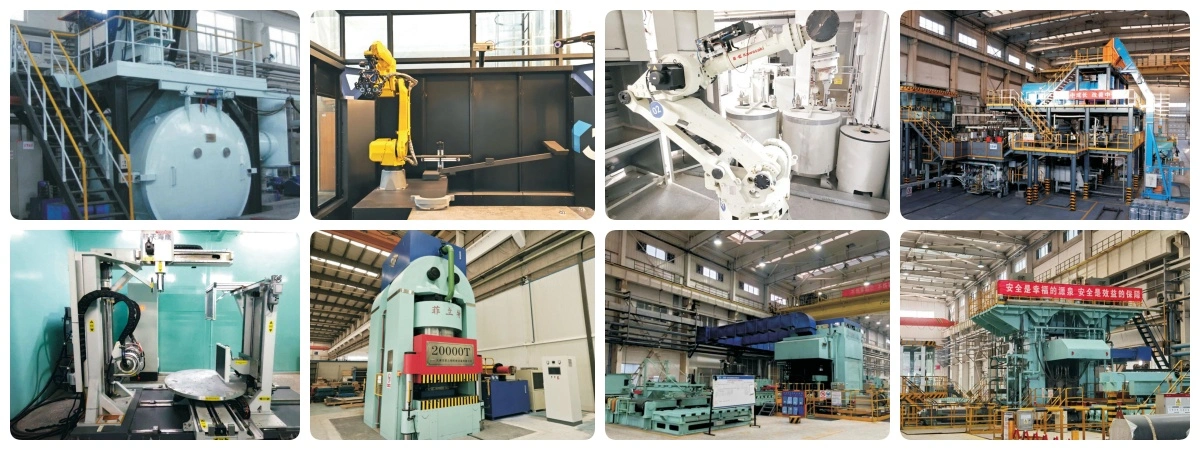
With a complete industrial chain from titanium sponge raw materials, ingot smelting, precision casting to finished surface treatment and stable semi-finished product inventory, we ensure consistent batch quality and controllable delivery cycles, effectively supporting customers’ stable production schedules.
We provide a 12-month official product warranty and 24/7 professional technical after-sales support to quickly respond to customer post-order demands and technical consultation.
FAQ
Q1: Why is Gr23 ELI titanium more suitable for prosthetics than standard Gr5?
A: Gr23 ELI titanium has lower interstitial elements such as oxygen and iron, with improved ductility and fracture toughness. It effectively resists sudden brittle fracture and structural damage caused by unpredictable impact, fully adapting to complex daily movement scenarios of prosthetic users.
Q2: Are your titanium prosthetic parts MRI compatible?
A: Yes. Titanium is non-ferromagnetic and will not interfere with MRI magnetic fields or cause safety risks. Only minor local imaging artifacts may occur, which does not affect medical examination.
Q3: Titanium vs carbon fiber for prosthetic components?
A: Carbon fiber features lighter weight but is prone to sudden brittle fracture. Titanium has isotropic stable strength, making it more suitable for load-bearing joints and adjustable connecting structures with higher safety requirements.
Q4: What causes creaking noise of titanium prosthetic adapters?
A: Abnormal noise is usually caused by non-standard screw torque or assembly debris, rather than material failure. Titanium hardware requires assembly torque strictly in accordance with ISO standards to ensure stable fitting.
Q5: Do titanium prosthetic component require daily special maintenance?
A: No special maintenance is required. The natural TiO₂ oxide layer provides lasting corrosion resistance. Simply rinsing with clean water after exposure to saltwater or chlorine water can maintain component performance.
Q6: Do you support non-standard customized prosthetic parts?
A: Yes. We support full OEM customization, with maximum casting size up to φ1500mm × 600mm and minimum wall thickness of 0.4mm. We can process exclusive components according to customer drawings and customized medical standards.
Contact Us
If you are looking for manufacturers of high-precision medical-grade Titanium Prosthetic Components for product iteration and batch procurement, please contact our professional technical team via srt@sunrui-ti.com.
