Titanium Turbine
Grade: Gr2, Gr3, Gr5, Gr1, Gr12, Gr7, Gr9, Gr23
Min. casting wall thickness: 0.4mm
Max. casting size: φ 1500mm × 600mm
Casting weight: 0.1~100kg
Surface roughness: Ra3.2~6.3μm
Executive standards: BMS 7-310, BMS 7-336, ASTM B367, GBIT 15073, GB/T 6614, GJB 2896A-2007, YY0117.3-2005, YY0117.1-2005
Titanium Turbine Precision Castings — High-Strength Lightweight Solutions for Aerospace, Marine & Industrial Applications
Titanium Turbine Precision Castings are made for spinning equipment that needs to be very precise, have strong structure performance, and be for a long time. Sunrui Titanium has been making titanium professionally for more than 60 years. Its roots are in the CSSC Luoyang Ship Material Research Institute. For making turbine parts, we use a number of high-performance titanium alloys, such as Gr2, Gr3, Gr5 (Ti-6Al-4V), Gr7, Gr9, Gr12, and Gr23. Our casting method can handle walls as thin as 0.4 mm, single pieces weighing between 0.1 kg and 100 kg, and making sizes up to 1500 mm x 600 mm at their widest point. The surface roughness is kept stable at Ra3.2–6.3μm, which meets all aircraft, marine, and commercial standards as well as official standards like ASTM B367, GJB 2896A-2007, and BMS 7-310.
What Makes a Titanium Turbine Different from Standard Turbine Components?
Turbine parts aren't just light alternatives to steel or nickel-based superalloy parts; they're also the best technical solutions for situations with a lot of load and a lot of speed.
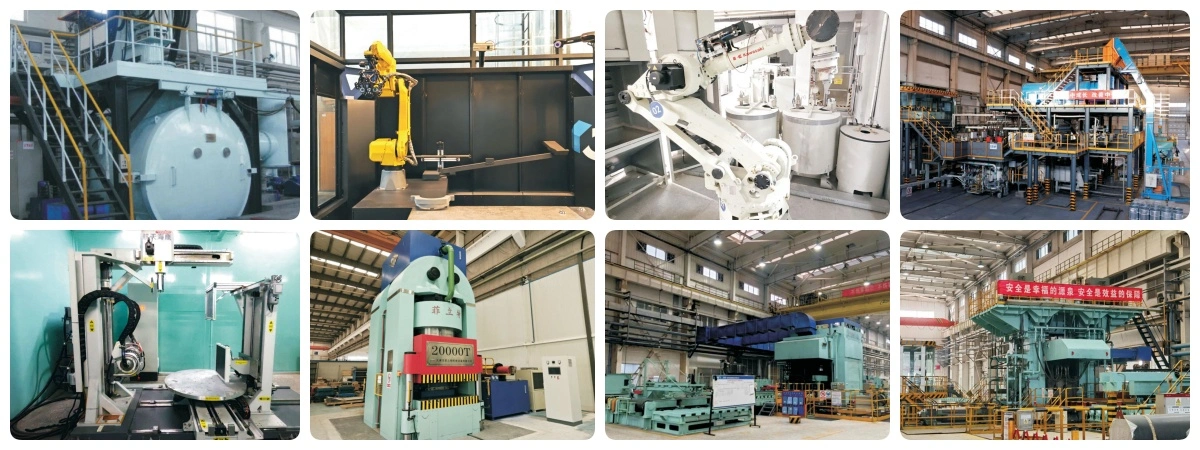
Titanium can mix with oxygen, nitrogen, and carbon when it is heated up to very high temperatures. To make sure the metal structure is pure, Sunrui Titanium uses professional vacuum heat treatment processes and large vacuum casting furnaces (up to 1500 kg per heat) to get rid of interstitial contamination and keep turbine blades from getting structural damage.
Titanium naturally forms a thick, stable film of TiO₂ oxide, which makes it very resistant to corrosion by chloride, saltwater, and acids. Our product Precision Castings are very useful in harsh marine and offshore environments where regular metal parts tend to break down over time because of this one-of-a-kind benefit.
Material Grades and Technical Specifications
We provide a complete lineup of engineering titanium alloys, supporting targeted material matching according to different equipment operating conditions and performance requirements.
Material Grades and Technical Specifications
Sunrui Titanium supports a full range of engineering-grade titanium alloys to match your specific operating conditions.
| Parameter | Details |
|---|---|
| Available Grades | Gr1, Gr2, Gr3, Gr5, Gr7, Gr9, Gr12, Gr23 |
| Min. Casting Wall Thickness | 0.4 mm |
| Max. Casting Size | φ 1500 mm × 600 mm |
| Casting Weight Range | 0.1 – 100 kg |
| Surface Roughness | Ra 3.2 – 6.3 μm |
| Tensile Strength (Gr5 / Ti-6Al-4V) | 895 – 1100 MPa |
| Max. Operating Temp. (TiAl variant) | Up to 600 – 750°C |
| Executive Standards | ASTM B367, BMS 7-310, BMS 7-336, GB/T 15073, GB/T 6614, GJB 2896A-2007, YY0117.1/3-2005 |
For high-temperature working scenarios such as turbocharger impellers and aero-engine compressor components, Titanium Aluminide (TiAl) materials maintain stable structural performance at 600–750°C, delivering far better thermal cycle resistance than standard Ti-6Al-4V alloy.
Core Performance Advantages
Sunrui’s Titanium Turbine Precision Castings feature four core performance strengths, fully meeting the high-standard procurement demands of B-end industrial and aerospace customers.
High Specific Strength
Titanium alloy a much higher strength-to-weight ratio than stainless steel and nickel-based superalloys. It effectively reduces centrifugal stress during high-speed rotation and avoids component failure caused by extreme load, ensuring stable operation of rotating equipment.
Corrosion Resistance
The passive TiO₂ protective layer resists pitting corrosion and crevice corrosion in saline and chemical environments. Practical marine application data proves that titanium parts have a service life more than 3 times longer than traditional steel components.
Wide Temperature Adaptability
Titanium alloys maintain stable mechanical properties in both high-temperature heat environments and ultra-low temperature cryogenic scenarios, applicable for high-heat exhaust components and cryogenic fuel system parts of turbine equipment.
Fatigue & Creep Resistance
We adopt professional shot peening treatment on blade roots and airfoil surfaces to form compressive residual stress on the material surface, inhibiting crack initiation and propagation, and greatly extending the cycle service life of high-load turbine components.
Applications Across Critical Industries
Our precision titanium castings are widely used in three core high-reliability industrial fields:
Aerospace Propulsion
Applied to aero-engine compressor components, titanium blades withstand extreme centrifugal force and severe temperature gradient changes. The lightweight design effectively improves aircraft fuel efficiency. The product dimensional accuracy reaches CT8, exceeding the industry standard CT9 requirement, fully adapting to aerospace high-precision assembly standards.
Marine and Offshore Engineering
Suitable for turbocharger supporting parts of marine vessels and offshore power equipment. Titanium's seawater corrosion resistance avoids premature aging and failure problems of stainless steel parts in long-term salt spray and seawater immersion environments, reducing equipment maintenance frequency and replacement cost.
High-Performance Automotive Turbocharging
Compared with Inconel alloy impellers, TiAl wheels reduce rotational inertia by 50%. They realize faster turbo response, more stable thermal cycle performance and lower bearing wear, bringing significant performance advantages for racing cars and high-end OEM passenger vehicles.

Quality Control and Inspection Standards
All titanium turbine castings go through strict multi-process inspection and verification before they are sent out. This is to make sure that there are no defects in them for high-end equipment support applications.
Fluorescent Penetrant Inspection (FPI): This is done according to the ASTM E1417 standard to find tiny cracks and holes on the surface that could get bigger when they are stressed.
5-Axis CMM Precision Inspection: Use CAD models to calibrate complex blade profiles with control down to the micron level to ensure aerodynamic accuracy and assembly conformity.
PMI Spectroscopic Analysis: Make sure that the chemistry make-up of each batch of metals meets all AMS and ISO standards.
Balancing Testing: Use a balancing treatment of ISO G0.4 or G1.0 to get rid of equipment shaking and harmonic interference when running at high speeds.
X-ray radiographic testing: Look for internal shrinking holes and impurity spots in casts to get rid of any secret structural problems before they are further processed.
Sunrui Titanium has certifications from AS9100, NADCAP, ABS, TUV, PED, NORSOK, and other international bodies. This means that they can help with compliance certifications and full product traceability for projects in aerospace, marine, and pressure equipment.

FAQ
Q1: What are the advantages of titanium wheels over Inconel parts?
A: TiAl wheels reduce rotational mass by up to 50% compared with Inconel alloys. They effectively lower moment of inertia and bearing wear, achieving faster transient response, which is highly suitable for turbocharger and aero-engine compressor scenarios.
Q2: What is the maximum working temperature of titanium castings?
A: Standard Gr5 (Ti-6Al-4V) parts adapt to working temperatures of 350–400°C. TiAl alloy stably operates at 600–750°C, meeting the high-temperature service requirements of high-performance turbochargers and aerospace equipment.
Q3: How does Sunrui avoid hydrogen embrittlement of titanium components?
A: We adopt vacuum annealing and standardized chemical milling processes, combined with strict interstitial element detection, to effectively prevent hydrogen absorption and avoid material embrittlement during production.
Q4: What processes can improve the fatigue life of turbine blades?
A: Professional shot peening is applied on blade roots and airfoils to form surface compressive stress, restrain crack growth, and improve the fatigue resistance and overall service cycle of turbine parts.
Q5: Do you support customized titanium castings?
A: Yes. We support full OEM customization of all titanium grades from Gr1 to Gr23, with customizable casting size (max φ1500mm × 600mm) and weight (0.1–100kg) to meet non-standard structural and dimensional requirements.
Q6: How does saltwater environment affect the service life of turbine components?
A: Titanium is immune to saltwater pitting and crevice corrosion. In actual marine working conditions, its service life is more than 3 times that of traditional steel components, with extremely stable environmental adaptability.
Contact Us
If you have demands for batch procurement, technical consultation and customized development of Titanium Turbine, please contact our professional technical team via srt@sunrui-ti.com.
