3D Printed Manifold
Grade: Gr2, Gr3, Gr5, Gr12
Min. wall thickness: 0.5mm
Executive standards: ASTM B367, GJB 2896A-2007
3D Printed Manifold for Aerospace & Industrial Applications — Precision Additive Manufacturing Solutions
Sunrui Titanium's 3D Printed Manifold pushes the boundaries of traditional fluid system design and manufacturing. Adopting advanced powder bed fusion technology, our titanium manifolds integrate internal channels into a complete monolithic structure. This structure effectively eliminates assembly joints, greatly reduces fluid leakage risks and achieves remarkable weight reduction. We provide multiple titanium grades including Gr1, Gr2, Gr3, Gr5, Gr7, Gr9, Gr12 and Gr23. With a minimum wall thickness of 0.5 mm, a standard build volume of 650 × 650 × 850 mm and a maximum processing size of 1,500 mm, our products fully meet the rigorous application requirements of aerospace, subsea engineering and industrial equipment fields.
What Is a Titanium 3D Printed Manifold?
Additive produced titanium manifolds are a world apart from standard goods fabricated by CNC drilling or brazing procedures. Internal sharp angle junctions, many connection interfaces and bulky block architectures with intrinsic performance shortcomings can only be achieved by conventional manufacturing processes.
We use laser powder bed fusion (L-PBF) and electron beam melting (EBM), mature technologies that stack and fuse titanium powder layer by layer, utilizing topologically optimized digital models. The final 3D Printed Manifold has integrated shaping and smooth curved interior flow channels which cannot be manufactured by standard subtractive machining processes.
This design flexibility translates into real performance benefits for the end user such as decreased fluid pressure drop, reduced flow turbulence, minimal leakage locations and considerably simplified product material lists.
Key Technical Specifications
| Parameter | Details |
|---|---|
| Available Grades | Gr1, Gr2, Gr3, Gr5, Gr7, Gr9, Gr12, Gr23 |
| Minimum Wall Thickness | 0.5 mm |
| Standard Build Volume | 650 × 650 × 850 mm |
| Maximum Part Size | 1,500 mm |
| Executive Standards | ASTM B367, GJB 2896A-2007 |
| As-Printed Surface Roughness | Ra 10–15 μm |
| Post-Processed Surface Finish | Below Ra 3.2 μm (via AFM) |
| Dimensional Tolerance | ±0.05 mm (CMM or 3D scan verified) |
| Metallurgical Density | Typically ≥ 99.8% |
Material Performance and Design Advantages
Titanium alloy is the optimal material for manufacturing precision manifolds, thanks to its ultra-high strength-to-weight ratio and corrosion resistance. Among all grades, Ti6Al4V (Gr5) is widely recognized and applied in the aerospace industry for its premium mechanical properties. It is noteworthy that titanium will react intensely with oxygen, nitrogen and carbon under high-temperature conditions. Therefore, all printing and post-processing procedures of our 3D Printed Manifold are completed under strictly controlled atmospheric environments to ensure product stability.
The additive manufacturing process also optimizes the internal microstructure of products. With scientific build orientation setting, 3D printed titanium parts deliver higher tensile strength than castings, providing guarantee for hydraulic equipment and high-pressure systems that require fatigue resistance.
Different from traditional processes, 3D printing requires no mold development. Customers’ customized designs can be converted into finished and inspected components within just a few days. This advantage makes the solution perfectly suitable for rapid prototyping, small-batch production and personalized engineering projects.
Quality Control and Inspection Process
The stability and reliability of product performance are guarantyd by rigorous multi-stage inspection and quality verification methods for every titanium manifolds produced by Sunrui Titanium.
CT Scanning The primary non-destructive testing technique to evaluate interior channel dimensions, remove residual powder and identify internal porosity. This is an essential inspection step for fluid conveying components.
Pressure Testing: Conducted as per ISO 19878 standard includes proof pressure and burst pressure tests to determine structural stability for normal operation and instantaneous pressure.
Surface finish verification: After the AFM post-treatment, the surface finish is verified by profilometer measurements to confirm that the interior surface roughness is lower than Ra 3.2 μm, which is necessary to satisfy high fluid and cleanliness criteria.
Dimensional Inspection: Full size detection is carried out using CMM or 3D scanning technology with accuracy tolerance up to ±0.05mm to ensure perfect assembly and 0% leakage matching with client systems.
Tensile and fatigue testing of process test coupons confirms that the additive manufacturing process is completely compliant with AMS 7003 and related industry norms.
Also all completed parts will be vacuum stress relieved or Hot Isostatic Pressing (HIP) to remove internal residual stress to ensure long term dimensional stability.

Applications Across Demanding Industries
With performance, our additive manufactured titanium manifolds are widely used in multiple high-standard and harsh working condition industries.
Aerospace Hydraulic Systems: The integrated manifold structure replaces dozens of scattered parts, adapting to extreme vibration and cyclic pressure working environments, and perfectly fits the compact installation space of aircraft structures. Compared with traditional block manifolds, the weight can be reduced by 30%-70%.
Subsea Oil & Gas: The product resists deep-sea high pressure and strong chemical corrosion. Applied to high-pressure chemical injection systems, it completely avoids stress corrosion cracking risks caused by traditional welded joints.
Automotive Racing and EV Thermal Management: The bionic internal flow channel structure optimizes the circulating cooling effect of battery packs and engine blocks, effectively improving heat transfer efficiency and ensuring stable operation of high-performance vehicles in high-temperature thermal environments.

Why Choose Sunrui Titanium for Your Manifold Project?
Sunrui Titanium over 60 years of professional titanium material R&D and manufacturing experience. We have built a complete industrial supply chain from titanium sponge and ingot processing to precision finished parts, realizing full-process quality control from raw materials to final products.
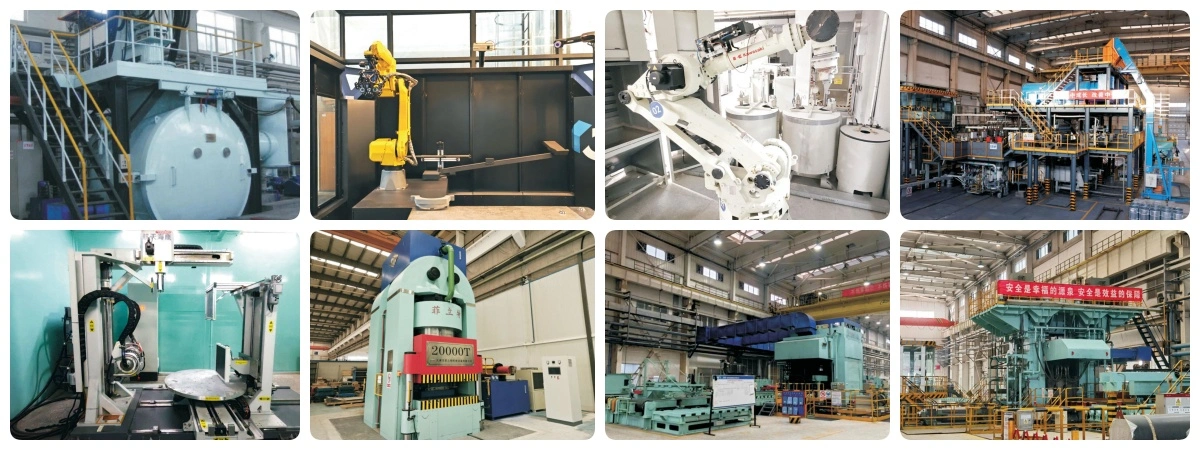
Our fully automated intelligent production lines, multi-robot collaborative operation and full-process real-time monitoring system ensure stable product quality and high yield rate. We have obtained authoritative certifications including AS9100, NADCAP, PED, ABS, TUV and NORSOK, fully complying with global high-end industrial quality standards.
Customization service is our core advantage. We support personalized prototype customization and stable small-batch OEM mass production. Equipped with a professional engineering team, we provide one-stop technical consultation, sample testing and 12-month official quality warranty services for all projects.
FAQ
Q1: How does the internal surface finish of Printed Manifolds compare with CNC machined ones?
A: The as-printed internal surface roughness is Ra 10–15 μm. After AFM or chemical polishing post-treatment, the surface finish can reach below Ra 3.2 μm, which is equivalent to or even better than traditional CNC drilled channels.
Q2: Are these titanium manifolds applicable for high-pressure hydraulic working conditions?
A: Yes. We adopt high-strength titanium alloy materials and customized wall thickness design according to customer working parameters. Our manifolds can fully adapt to various high-pressure hydraulic service environments and pass relevant professional pressure certification tests.
Q3: What is the production lead time for custom Printed Manifolds?
A: Without mold opening procedures, the whole process from design confirmation to finished product delivery only takes several days for prototypes and small-batch orders. The specific lead time depends on product complexity and post-processing requirements.
Q4: How do you eliminate residual stress of printed titanium manifolds?
A: All finished products will undergo vacuum stress relief or Hot Isostatic Pressing (HIP) treatment to completely eliminate internal residual stress and ensure long-term dimensional stability during service.
Q5: How to ensure no residual powder inside the internal channels?
A: We adopt ultrasonic cleaning and automatic vibration cleaning processes, combined with CT/X-ray non-destructive testing, to ensure 100% removal of residual powder inside channels before delivery.
Q6: How to select the suitable titanium grade for my project?
A: We provide 8 mainstream titanium grades including Gr1, Gr2, Gr3, Gr5, Gr7, Gr9, Gr12 and Gr23. Our professional engineers will recommend the most suitable grade based on your required strength, corrosion resistance and actual operating environment.
Contact Us
If you have any demands or consultation for customized 3D Printed Manifold projects, please feel free to contact our professional engineering team via srt@sunrui-ti.com.
