3D Printed Turbine Blades
Grade: Gr2, Gr3, Gr5, Gr12
Min. wall thickness: 0.5mm
Executive standards: ASTM B367, GJB 2896A-2007
3D Printed Turbine Blades for Aerospace & Industrial Applications — Precision Titanium Additive Manufacturing Solutions
Sunrui Titanium uses professional titanium additive manufacturing technology to make high-performance 3D Printed Turbine Blades. This technology lets them make complex structural designs that aren't possible with traditional casting methods. Our goods have walls that are at least 0.5 mm thick, and the normal printer build size is 650 × 650 × 850 mm. The largest special workpiece size that can be made is 1,500 mm. By using mold-free production, we cut the time it takes to make and deliver a product by a large amount. We work with different types of titanium, such as Gr1, Gr2, Gr3, Gr5, Gr7, Gr9, Gr12, and Gr23. All steps in the production process are done exactly according to ASTM B367 and GJB 2896A-2007 standards. This makes sure that the precision parts are stable and for use in spacecraft propulsion, industrial power generation, and marine equipment.
What Are 3D Printed Turbine Blades?
Turbine blades always have to work in harsh conditions, like places with very high temperatures, fast rotation, and gas impacts that eat away at metal. Traditional investment casting has been used to make blades for a long time, but it has some clear problems, such as high costs for tools, a long lead time for development, and strict geometric design limits.
These rules are broken completely by titanium additive manufacturing. The metal 3D printing technologies we use are L-PBF (Laser Powder Bed Fusion) and EBM (Electron Beam Melting). We use high-purity titanium alloy powder to build blades layer by layer.
This new way of making things fixes three big problems with the old way of making blades: the fact that it's hard to work with complicated cooling lines inside the blade, custom equipment takes 12 to 18 months and costs a lot, and subtractive cutting wastes a lot of material.
Key Technical Advantages
Design Freedom That Casting Cannot Match
3D printing allows one-piece integrated forming of precision structures such as internal cooling channels, lattice lightweight structures and film cooling holes during the manufacturing process. These complex customized structures cannot be realized by conventional casting and machining methods.
It transforms the traditional "design for manufacturing" concept into "design for performance", providing greater optimization space for blade aerodynamic efficiency and internal thermal management, which is for upgrading turbine overall performance.
Metallurgical Properties
Titanium alloy is highly active under high temperature and prone to chemical reactions with oxygen, nitrogen and carbon. Sunrui Titanium adopts strict vacuum and inert gas protection printing environments to avoid material contamination and ensure full density and pure metallurgical structure of finished parts.
The titanium microstructure formed by professional additive manufacturing has more stable and higher tensile strength than traditional castings. Combined with HIP hot isostatic pressing post-treatment, the material density can reach over 99.8%, greatly reducing internal porosity and ensuring structural integrity and fatigue resistance of 3D Printed Turbine Blades.
Speed and Flexibility for Small-Batch Production
Mold-free production eliminates tooling opening and debugging procedures, realizing rapid delivery from design drawings to finished products within only a few days. It is highly suitable for multiple B-end business scenarios: rapid verification of new blade structure prototypes, small-batch customized mass production, and urgent replacement of non-standard specification parts.
3D Printed Turbine Blades Specifications
| Parameter | Details |
|---|---|
| Available Grades | Gr1, Gr2, Gr3, Gr5, Gr7, Gr9, Gr12, Gr23 |
| Minimum Wall Thickness | 0.5 mm |
| Standard Build Size | 650 × 650 × 850 mm |
| Maximum Part Size | 1,500 mm |
| Executive Standards | ASTM B367, GJB 2896A-2007 |
| Manufacturing Process | L-PBF / EBM Additive Manufacturing |
| Post-Processing | HIP, heat treatment, machining, surface finishing |
| Customization | OEM, custom geometry, grade selection available |
Quality Control You Can Trust
To make sure that all parts meet high-standard industrial and aerospace application requirements before delivery, we use a full multi-stage, stringent inspection system for every batch of 3D Printed Turbine Blades.
CT scanning can accurately find internal flaws, inclusions, and blocked cooling channels that can't be seen by looking at the surface. This makes sure that the structure is compact inside.
Fluorescent Penetrant Inspection (FPI): Look for small surface cracks and structural breaks to make sure the blades' surfaces are completely solid.
CMM and Blue Light Scanning: Check the finished parts' dimensions against the original CAD model to make sure that the aerodynamic shapes are accurate to the micron level.
Microstructural Analysis: Find the internal grain orientation and harmful impurity phases to get rid of any risks of fatigue failure.
Destructive Testing: Run stress rupture and fatigue cycle tests on the product to make sure that its life span and mechanical properties match the needs of the different turbine stages.
Sunrui Titanium has a number of important international certifications, such as AS9100, NADCAP, PED, ABS, TUV, and NORSOK. All of the custom parts they make come with quality system certification.

Application Areas
Aerospace Propulsion: Using additive manufacturing to make turbine blades that are lighter and have more precise internal structures can improve the engine bypass ratio, lower overall weight, and lower fuel consumption. This is exactly what turbofan engines need to improve their performance.
Industrial Gas Turbines (IGT): Customized internal cooling channel structures allow higher inlet operating temperatures for power generation equipment. This increases the efficiency of combined cycle power generation and makes sure that the blades have a long and stable service life.
Marine and Turbocharging: Our customized small-batch blade structures get rid of the traditional cost and cycle limits of traditional tools for high-performance marine engines and large turbocharging equipment. This makes customer product iteration and engine performance optimization much faster.

Why Choose Sunrui Titanium?
Derived from the titanium R&D department of CSSC Luoyang Ship Material Research Institute, Sunrui Titanium over 60 years of professional titanium material research and manufacturing experience.
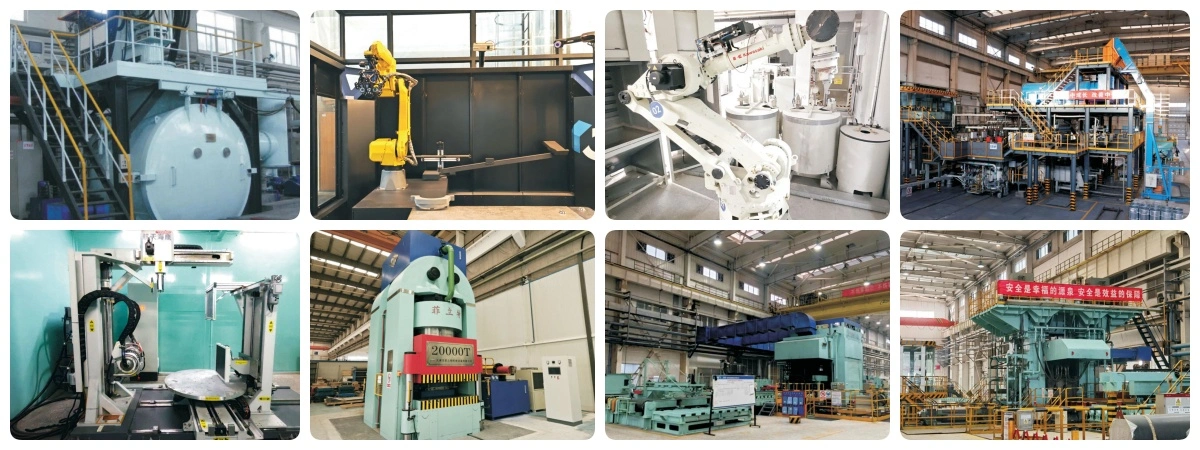
We own a complete vertical industrial chain covering titanium sponge, titanium ingot processing to finished precision parts. Equipped with fully automated robotic production lines and high-precision vacuum melting equipment, we ensure stable material quality and consistent batch production yield.
For global B2B customers, we are an integrated one-stop supplier covering material selection, additive printing manufacturing, precision post-processing, full quality inspection and global logistics delivery, greatly simplifying your procurement and project management process.
FAQ
Q1: How much faster is it to make a 3D-printed turbine blade than a cast one?
A: Usually, hand-made metal blade tools take 12 to 18 months. Our additive manufacturing process doesn't need molds, so sample parts can be made in just a few days or weeks. This cuts down on the time it takes for R&D and iterations by a large amount.
Q2: How is the finish on the surface of printed blades compared to parts that are cast?
A: Surfaces that have been printed are pretty rough. After professional post-processing steps like abrasive flow machining and electrochemical finishing, the surface roughness can reach Ra = 0.8µm, which is better than the standard requirements for casting surface quality.
Q3: What types of titanium can be used to make rotor blades?
A: Gr5 (Ti-6Al-4V) is the grade that is most often used for standard high-load turbine structural parts. Gr23 (ELI grade) can be used in situations where ultrahigh toughness is needed. The final grade can be changed based on the temperature, load, and environment of the actual operation.
Q4: Do you allow special blade shapes that aren't standard?
A: Yes. The mold-free printing method works with all custom geometric shapes. Customers only need to give us CAD models or technical specifications, and we'll take care of everything else, from optimizing the answer to production and post-processing.
Q5: How do you make sure that the quality of the titanium powder stays stable?
A: Every batch of titanium powder goes through strict morphological inspection and chemical makeup testing to get rid of any flaws. This keeps the melting point fixed and makes sure that finished parts have the same density and mechanical properties.
Q6: What kind of good documents can you give me to check the project?
A: We give full material traceability files, inspection reports for CT, FPI, and CMM machines, data from mechanical performance tests, and standard compliance certificates. Customized papers can be sent based on the needs of the customer's project report.
Contact Us
If you have project demands for prototype verification, small-batch customization and mass procurement of high-precision 3D Printed Turbine Blades, please send your engineering drawings and technical specifications to our professional team via srt@sunrui-ti.com.
