Annealed Titanium Plate
Slab
Forged slab: (70~300)x1400x10000
EB ingot: 200x1290/1090x(1000~6200)
Hot rolled plate: (2.5~60)x(600~2500)x(1000~8000)
Cold rolled plate: (0.4~4.0)x(600~2500)x(1000~4000)
Hot rolled coil: (3.0~12)x(1000-1500), max coil weight 7 ton
Cold rolled coil: (0.4~4.0)x(1000~1500), max coil weight 6 ton
Material Grade: GR1, GR2, GR3, GR4, GR5, GR6, GR7, GR9(AB-5), GR12, Ti-811, Ti-15333, SP- 700, Ti-6242, etc.
Specification: GB, GJB, ASTM, ASME, AMS, DIN, JIS standards or industry standards and enterprise standards
Annealed Titanium Plate for Industrial & Aerospace Applications — Precision-Rolled, Vacuum-Treated Solutions
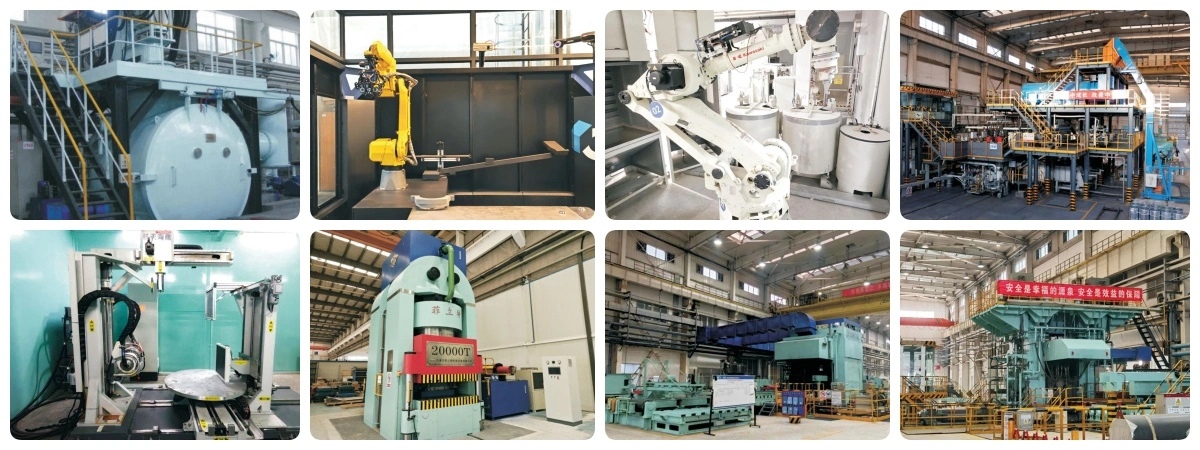
Sunrui Titanium’s Annealed Titanium Plate is a professional processed flat rolled titanium plate, made by stringent vacuum annealing process. We heat the rolled titanium plate to the recrystallization temperature and then use a controlled slow cooling technique to completely recover the ductility of the material and remove the residual rolling stress. This expert thermal treatment handles efficiently frequent engineering difficulties such as CNC machining springback, stress corrosion cracking and poor secondary formability. We inherit more than 60 years titanium research, development and production expertise from CSSC Luoyang Ship Material Research Institute. We provide a broad product range from cold rolled plates (0.4 mm) to heavy hot rolled plates (60 mm) covering all grades from GR1 to Ti-6Al-4V. All goods are in compliance with worldwide mainstream industrial norms, including ASTM, AMS, ASME, GB, JIS, etc.
What Makes Annealed Titanium Plate Different From Standard Rolled Plate?
Conventional as-rolled titanium plates have noticeable work-hardening effects and residual internal stress produced by hot and cold rolling. The unstable grain structure will readily cause dimensional deviation, processing springback and early fatigue failure during secondary machining and shaping, which considerably raises the production scrap rate.
Titanium plates are vacuum annealed to the interior structure fully. Accurate temperature control is at 700°C-900°C (various alloy grades have different temperature controls). The cooling cycle is standardized; the deformed grain structure is changed to stable and homogeneous equiaxed alpha or alpha-beta microstructure.
The material in the completed state has great dimensional stability and high ductility and is suited for difficult bending, welding and precision machining operations without cracking or distortion. Sunrui only uses complete vacuum annealing furnaces in its manufacturing process. This processing procedure prevents surface oxidation and hydrogen absorption, entirely removes brittle oxygen-enriched alpha case layers, and eliminates the need for additional surface treatment with strong acid pickling.
Technical Specifications
| Product Type | Dimension Range |
|---|---|
| Forged Slab | (70–300) × 1400 × 10000 mm |
| EB Ingot Slab | 200 × 1290/1090 × (1000–6200) mm |
| Hot Rolled Plate | (2.5–60) × (600–2500) × (1000–8000) mm |
| Cold Rolled Plate | (0.4–4.0) × (600–2500) × (1000–4000) mm |
| Hot Rolled Coil | (3.0–12) × (1000–1500) mm, max 7 ton |
| Cold Rolled Coil | (0.4–4.0) × (1000–1500) mm, max 6 ton |
| Item | Details |
| --- | --- |
| Material Grades | GR1, GR2, GR3, GR4, GR5 (Ti-6Al-4V), GR6, GR7, GR9 (AB-5), GR12, Ti-811, Ti-15333, SP-700, Ti-6242 |
| Applicable Standards | GB, GJB, ASTM B265, ASME SB-265, AMS 4911, DIN, JIS |
| Surface Condition | Descaled, pickled, Alpha-Case free |
| Certifications | AS9100, NADCAP, PED, ABS, TUV, NORSOK |
Material Properties You Can Count On
Annealed Titanium Plate has inherited titanium’s physical qualities, with a density of 4.51 g/cm³ — over 60% lighter than steel, yet with specific strength. The vacuum annealing technique optimizes material elongation, which generally varies from 10% to 25% depending on various grades, enhancing the material processability.
The maximum service temperature for commercially pure titanium (grades 1 to 4) is 204°C (400°F). Titanium alloy grades like GR5 (Ti-6Al-4V) can handle working temperatures up to 400°C (750°F), completely satisfying the requirements of high-temperature structural components.
Throughout the whole manufacturing process, we have careful control for interstitial components. The hydrogen concentration is kept below 150ppm to prevent hydrogen embrittlement. Oxygen and nitrogen content is accurately controlled, preventing the danger of high temperature oxidation and impurity pollution. The surface may generate a thick TiO₂ passive layer by itself, which has good corrosion resistance in chloride and oxidizing conditions.
Where Annealed Titanium Plate Performs Best
Aerospace Structures
Materials with stable fatigue resistance and stress corrosion resistance are needed for aerospace bulkheads, wing skins and airframe brackets. The homogeneous and stable microstructure of goods may provide long-term dependable operation of structural sections under high-cycle alternating load, eliminating structural failure hazards.
Chemical & Petrochemical Processing
Industrial pressure vessels, heat exchangers and reaction tanks operate in high temperature and high chloride corrosive environments for a long period. Annealed treatment offers better welding performance and structural stability for titanium plates, and the natural passive layer provides long-term chemical corrosion resistance, completely meeting the ASME SB-265 industrial criteria.
Medical Devices and Implants
Accurate bending and contouring fit is required for orthopedic bone plates, cranial meshes and spinal implants. Products have great ductility, which allows accurate shaping without breaking. It is very biocompatible and is used commonly in medical devices that are implanted for lengthy periods of time.
Marine & Ship Building
Marine saltwater settings are susceptible to pitting and crevice corrosion. Annealed titanium plates GR2 and GR12 have far greater corrosion resistance compared to stainless steel and nickel based alloys, so they are the ideal material for ship and offshore marine equipment.

Quality Control and Supply Reliability
We provide complete-process traceable quality control from titanium sponge raw materials, ingot smelting, rolling, vacuum annealing to surface finishing. Professional ultrasonic testing equipment, precision rolling mills and vacuum annealing manufacturing lines monitor all production connections in real-time.
Every batch of materials given with full MTR mill test results, chemical composition certifications and mechanical performance test records. Incoming inspection and industry compliance audits are easier for customers with authorized certifications such as AS9100, NADCAP and NORSOK.
With a full vertical industrial chain and substantial semi-finished product inventories, we are able to consistently offer standard goods and customized OEM orders. For large-volume bulk purchases, we provide predictable delivery cycles and address the long-term batch procurement demands of worldwide industrial clients.

FAQ
Q1: What is the difference between mill annealed and solution treated & aged titanium plate?
A: Mill annealed (MA) is the standard delivery state with balanced toughness, formability and machinability, suitable for most fabrication and pressure vessel projects. Solution treated & aged (STA) features higher yield strength but lower ductility, usually applied for high-strength structural parts.
Q2: Why choose vacuum annealing instead of air annealing?
A: Vacuum annealing avoids surface oxidation and hydrogen absorption, completely removing brittle alpha case layers. Air annealing will produce oxygen-enriched brittle surface layers, which require additional pickling treatment and may affect surface quality and material performance.
Q3: Is welded processing available for the products?
A: Yes. GR2, GR5 and other mainstream grades support conventional welding with strict argon or helium inert gas shielding. Post-weld stress relief annealing is recommended for the heat-affected zone to restore overall structural uniformity.
Q4: How does plate flatness affect precision machining?
A: Titanium has low elastic modulus. Unqualified flatness will cause vibration during cutting, resulting in dimensional tolerance errors. For precision machining projects, please specify flattened and descaled treatment in accordance with ASTM B265 standards.
Q5: How to select suitable grades for marine and chemical environments?
A: GR2 is the universal grade for conventional corrosion scenarios. GR7 and GR12 are applicable to harsh reducing acid environments, while GR5 is the preferred high-strength grade for marine structural equipment.
Q6: Do you support non-standard customized products?
A: Yes. We support customized dimensions, special grades and surface specifications, providing professional OEM production and one-stop technical services for global customers.
Contact Us
If you are looking for high-stability, stress-free Annealed Titanium Plate for aerospace, chemical, medical and marine projects, feel free to reach out to our professional team via srt@sunrui-ti.com.
