ASTM B265 Titanium Sheet
Slab
Forged slab: (70~300)x1400x10000
EB ingot: 200x1290/1090x(1000~6200)
Hot rolled plate: (2.5~60)x(600~2500)x(1000~8000)
Cold rolled plate: (0.4~4.0)x(600~2500)x(1000~4000)
Hot rolled coil: (3.0~12)x(1000-1500), max coil weight 7 ton
Cold rolled coil: (0.4~4.0)x(1000~1500), max coil weight 6 ton
Material Grade: GR1, GR2, GR3, GR4, GR5, GR6, GR7, GR9(AB-5), GR12, Ti-811, Ti-15333, SP- 700, Ti-6242, etc.
Specification: GB, GJB, ASTM, ASME, AMS, DIN, JIS standards or industry standards and enterprise standards
ASTM B265 Titanium Sheet for Industrial & Aerospace Applications — Precision-Made, Specification-Certified
Sunrui Titanium sells global unified industry standards-compliant ASTM B265 Titanium Sheet. Our products are made from premium EB slabs and come in over 30 grades, from commercial pure titanium to high-performance Ti-6Al-4V titanium alloy. You can choose between hot-rolled and cold-rolled designs. There are thicknesses of 2.5–60 mm and widths of up to 2500 mm for hot rolled sheets. The thicknesses of 0.4–4.0 mm for cold rolled sheets are also available. CSSC-backed titanium R&D and manufacturing experience spanning more than 60 years, along with authoritative certifications such as AS9100, NADCAP, and NORSOK, we provide stable, fully traceable, and standard-compliant Titanium Sheet to support high-demand aerospace and industrial projects.
What Is ASTM B265 Titanium Sheet?
An official standard from ASTM International, ASTM B265 covers annealed titanium and titanium alloy sheets, plates, and strips. There are clear categories in the standard for product shapes based on their sizes. Sheets are materials with a thickness below 4.75 mm and a width above 610 mm; plates are thicker materials over 4.75 mm; and strips are products with a width below 610 mm.
Specifications include strict, unified rules for chemical make-up, tensile mechanical properties, size variations, and full material tracking. In the eyes of global B-end buyers and engineering teams, it successfully standardizes material quality across cross-border supply chains, lowers the risk of structure failure, and ensures the long-term stable operation of parts in acidic, high-load, and safe working conditions.
Key Properties and Technical Performance
Although different grades of ASTM B265 Titanium Sheet have different performance indicators, all of them have the same general physical qualities, such as a melting point of 1660°C and a density of 4.51 g/cm³. In harsh corrosive environments, the naturally occurring passive TiO₂ oxide layer gives the material much better pitting and oxidation resistance than stainless steel.
| Grade | Yield Strength | Tensile Strength | Elongation | Typical Use |
|---|---|---|---|---|
| Grade 1 (CP) | ≥ 170 MPa | ≥ 240 MPa | ≥ 24% | Deep drawing, forming |
| Grade 2 (CP) | ≥ 275 MPa | ≥ 345 MPa | ≥ 20% | General industrial |
| Grade 5 (Ti-6Al-4V) | ≥ 828 MPa | ≥ 895 MPa | ≥ 10% | Aerospace, high-stress |
| Grade 7 | ≥ 275 MPa | ≥ 345 MPa | ≥ 20% | Reducing acid environments |
| Grade 12 | ≥ 345 MPa | ≥ 483 MPa | ≥ 18% | Marine, seawater |
Interstitial element control is critical to mechanical integrity. ASTM B265 strictly limits Nitrogen (N) to 0.03%, Carbon (C) to 0.08%, and Hydrogen (H) to 0.015% — because at elevated temperatures, titanium reacts vigorously with oxygen, nitrogen, and carbon, making contamination prevention essential.
The stable, passive TiO₂ oxide film that forms naturally on titanium surface gives it exceptional immunity to pitting in saltwater and oxidizing acid environments — a key advantage over stainless steel in aggressive service conditions.
ASTM B265 Titanium Sheet Specifications at Sunrui Titanium
| Product Form | Dimensions |
|---|---|
| Forged Slab | (70–300) × 1400 × 10000 mm |
| EB Ingot | 200 × 1290/1090 × (1000–6200) mm |
| Hot Rolled Plate | (2.5–60) × (600–2500) × (1000–8000) mm |
| Cold Rolled Plate | (0.4–4.0) × (600–2500) × (1000–4000) mm |
| Hot Rolled Coil | (3.0–12) × (1000–1500) mm, max 7 tons |
| Cold Rolled Coil | (0.4–4.0) × (1000–1500) mm, max 6 tons |
Available Grades: GR1, GR2, GR3, GR4, GR5, GR6, GR7, GR9 (AB-5), GR12, Ti-811, Ti-15333, SP-700, Ti-6242 and more customized grades.
Supported Standards: ASTM, ASME, AMS, GB, GJB, DIN, JIS and customized enterprise standards.
Where Is ASTM B265 Titanium Sheet Used?
Standard-approved ASTM B265 Titanium Sheet is widely used in key industries with strict performance standards, providing stable practical application value:
Putting chemicals to use
Titanium sheets GR2 and GR7 are great for making high-temperature heat exchangers, pressure tanks, and pipe systems that come into touch with hydrochloric acid and sulfuric acid. Because it contains 0.12–0.25% palladium, GR7 is much more resistant to crevice corrosion than pure titanium grades, which makes it last much longer in less acidic environments.
Engineering in Aerospace
Titanium sheets made of GR5 (Ti-6Al-4V) are the best choice for airplane fuselage panels, engine firewalls, and structural parts that have to hold weight. Its high yield strength (above 828 MPa) and low density make it very light, which helps airplanes use less fuel without sacrificing safety.
Desalination and the sea
GR2 and GR12 sheets are very good at resisting corrosion and biofouling in seawater. They can be used for a long time in offshore platform equipment and desalination plant systems, replacing materials that break down or age.
Medical Tools
Pure titanium grades sold in stores are safe for use in medical equipment and are often used as extra parts next to implant devices because they are non-toxic and highly biocompatible. They also meet strict medical safety standards.

Why Choose Sunrui Titanium?
We have a full industrial chain that includes smelting titanium sponge raw materials, casting EB ingots, hot/cold rolling, and processing finished products. This means that we can fully track the process from raw materials to finished products, which is exactly what regulated industries like aerospace and medical treatment need.
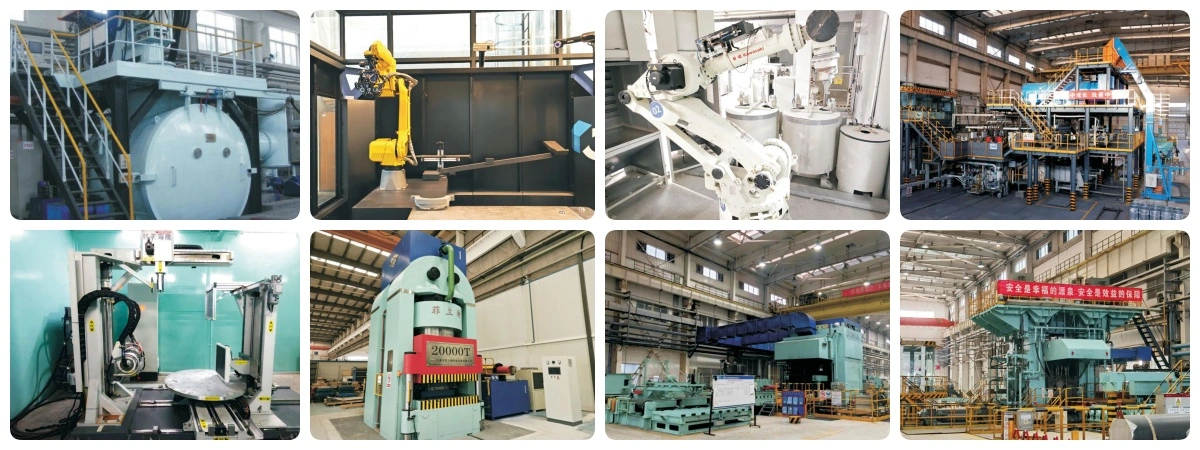
Our production line uses professional EB melting furnaces, vacuum heat treatment equipment, and ultrasonic testing devices, along with full-process quality monitoring to make sure that each batch of products has stable mechanical properties and accurate measurements.
We can customize OEM products and make non-standard items based on customer models and specifications. We can react quickly to large orders and pressing buying needs by having a sufficient collection of semi-finished products that can be delivered steadily and on time.

FAQ
Q1: What goods are covered by ASTM B265 standard?
A: It includes titanium sheet, plate and strip. The unified ASTM B265 requirements cover sheet, which is defined as materials less than 4.75 mm thick and wider than 610 mm; plate, which is defined as materials thicker than 4.75 mm; and strip, which is defined as materials narrower than 610 mm.
Q2: What is the difference between GR1 and GR2 titanium sheets?
A: GR1 has the greatest ductility, appropriate for deep drawing and difficult shaping procedures. It has a good combination of strength and form-ability with great weldability, and is the most adaptable grade for common industrial situations.
Q3: Do you do titanium sheet welding ?
A: Yes. Both TIG (GTAW) and MIG (GMAW) welding may be used. The whole welding process has to be carried out under stringent argon shielding to prevent exposure to air which embrittles the material.
Q4: What are the benefits of GR7 over GR2 for chemical applications?
A: GR7 includes trace amounts of palladium elements, which greatly improve the resistance to crevice corrosion in reducing acid environments, providing a longer service life than regular GR2 titanium sheets for hydrochloric acid and sulfuric acid processing equipment.
Q5: What surface finishing do you offer?
A: We provide many finishes such as normal mill descaled finish, satin polished finish and mirror polished finish and may be modified as per customer’s use and bonding needs.
Q6: Do you accept sizes and particular standards?
A: Yeah. We are able to provide non-standard dimensions and can make goods in accordance with ASTM, AMS, ASME, DIN, JIS and corporate standards to fit your project particular needs.
Contact Us
If you are looking for suppliers of high-precision and standard-certified ASTM B265 Titanium Sheet, feel free to get in touch with our professional team via srt@sunrui-ti.com.
