Expandable Metal
With exceptional corrosion resistance and the highest strength-to-weight ratio of any metal, titanium materials serve numerous fields including chemicals and electronics.
Typical scenarios:
Commonly applied as titanium anodes and filter elements in chlor-alkali production and other chemical sectors.
Expandable Metal for Industrial Filtration & Chemical Applications — Lightweight, Strong, Corrosion-Resistant
High performance Sunrui Titanium provide Expandable Metal custom made for industrial filtration and chemical processing applications. Our enlarged mesh is made of titanium sheets, and has structural integrity, zero-waste forming technique and anti-corrosion performance. Based on more than 60 years of titanium research and development and manufacturing expertise of CSSC Luoyang Ship Material Research Institute, we primarily use ASTM B265 standard GR1, GR2 pure titanium sheet for production. The optional grades may be from GR1 to GR12, including professional titanium alloys. We can provide cold-rolled sheets from 0.4 mm to 4.0 mm in thickness and with a maximum width of 2500 mm. All goods are in compliance with GB, ASTM, ASME, AMS, DIN and other important international standards, to guaranty the stability and consistency of the completed mesh quality for worldwide industrial projects.
What Makes Titanium Expandable Metal Mesh Different
Professional titanium expanded mesh is mostly produced from solid titanium sheets of GR1 and GR2 high purity, different from the ordinary carbon steel and aluminum mesh products. Because of the too high hardness, high strength titanium alloys are not suitable for this procedure to support traditional stamping and expanding forming.
The whole manufacturing process employs synchronized shearing and stretching technologies to uniformly generate diamond-shaped mesh holes on the entire titanium sheet. This special technique does not include any material cutting at all and so generates no scrap waste, with the titanium sheet maintaining its ongoing structural performance.
This zero waste forming process can effectively minimize customers’ procurement cost, each raw material can be turned into final products, no unnecessary waste. The final Expandable Metal keeps titanium’s top-tier strength-to-weight ratio, and its standardized open-hole structure ideally adapts to fluid circulation, precision filtering and electrochemical industrial applications.
Technical Specifications
| Parameter | Details |
|---|---|
| Raw Material | Commercially pure titanium sheet GR1, GR2 (ASTM B265) |
| Material Grades Available | GR1, GR2, GR3, GR4, GR5, GR6, GR7, GR9 (AB-5), GR12, Ti-811, Ti-15333, SP-700, Ti-6242 |
| Cold Rolled Sheet Thickness | 0.4 mm – 4.0 mm |
| Hot Rolled Plate Thickness | 2.5 mm – 60 mm |
| Sheet Width Range | 600 mm – 2,500 mm |
| Cold Rolled Coil Width | 1,000 mm – 1,500 mm |
| Cold Rolled Coil Max Weight | 6 tons |
| Hot Rolled Coil Max Weight | 7 tons |
| Profile Types | Raised (standard), Flattened (cold-rolled smooth surface) |
| Applicable Standards | GB, GJB, ASTM, ASME, AMS, DIN, JIS, enterprise standards |
Raised profile mesh features angled strands, providing anti-slip performance and maximum load-bearing capacity, which is the standard conventional type. Flattened profile mesh is secondary cold-rolled to form a flat and smooth 2D surface, ideal for filter elements, electrode substrates and precision assembly parts with high fitting requirements.
Material Properties You Can Rely On
Expandable Metal has all the physical and chemical qualities of titanium raw materials. It has low density, ultrahigh specific strength and greater structure stability than most of the structural steel materials under the same weight situation.
corrosion resistance that exceeds stainless steel and aluminum materials. The product is entirely biocompatible and can be stably used in saltwater with high chloride content and diverse acid and alkali chemical environments for a long time, therefore avoiding the failure caused by corrosion and aging of typical metal mesh.
This titanium mesh is compatible with normal welding and machining processing, hence compatible with the normal titanium manufacturing processes. It shows consistent performance in long-term thermal cycling and mechanical stress, which guaranties its reliability for chlor-alkali electrolytic cells and industrial filtering systems., its biocompatibility conforms to the criteria of medical device manufacture and its heat resistance and fatigue resistance are beneficial for long-term service in the severe working conditions of aerospace and marine.
Quality Control and Traceability
All Sunrui titanium expanded mesh products are manufactured under process quality control and meet authoritative certifications like as AS9100, NADCAP, PED, ABS, TUV and NORSOK.
We do strict dimensional inspection on each product batch, calibrating key parameters such as SWD (short way of design), LWD (long way of design), flatness and strand bonding integrity, to ensure no fracture or defect at the mesh bonding locations and assure overall uniformity.
All orders are completely traceable to material. We provide authentic Mill Test Reports (MTR) for confirmation of the chemical composition, mechanical qualities and the correct grade information of the raw materials. We have our own ultrasonic testing and precision inspection equipment and thoroughly regulate the product dimensional correctness and structural dependability before delivery.

Applications Across Industrial Sectors
Titanium expanded mesh is widely used as core functional and structural components in various high-standard industrial fields:
Chlor-Alkali Industry
It the core raw material for titanium anode production. With electrical conductivity and chlorine-alkali corrosion resistance, it stably operates in electrolytic cell environments for caustic soda and chlorine production.
Industrial Filtration
The uniform diamond open-hole structure supports filter membrane support, resisting high pressure difference and aggressive chemical fluid impact. Its self-draining design effectively avoids liquid accumulation and improves filtration efficiency and stability.
Chemical Processing
Applied as separation components, flow diffusers and structural reinforcing parts for chemical equipment, adapting to non-reactive and high-purity industrial production requirements.
Marine & Offshore Engineering
Relying on chloride corrosion resistance, it is used for seawater filtration equipment and marine anti-corrosion structural mesh panels.
Electrochemical & Electronic Industry
Custom micro titanium mesh is applicable for scenarios requiring continuous and stable surface conductivity of components.

Customization and Supply Capability
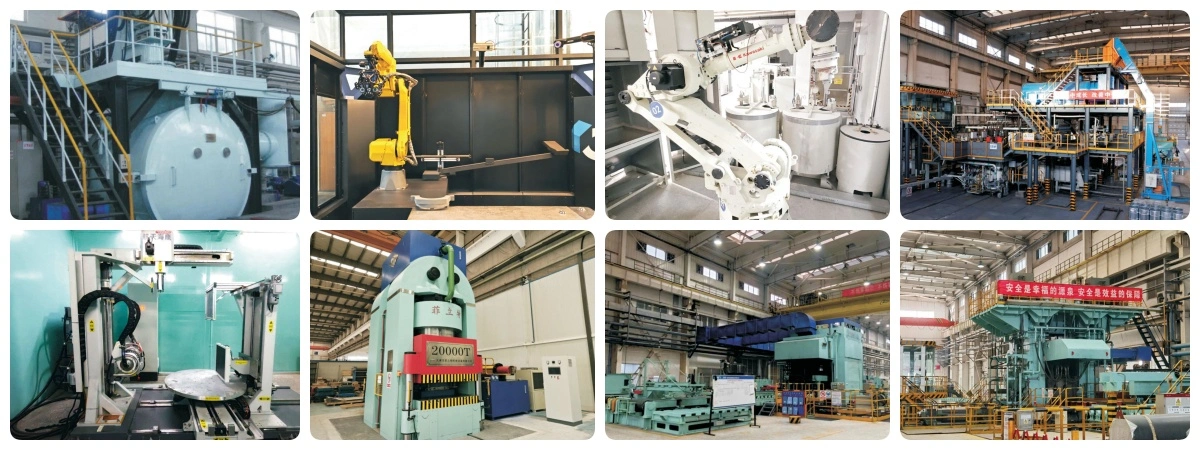
Sunrui Titanium owns a complete industrial chain covering titanium sponge smelting, ingot processing, sheet rolling and finished mesh production. The whole production process is independently controlled, ensuring traceable raw materials and stable batch quality.
We support global OEM customized services. According to customer engineering design requirements, we can customize exclusive mesh LWD/SWD specifications, sheet thickness and professional surface treatment processes.
Sufficient semi-finished product inventory supports large-scale batch procurement and short-cycle urgent orders. We cooperate with mature global logistics systems to provide safe, efficient and cost-effective door-to-door delivery services.
FAQ
Q1: Which titanium grades are suitable for expanded mesh production?
A: GR1 and GR2 commercial pure titanium are the mainstream choices. These two grades feature ductility to support expanding and stamping forming, while retaining premium corrosion resistance. High-hardness titanium alloys are not suitable for mesh processing.
Q2: What is the difference between raised and flattened titanium mesh?
A: Raised mesh has angled strands with higher strength and anti-slip performance for general structural and anti-skid scenarios. Flattened mesh is cold-rolled into a smooth flat surface, more suitable for precision filter elements and electrode substrate production.
Q3: Can titanium expanded mesh be used in chlor-alkali production environments?
A: Yes, it is one of the most typical application scenarios. Titanium mesh effectively resists corrosion from chlorine gas and caustic soda, and is the standard anode material for chlor-alkali electrolytic cells.
Q4: What quality documents can you provide for orders?
A: We provide complete Mill Test Reports, including chemical composition analysis, mechanical property test data and grade certification, with full batch traceability compliant with AS9100 and NADCAP quality systems.
Q5: What thickness options are available for base titanium sheets?
A: Cold-rolled sheets are available in 0.4–4.0 mm, and hot-rolled plates cover 2.5–60 mm. Customers can select suitable raw material thickness according to mesh strength and application requirements.
Q6: Do you support custom mesh sizes for industrial filters?
A: Absolutely. We provide full OEM customization, supporting personalized adjustment of mesh specifications, thickness, profile type and dimensions to match your filter equipment and electrolytic cell design standards.
Contact Us
If you need technical parameter consultation, sample testing or customized quotation of Expandable Metal, please contact our professional technical team via srt@sunrui-ti.com.
