Medical Titanium Plate
Slab
Forged slab: (70~300)x1400x10000
EB ingot: 200x1290/1090x(1000~6200)
Hot rolled plate: (2.5~60)x(600~2500)x(1000~8000)
Cold rolled plate: (0.4~4.0)x(600~2500)x(1000~4000)
Hot rolled coil: (3.0~12)x(1000-1500), max coil weight 7 ton
Cold rolled coil: (0.4~4.0)x(1000~1500), max coil weight 6 ton
Material Grade: GR1, GR2, GR3, GR4, GR5, GR6, GR7, GR9(AB-5), GR12, Ti-811, Ti-15333, SP- 700, Ti-6242, etc.
Specification: GB, GJB, ASTM, ASME, AMS, DIN, JIS standards or industry standards and enterprise standards
Medical Titanium Plate for Surgical & Implant Applications — Biocompatible Solutions by Sunrui Titanium
Sunrui Titanium offers high-purity Medical Titanium Plate that is for surgical tool fabrication, internal bone fixation and permanent prosthetic implant applications where biocompatibility and mechanical performance are required. With more than 60 years’ experience in titanium manufacture acquired from CSSC Luoyang Ship Material Research Institute, all of our medical-grade plates are made by professional vacuum arc remelting (VAR) or electron beam (EB) melting procedures to guaranty ultra-low impurity content. We provide a broad variety of grades from GR1 to GR5 and specific medical alloys with cold rolled thicknesses beginning from 0.4 mm and hot rolled plates up to 60 mm. All items thoroughly conform with major worldwide medical industry norms such as GB, ASTM, AMS.
What Makes Titanium the Right Choice for Medical Applications?
Standard material: Because of its biological safety and capacity to shield against stress, titanium is the recognized standard for contemporary medical implants.
Bone compatibility: Implants can spread mechanical stress equally and prevent tissue atrophy and bone resorption brought on by excessively stiff alloys since their elastic modulus (~110 GPa, roughly half that of stainless steel's 200 GPa) nearly matches cortical bone.
In order to prevent metal ion release and tissue irritation, passive TiO₂ coating naturally forms a thick, long-lasting inert layer that ensures long-term osseointegration and eliminates metallosis and immunological rejection.
Medical Titanium Plate Specifications
| Parameter | Details |
|---|---|
| Forged Slab | (70~300) × 1400 × 10000 mm |
| EB Ingot | 200 × 1290/1090 × (1000~6200) mm |
| Hot Rolled Plate | (2.5~60) × (600~2500) × (1000~8000) mm |
| Cold Rolled Plate | (0.4~4.0) × (600~2500) × (1000~4000) mm |
| Hot Rolled Coil | (3.0~12) × (1000~1500) mm, max coil weight 7 ton |
| Cold Rolled Coil | (0.4~4.0) × (1000~1500) mm, max coil weight 6 ton |
| Material Grades | GR1, GR2, GR3, GR4, GR5, GR6, GR7, GR9 (AB-5), GR12, Ti-811, Ti-15333, SP-700, Ti-6242, etc. |
| Standards | GB, GJB, ASTM, ASME, AMS, DIN, JIS, and enterprise standards |
Our complete production specification range covers ultra-thin cold-rolled sheets for precision surgical instruments and thick hot-rolled plates for load-bearing implant structures, meeting all dimensional and performance requirements for medical device manufacturing.
Quality Control and Traceability
Medical-grade Medical Titanium Plate materials must be subject to far more rigorous quality control than conventional industrial titanium products. Sunrui Titanium executes the quality monitoring of the whole process, from raw titanium sponge, ingot smelting, rolling processing to completed products, including ultrasonic non-destructive testing, high-precision dimensional calibration and severe surface quality inspection.
Every manufacturing batch provides full lifecycle material traceability and qualification documentation to aid clients with medical device registration, quality audit and production record filing. We have authoritative certifications of AS9100, NADCAP, PED, ABS, TUV and NORSOK to provide consistent and dependable product quality for high-standard medical applications.
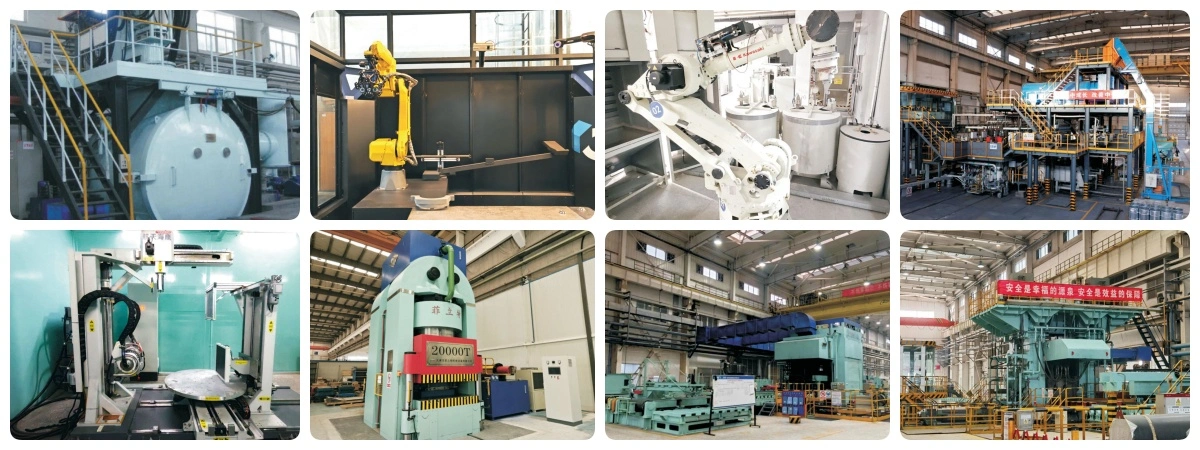
We have modern EB melting furnaces, vacuum casting equipment, precision rolling lines and vacuum heat treatment systems, which allow us to carefully regulate the interstitial impurity concentration to completely fulfill the purity criteria of implant-grade titanium materials.

Applications in the Medical Field
Our medical titanium plates and strips are extensively used in many areas of medical device manufacture. Orthopedic surgery uses them to make bone fixation plates, spinal fusion cages, and craniofacial reconstructive components. Thin cold-rolled titanium materials are used in cardiovascular and dental medicine for equipment casings, fixed brackets and implant abutments.
GR1 and GR2 pure titanium are great options for surgical tool producers, since they have great ductility and can be easily bent and formed to exact contours. The high-purity alloy Ti-6Al-4V ELI (equal to GR23) has fatigue resistance and so is well suited for load-bearing orthopedic implant components. Our skilled technical staff can provide targeted grade selection advice and material data sheets according to your product design and application circumstances.

FAQ
Q1: What distinguishes Ti-6Al-4V ELI for medical usage from CP titanium?
A: GR1–GR4 CP titanium is biocompatible and ductile, making it appropriate for precision surgical instruments and non-load-bearing implants. Ti-6Al-4V ELI is the material of choice for load-bearing orthopedic implants due of its greater fatigue and structural strength.
Q2: Is it safe to use titanium plates for MRIs?
A: Titanium has a very low magnetic susceptibility and is non-ferromagnetic. It fully satisfies safety standards for permanently implanted medical devices, producing nearly no image artifacts and without shifting or heating up during MRI scanning.
Q3: Is it possible to permanently implant titanium plates in the human body?
A: Yes. Qualified titanium plates support long-term and permanent in-body implantation since they are biocompatible and have stable corrosion resistance in bodily fluid conditions, preventing degradation or unfavorable reactions.
Q4: How does titanium address the issue of orthopedic implant stress shielding?
A: Compared to stainless steel, titanium's elastic modulus is substantially closer to that of human cortical bone. It achieves homogeneous stress transfer, lessens the hardness mismatch between implant and bone tissue, and successfully stops bone loss brought on by prolonged stress shielding.
Q5: What options are there for surface treatments?
A: The most common treatment is anodization, which increases wear and corrosion resistance by thickening the protective oxide layer. Additionally, color tagging is supported for batch management and simple surgical identification.
Contact Us
If you are looking for stable and qualified Medical Titanium Plate for surgical instrument and implant manufacturing projects, feel free to contact our professional technical team via srt@sunrui-ti.com.
