Polished Titanium Plate
Slab
Forged slab: (70~300)x1400x10000
EB ingot: 200x1290/1090x(1000~6200)
Hot rolled plate: (2.5~60)x(600~2500)x(1000~8000)
Cold rolled plate: (0.4~4.0)x(600~2500)x(1000~4000)
Hot rolled coil: (3.0~12)x(1000-1500), max coil weight 7 ton
Cold rolled coil: (0.4~4.0)x(1000~1500), max coil weight 6 ton
Grade: GR1, GR2, GR3, GR4, GR5, GR6, GR7, GR9(AB-5), GR12, Ti-811, Ti-15333, SP- 700, Ti-6242, etc.
Specs: GB, GJB, ASTM, ASME, AMS, DIN, JIS standards or industry standards and enterprise standards
Polished Titanium Plate for Industrial & Precision Applications — Premium Surface Finish Solutions
Sunrui Titanium’s Polished Titanium Plate is produced for precise industrial applications that need stringent surface integrity and consistent operating performance. With 60 years of expert titanium production technology from the CSSC Luoyang Ship Material Research Institute, we provide full-graded titanium plates from GR1 to Ti-6242. Our products include cold rolled plates from 0.4 mm to 4.0 mm and hot rolled plates up to 60 mm with a maximum width of 2500 mm. Each polished titanium receives careful mechanical and chemical composite finishing process to remove surface oxide scales and brittle alpha-case layers. The completed product has consistent Ra surface roughness, a full and stable TiO₂ passive layer, precise dimensional tolerances and dependable performance for all sorts of demanding precision application situations.
What Makes Polished Titanium Plate Different from Standard Mill-Finish Plates?
Conventional mill finish and pickled titanium plates always have small surface imperfections such as residual oxide scales, micro gaps and minor processing impurities. These little defects are readily the starting locations for corrosion, and undermine the durability of precise equipment under high-standard industrial working circumstances.
The expert polishing finishing greatly improves the metallurgical condition of the surface of titanium plates. The polishing procedure removes the surface unevenness, peak burrs and residual pollutants such as carbon and iron, so that the titanium substrate may rapidly form a homogenous, complete and stable natural TiO 2 passive protection coating.
Polished titanium has a far resistance to pitting corrosion, a lower fluid friction coefficient and less bacterial adhesion than ordinary mill finish items. All strict functional and esthetic criteria of the medical, aerospace, chemical and upmarket industrial sectors are completely fulfilled.
Key Technical Properties
Polished Titanium Plate not only inherits the inherent benefits of titanium such as light weight and high strength, with a material density of 4.51g/cm³, but also realizes adjustable and controlled surface performance via precision polishing technology.
The surface roughness is variable from many grades, satin finish Ra 0.4 μm, to ultra-fine mirror 8K finish below Ra 0.05 μm. Different roughness levels may directly tune surface reflectivity, cleaning convenience and friction properties, and can improve stress corrosion resistance in high-chloride corrosive situations.
The polished surfaces have lower and more stable coefficients of friction, which is important for the functioning of precision elements like sealing components and heat exchanger plates. All flatness and dimensional indicators are in complete compliance to ASTM B265, AMS 4911 and other international industry norms.
Polished Titanium Plate Specifications
| Parameter | Details |
|---|---|
| Hot Rolled Plate | (2.5–60) mm × (600–2,500) mm × (1,000–8,000) mm |
| Cold Rolled Plate | (0.4–4.0) mm × (600–2,500) mm × (1,000–4,000) mm |
| Hot Rolled Coil | (3.0–12) mm × (1,000–1,500) mm, max coil weight 7 ton |
| Cold Rolled Coil | (0.4–4.0) mm × (1,000–1,500) mm, max coil weight 6 ton |
| Forged Slab | (70–300) mm × 1,400 mm × 10,000 mm |
| EB Ingot | 200 mm × 1,290/1,090 mm × (1,000–6,200) mm |
| Material Grades | GR1, GR2, GR3, GR4, GR5, GR6, GR7, GR9 (AB-5), GR12, Ti-811, Ti-15333, SP-700, Ti-6242, etc. |
| Standards | GB, GJB, ASTM, ASME, AMS, DIN, JIS, and enterprise standards |
| Surface Finish Range | Ra 0.4 μm (Satin) to < 0.05 μm (Mirror 8K) |
Where Polished Titanium Plate Performs Best
Medical and Pharmaceutical Environments
Smooth, contamination-resistant surfaces are needed for medical instrument trays, equipment housings and pharmaceutical mixing containers. The polished finish below Ra 0.2 μm prevents biofilm and bacterial adhesion efficiently and is maintained after many high-intensity sterilization cycles without surface aging or damage. GR2 and GR23 titanium grades are the predominant option for such medical grade circumstances.
Aerospace & Industrial Heat Exchangers
Ultra-smooth polished surfaces may improve the overall heat exchange performance of the plate heat exchanger equipment by reducing the surface fouling and fluid resistance. Polished skin parts in aerospace manufacturing reduce aerodynamic drag, which helps the overall operating performance of aircraft equipment.
Marine Architecture and High-End Consumer Applications
Polished titanium decorative panels are suitable for coastal and marine high-salt corrosive settings, can withstand air corrosion and pitting damage for long-term use, and provide stable esthetic effects. Its premium smooth surface makes it commonly used in high-end electronic equipment casings, luxury items and architectural decorating areas.
Industrial Equipment and Chemical Processing
The major reason of corrosion failure in chemical media is the presence of micro gaps and surface imperfections on conventional metal plates. Polished titanium plate reduce surface corrosion starting sites entirely, which has stable service performance in chloride-rich and oxidizing corrosive situations and prolongs the service life of chemical processing equipment substantially.

Why Source from Sunrui Titanium?
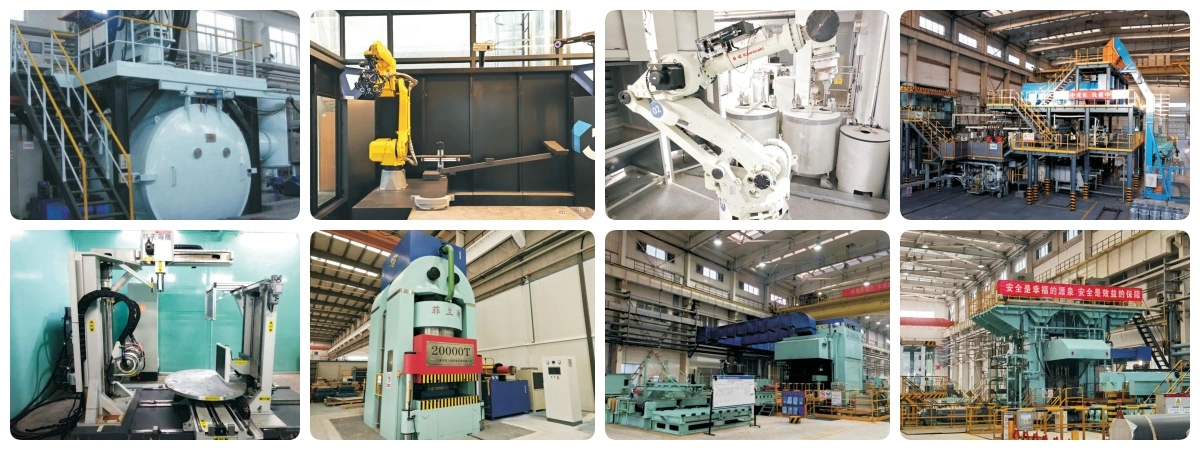
Sunrui Titanium has a complete industrial chain manufacturing line, which includes smelting, forging, hot rolling, cold rolling, vacuum annealing, sandblasting, pickling and precision polishing finishing. It employs independent full-process manufacturing which offers rigorous process control and more stable and consistent surface quality than businesses using external processing.
We have AS9100, NADCAP, PED, ABS, TUV and NORSOK, all the internationally recognized certifications, to completely fulfill the qualification needs of the aerospace, marine, pressure vessel and offshore engineering sectors. All items are fully traceable by material and supplied with standard inspection documentation.
We provide one-stop supply guaranty with steady quality and full qualification files to assist customers’ downstream quality system audit for worldwide B-end procurement. We provide customized material grade, dimension and surface finish as well as OEM processing. A sufficient stock of semi-finished products guaranties stability of deliveries for big orders.

FAQ
Q1: What are the application differences between GR2 and GR5 products?
A: GR2 pure titanium features corrosion resistance and easy polishing performance, suitable for chemical equipment and architectural decoration. GR5 titanium alloy has higher hardness and structural strength, ideal for aerospace precision structural parts, while mirror polishing requires more refined processing techniques.
Q2: Does polishing upgrade the corrosion resistance of these products?
A: Yes. Precision polishing removes surface micro-defects and residual contaminants that easily accumulate corrosive media, forming a more uniform and complete TiO₂ passive film. It greatly improves the pitting corrosion and stress corrosion resistance in high-chloride working environments.
Q3: Can the welded polished product restore the original surface finish?
A: Welding will harm the polished surface of the heat affected zone. After welding, the original surface roughness and visual uniformity may be restored by local grinding and secondary precision polishing.
Q4: How do you properly care for polished titanium?
A: Wipe with gentle microfiber towels with neutral detergent or isopropyl alcohol. Avoid chlorine containing cleansers as this will destroy the passive oxide layer and lead to later surface pitting issues.
Q5: What are the standards for these products?
A: The product’s mechanical qualities are in accordance with ASTM B265 and AMS 4911. Surface finish grades like No.4 satin, No.8 mirror, etc. may be made as per the actual procurement demands of the client.
Q6: What customized services can be provided?
A: We support custom dimensions, special alloy grades, designated surface roughness and matching industry standards, and provide exclusive OEM production and targeted certification documents for B-end customers.
Contact Us
If you have procurement and customization demands for high-precision, high-finish Polished Titanium Plate, please contact our professional technical team via srt@sunrui-ti.com.
