Titanium Alloy Plate GR5
Slab
Forged slab: (70~300)x1400x10000
EB ingot: 200x1290/1090x(1000~6200)
Hot rolled plate: (2.5~60)x(600~2500)x(1000~8000)
Cold rolled plate: (0.4~4.0)x(600~2500)x(1000~4000)
Hot rolled coil: (3.0~12)x(1000-1500), max coil weight 7 ton
Cold rolled coil: (0.4~4.0)x(1000~1500), max coil weight 6 ton
Material grade: GR5
Specification: GB, GJB, ASTM, ASME, AMS, DIN, JIS standards or industry standards and enterprise standards
Titanium Alloy Plate GR5 for Aerospace & Industrial Applications — High Strength, Lightweight Solution
Titanium Alloy Plate GR5 (Ti-6Al-4V) is the most widely used titanium alloy in the global industrial market, occupying nearly 50% of the total titanium material consumption. Leveraging over 60 years of professional titanium manufacturing experience, Sunrui Titanium produces premium GR5 titanium plates with EB slabs as raw materials. Our product range covers hot rolled plates with thickness of 2.5–60 mm and cold rolled plates of 0.4–4.0 mm, with a maximum width of 2500 mm. All Titanium products comply with GB, ASTM, ASME, AMS, DIN, JIS and other mainstream international standards, stably serving high-standard application scenarios including aerospace, marine engineering, medical equipment and industrial manufacturing.
What Makes Ti-6Al-4V the Industry's Workhorse Alloy?
GR5 is a classic alpha-beta titanium alloy consisting of 6% aluminum and 4% vanadium. Aluminum stabilizes the alpha phase to improve overall structural strength, while vanadium optimizes the beta phase to material ductility and fracture toughness. This precise ingredient balance enables the alloy to deliver far more stable performance than commercial pure titanium and ordinary structural alloys in high-load and extreme working environments.
Different from GR2 and other pure titanium grades, Titanium Alloy Plate GR5 can achieve upgraded mechanical properties through solution treatment and aging (STA) process on the basis of mill-annealed state. This flexible heat treatment solution allows engineering teams to adjust the matching of material strength and ductility according to actual project needs.
With a density of 4.43 g/cm³, only 60% of steel, the alloy features a minimum tensile strength of 895 MPa and yield strength of 828 MPa. It realizes steel-level structural bearing capacity with greatly reduced weight, a advantage that aluminum alloy and stainless steel cannot achieve under extreme operating conditions.
Key Material Properties
| Property | Value |
|---|---|
| Alloy Composition | Ti — 6% Al, 4% V |
| Density | ~4.43 g/cm³ |
| Minimum Tensile Strength | 895 MPa (130 ksi) |
| Minimum Yield Strength | 828 MPa (120 ksi) |
| Max Operating Temperature | Up to ~400°C (750°F) |
| Corrosion Resistance | in seawater, organic acids, chlorides |
| Weldability | TIG / Plasma welding with inert Argon shielding |
Full Titanium Alloy Plate GR5 Specifications
| Form | Dimensions |
|---|---|
| Forged Slab | (70~300) × 1,400 × 10,000 mm |
| EB Ingot | 200 × 1,290/1,090 × (1,000~6,200) mm |
| Hot Rolled Plate | (2.5~60) × (600~2,500) × (1,000~8,000) mm |
| Cold Rolled Plate | (0.4~4.0) × (600~2,500) × (1,000~4,000) mm |
| Hot Rolled Coil | (3.0~12) × (1,000~1,500) mm, max 7 ton |
| Cold Rolled Coil | (0.4~4.0) × (1,000~1,500) mm, max 6 ton |
| Available Grades | GR1, GR2, GR3, GR4, GR5, GR6, GR7, GR9, GR12, Ti-811, Ti-15333, SP-700, Ti-6242, etc. |
| Standards | GB, GJB, ASTM, ASME, AMS, DIN, JIS, and enterprise standards |
Available Grades: GR1, GR2, GR3, GR4, GR5, GR6, GR7, GR9, GR12, Ti-811, Ti-15333, SP-700, Ti-6242, etc.
Standards: GB, GJB, ASTM, ASME, AMS, DIN, JIS, and enterprise standards
Where GR5 Plate Performs Best
Aerospace Structures: Aerospace components need to resist long term fatigue vibration and temperature variation. GR5 is extensively used in the aircraft fuselage parts, engine nacelles and fasteners with low coefficient of thermal expansion, remarkable fatigue resistance and consistent service performance up to 400°C.
Marine & Offshore Engineering: Ordinary metal materials are easy to be corroded and failed because of long-term erosion of chloride-rich saltwater. GR5 titanium alloy is much better than stainless steel in saltwater corrosion resistance, which may greatly reduce the frequency of equipment maintenance and prolong the service life of ship hull accessories, heat exchangers and subsea structural elements.
Medical Devices GR5 plates provide proven biocompatibility, low weight advantage and stable mechanical qualities, which are popular materials for orthopedic implants and prosthetic components. Note that for implant situations requiring high toughness, Grade 23 (Ti-6Al-4V ELI) with reduced interstitial content is more appropriate, whereas regular GR5 is chosen for medical load-bearing structural components.
Petrochemical & Industrial Processing GR5 has a stable performance in most of the corrosive environments of organic acid and chloride, and is suitable for the high-temperature working conditions of petrochemical production. But it is not suited to concentrated reducing acids, such as hydrofluoric acid and hot sulfuric acid. They will cause material corrosion and damage.

Quality Control and Documentation
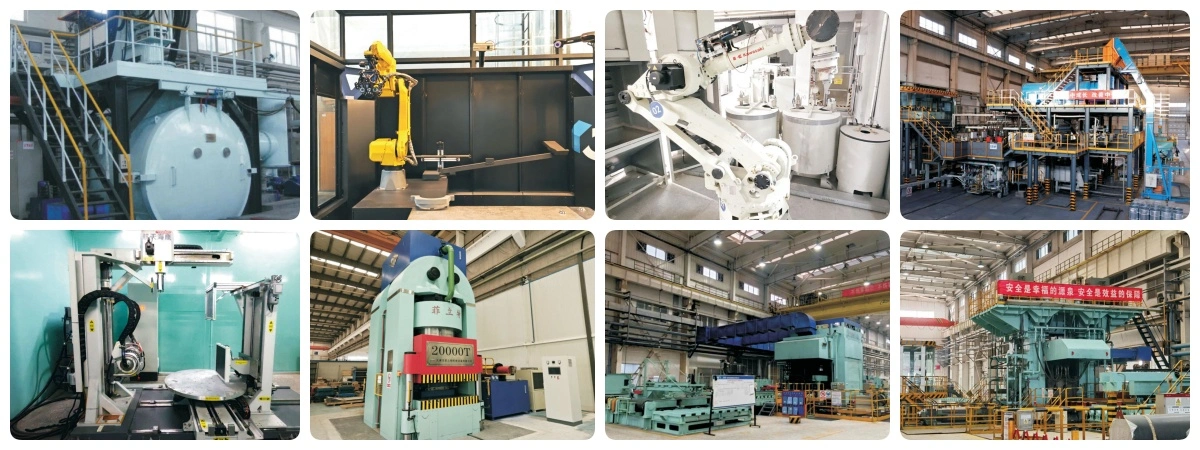
Sunrui Titanium does full-process quality monitoring including ultrasonic non-destructive testing, precise dimensional inspection and chemical composition verification for Titanium Alloy Plate GR5. All batches of goods are delivered with full Mill Test Certificate (MTC) including chemical analytical data, mechanical performance test results and records of conformity with non-destructive testing.
The firm possesses recognized industry certifications such as AS9100, NADCAP, PED, ABS, TUV and NORSOK. All certification systems are constantly running and audited, completely fulfilling the demanding traceability and compliance requirements of the aerospace, marine and pressure vessel equipment sectors.

Machining and Welding Considerations
The GR5 titanium alloy has poor thermal conductivity, which readily generates heat accumulation on the cutting edge during machining, resulting in faster tool wear and workpiece work hardening. The processing quality may be guarantyd by using sharp carbide tools, low-speed cutting settings and appropriate cooling fluid.
Material compatible with plasma and TIG welding. The fundamental need for welding is to maintain complete argon inert gas shielding for the welding pool and the back heating surface. Titanium reacts very aggressively with oxygen, nitrogen and carbon at high temperatures, and even a little amount of air pollution will affect the performance of the weld joint. A post-weld heat treatment is indicated to relieve residual welding stresses and structural stability.
FAQ
Q1: What are the key differences between GR5 and GR2 titanium?
A1: GR5 is alloyed titanium with high strength, suitable for structural load-bearing scenarios. GR2 is pure titanium with better ductility and corrosion resistance but lower mechanical strength. GR2 is ideal for chemical lining, while GR5 is the optimal choice for structural parts requiring high strength.
Q2: Can GR5 plate be heat treated for higher strength?
A2: Yes. Solution treatment and aging (STA) can effectively improve its mechanical properties beyond the conventional mill-annealed state. We normally supply mill-annealed plates for balanced strength and ductility unless customers have customized heat treatment requirements.
Q3: What surface finishes can you provide?
A3: Standard products adopt acid pickling descaling finish. We also support sandblasting, precision machining and low-Ra polishing surface treatment to meet the processing needs of aerospace precision parts and medical implants.
Q4: Is GR5 titanium fully corrosion-resistant?
A4: It delivers corrosion resistance in seawater, organic acids and chloride media, but cannot resist concentrated reducing acids such as hydrofluoric acid and hot sulfuric acid. Material selection confirmation is required for special chemical working conditions.
Q5: What certification documents are included in each order?
A5: Every batch is matched with official MTC factory test reports covering chemical composition, mechanical properties and NDT test records. Our multiple international industry certifications can support customers’ supplier audit and product compliance verification.
Q6: Do you support customized GR5 titanium products?
A6: Yes. We support full customization of dimensions, surface finishes, implementation standards and specifications for plates, coils, forgings and other products, providing one-stop OEM solutions for global industrial projects.
Contact Us
If you are looking for high-performance, stable-quality Titanium Alloy Plate GR5 for aerospace, marine, medical and petrochemical projects, feel free to consult our professional team for technical guidance and exclusive quotations via srt@sunrui-ti.com.
