Titanium Alloy Plates
Slab
Forged slab: (70~300)x1400x10000
EB ingot: 200x1290/1090x(1000~6200)
Hot rolled plate: (2.5~60)x(600~2500)x(1000~8000)
Cold rolled plate: (0.4~4.0)x(600~2500)x(1000~4000)
Hot rolled coil: (3.0~12)x(1000-1500), max coil weight 7 ton
Cold rolled coil: (0.4~4.0)x(1000~1500), max coil weight 6 ton
Material grade: GR5
Specification: GB, GJB, ASTM, ASME, AMS, DIN, JIS standards or industry standards and enterprise standards
Titanium Alloy Plates for Aerospace, Marine & Industrial Applications — High-Strength, Corrosion-Resistant Solutions
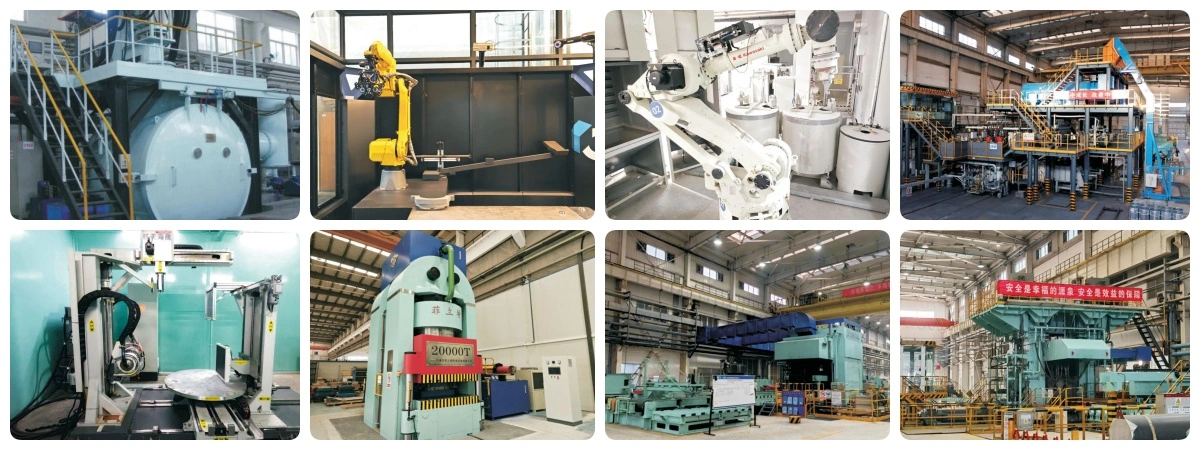
Titanium Alloy Plates are premium precision rolled metal products manufactured by Luoyang Sunrui Titanium Precision Casting Co., Ltd. Backed by over 60 years of titanium R&D and production experience inherited from CSSC research system, we adopt EB casting slabs as raw materials to produce pure titanium and titanium alloy plate covering mainstream grades including GR5. Our product lineup covers diversified specifications: hot rolled plates ranging from 2.5~60 mm in thickness, and cold rolled plates from 0.4~4.0 mm. All products are certified by AS9100, NADCAP, ABS and NORSOK, fully applicable to high-standard aerospace, marine, petrochemical and medical manufacturing scenarios. Global clients can source stable and high-performance Titanium Alloy Plate to meet their rigorous industrial production demands.
What Makes Titanium Alloy Plates Different from Standard Metal Sheets?
Titanium alloy plate, unlike conventional metal sheets simply cut from ingots, are expert produced semi-finished products with highly regulated internal microstructure. Alloying titanium with aluminum, vanadium, molybdenum and other stabilizing elements gives an alpha-beta dual-phase structure that provides an strength-to-weight ratio, unobtainable with traditional structural metals.
The density of titanium alloy is 4.51 g/cm3, which is 43% lighter than steel (7.9 g/cm3), and can completely solve the issue of the weight limit in aerospace structural design . GR5 (Ti-6Al-4V) Titanium Alloy Plates may be more than 895 MPa tensile strength for all grades and ultra-light weight. It’s a mix of performance that neither steel nor aluminum materials can reach.
Titanium is chemically active and interacts readily with oxygen, nitrogen and carbon at elevated temperatures. Sunrui uses professional vacuum annealing technology in the manufacturing process to prevent the creation of brittle alpha-case layer and maintain stable ductility and fatigue resistance. This rigorous process control guaranties that our plates are completely dependable for flight-critical and safety-related industrial applications.
Full Titanium Specifications
| Category | Parameter |
|---|---|
| Forged Slab | (70~300) × 1400 × 10000 mm |
| EB Ingot | 200 × 1290/1090 × (1000~6200) mm |
| Hot Rolled Plate | (2.5~60) × (600~2500) × (1000~8000) mm |
| Cold Rolled Plate | (0.4~4.0) × (600~2500) × (1000~4000) mm |
| Hot Rolled Coil | (3.0~12) × (1000~1500) mm, max coil weight 7 ton |
| Cold Rolled Coil | (0.4~4.0) × (1000~1500) mm, max coil weight 6 ton |
| Material Grades | GR1, GR2, GR3, GR4, GR5, GR6, GR7, GR9 (AB-5), GR12, Ti-811, Ti-15333, SP-700, Ti-6242, etc. |
| Standards | GB, GJB, ASTM, ASME, AMS, DIN, JIS, and enterprise standards |
| Density | ~4.51 g/cm³ |
| Tensile Strength (CP Grades) | 240–550 MPa |
| Tensile Strength (GR5 Alloy) | >895 MPa |
| Thermal Stability | Up to 400°C–600°C depending on grade |
Core Material Properties and Performance Advantages
Our rolled products have physical and chemical qualities, which are better than typical engineering metals, and deliver and long-lasting service performance for industrial equipment.
Corrosion Resistance: Titanium may spontaneously produce a thick and self-healing TiO2 passive oxide coating on the surface. It resists saltwater erosion, oxidizing acid corrosion and chloride stress corrosion cracking efficiently, and is an material for desalination equipment, PTA reactors and offshore oil platform infrastructure.
Biocompatibility: Titanium is non-toxic and non-magnetic. GR5 ELI extremely low interstitial titanium alloy is commonly utilized in MRI compatible cranial plates and orthopedic fixation implants. It promotes the integration of human bone and minimizes stress shielding which stainless steel materials cannot do.
Controllable Weldability & Machinability: Titanium alloy plate need professional processing characteristics such as fixed tooling, high-pressure cooling and moderate cutting speed, because of its limited heat conductivity. Under tight inert gas shielding, the welding joints retain entire mechanical performance without embrittlement or structural failure.
Application Scenarios: Where These Plates Deliver Real Value
The dependable and performance of Titanium Alloy Plates resolves several practical pain issues in high-end industrial production, spanning many main fields:
Aerospace and Defense:High-strength titanium alloy plate are utilized to build aircraft bulkheads, wing skins, engine hoods and fire barrier components. The material is able to sustain high G-force load and severe temperature cycling from cryogenic environment to over 400°C stably, avoiding creep and fatigue failure. Our products completely comply with industry requirements AMS 4911 and GJB.
Marine & Offshore: Deep-sea submersible hulls, riser components and heat exchanger tube sheets need materials that can withstand high-pressure and high-salinity saltwater corrosion. Titanium alloy plate has a much longer service life than stainless steel, which considerably reduces the equipment replacement and maintenance expenses of offshore projects.
Chemical and Industrial Processing: Used for the linings of reaction vessels and components of pressure vessels subjected to wet chlorine, nitric acid and other severe media. Our plates are made to comply with ASME SB-265 and NORSOK requirements, offering long-term operation in corrosive chemical conditions.
Medical Devices: Cranial and orthopedic implant parts processed from high-purity GR5 ELI plates exhibit fracture toughness and non-magnetic qualities, according to ISO 5832 medical implant requirements for safe long-term human implantation.

Quality Control and Supply Reliability
We implement full-process quality monitoring for every batch of products, covering ultrasonic flaw detection, precise dimensional inspection and performance testing. Complete traceability documents are provided from raw titanium sponge to finished plates, meeting the strict procurement standards of aerospace and medical industries.
Sunrui Titanium maintains sufficient semi-finished product inventory to support large-scale bulk orders and stable batch supply. We provide full OEM customization services for different grades and non-standard dimensions. Cooperated with professional global logistics providers, we support safe, cost-effective door-to-door delivery worldwide.

FAQ
Q1: What is the difference between GR5 and GR23 titanium alloy plate?
A1: GR23 is the ELI ultra-low interstitial version of GR5, with lower oxygen and iron content. It features better fracture toughness and ductility, suitable for cryogenic working conditions and fracture-sensitive aerospace core components.
Q2: Is direct welding possible between titanium alloy plate and steel?
A2: Direct welding is not feasible, as it will produce brittle intermetallic compounds such as TiC and FeTi and cause joint failure. Explosive cladding is the mature and connecting process for titanium and steel substrates.
Q3: What international standards do your titanium plates comply with?
A3: Our products meet GB, GJB, ASTM B265, ASME SB-265, AMS 4911, DIN, JIS and other mainstream standards, and can be customized according to customers’ exclusive enterprise standards.
Q4: How to clean titanium plate surfaces before processing?
A4: Thoroughly remove surface iron contamination with professional pickling passivation solution or special titanium stainless steel brushes. Steel wool is prohibited to avoid residual iron particles affecting corrosion resistance.
Q5: What are the available specifications for titanium coils?
A5: Hot rolled coils have a maximum weight of 7 tons, and cold rolled coils up to 6 tons, with a unified width range of 1000–1500 mm.
Q6: Do you support customized alloy grades and sizes?
A6: Yes. We provide full OEM customization, supporting non-standard dimensions and special grades including Ti-6242, SP-700, Ti-15333 and Ti-811 for personalized project demands.
Contact Us
If you need high-strength, corrosion-resistant Titanium Alloy Plates for aerospace, marine, chemical and medical projects, feel free to contact our professional technical and sales team via srt@sunrui-ti.com.
