Titanium Grade 12 Plate
Slab
Forged slab: (70~300)x1400x10000
EB ingot: 200x1290/1090x(1000~6200)
Hot rolled plate: (2.5~60)x(600~2500)x(1000~8000)
Cold rolled plate: (0.4~4.0)x(600~2500)x(1000~4000)
Hot rolled coil: (3.0~12)x(1000-1500), max coil weight 7 ton
Cold rolled coil: (0.4~4.0)x(1000~1500), max coil weight 6 ton
Material Grade: GR5
Specification: GB, GJB, ASTM, ASME, AMS, DIN, JIS standards or industry standards and enterprise standards
Titanium Grade 12 Plate — High-Strength Corrosion-Resistant Solution for Demanding Industrial Environments
Titanium Grade 12 Plate is a widely used near-alpha titanium alloy with the specification Ti-0.3Mo-0.8Ni (UNS R53400). It effectively closes the performance gap between Grade 7 titanium alloy, which is expensive and based on palladium, and regular commercial pure titanium. SUNRUI TITANIUM uses EB slabs as raw materials to make this product, which is supported by more than 60 years of expert titanium manufacturing knowledge. With a minimum yield strength of 345 MPa and a tensile strength of 483 MPa, our titanium offers consistent resistance to crevice corrosion even at temperatures as high as 260°C. In accordance with ASTM B265, ASME SB265, DIN 3.7105, and other widely accepted worldwide industry standards, we provide full specifications, including hot rolled plates (2.5–60 mm thick) and cold rolled plates (0.4–4.0 mm thick).
What Makes This Alloy Different from Standard Titanium?
Conventional commercial pure titanium like Grade 2 performs stably in mild working conditions. However, it is prone to crevice corrosion when exposed to hot brine, reducing acid solutions and high-temperature chloride media, which are extremely common in chemical processing and marine engineering scenarios.
Titanium Grade 12 Plate effectively solves the above pain points. The 0.8% nickel ingredient greatly enhances the material’s crevice corrosion resistance, while 0.3% molybdenum optimizes its structural stability in low-concentration HCl, H₂SO₄ and other reducing acid environments. It improves the durability of industrial equipment without the high procurement cost of precious metal additives such as palladium.
This alloy is a cost-effective, high-performance upgrade for industrial applications when Grade 2 titanium is not enough and Grade 7 titanium is too expensive for mass production.
Chemical Composition
| Element | Content |
|---|---|
| Titanium | Balance |
| Nickel (Ni) | 0.6 – 0.9% |
| Molybdenum (Mo) | 0.2 – 0.4% |
| Iron (Fe) | Max 0.25% |
| Carbon (C) | Max 0.08% |
Mechanical & Physical Properties
| Property | Value |
|---|---|
| Minimum Yield Strength | 345 MPa (50 ksi) |
| Tensile Strength | 483 MPa (70 ksi) |
| Density | 4.51 g/cm³ |
| Melting Range | ~1660°C |
| Max Operating Temperature | ~300°C (572°F) |
| Crevice Corrosion Resistance (Brine) | Up to 260°C (500°F) |
Titanium Grade 12 Plate Specifications
| Form | Dimensions |
|---|---|
| Forged Slab | (70–300) × 1400 × 10000 mm |
| EB Ingot | 200 × 1290/1090 × (1000–6200) mm |
| Hot Rolled Plate | (2.5–60) × (600–2500) × (1000–8000) mm |
| Cold Rolled Plate | (0.4–4.0) × (600–2500) × (1000–4000) mm |
| Hot Rolled Coil | (3.0–12) × (1000–1500) mm, max 7 tons |
| Cold Rolled Coil | (0.4–4.0) × (1000–1500) mm, max 6 tons |
Standards Supported: GB, GJB, ASTM, ASME, AMS, DIN, JIS, and enterprise standards
Key Performance Advantages
Good Corrosion Resistance: This titanium alloy provides good resistance to hot bromide solutions, wet chlorine, organic chlorides and mild reducing acids. Under the situation of high-temperature hot brine below 260°C, its corrosion resistance is much more than all conventional commercial pure titanium grades.
High Temperature Strength: Ordinary Grade 2 titanium is subject to a loss of strength at high temperatures. However, Titanium Grade 12 Plate is suitable for the production of industrial heat exchangers and pressure vessels that are required to operate at high temperatures. It has uniform mechanical strength and creep resistance up to 300°C.
Formability & Weldability: It can be welded using conventional welding processes and has welding properties similar to Grade 2 Titanium. Cold bending, rolling and other forming operations may be performed with somewhat higher forming force required because of its increased strength. Titanium is reactive with oxygen, nitrogen and carbon at high temperatures and this will cause the material to become brittle and its properties to deteriorate. It is thus essential that strict shielding with argon or helium inert gas be used during welding and high temperature processing.
Where Is It Used?
Chemical processing: It is a common standard material for shell-and-tube heat exchangers and pressure vessels for wet chlorine and hot bromide media. It solves the problem of crevice corrosion often encountered in chemical reaction systems and assures the long-term steady functioning of equipment.
Marine & Desalination: Compared to conventional alloys, Grade 12 titanium increases the lifespan of equipment used in saltwater treatment applications under high temperatures and pressures, including marine pipe systems and desalination evaporator plates. This minimizes the frequency of future maintenance and reduces the total lifespan operating cost of marine and desalination systems.
Hydrometallurgy: Liners and agitators of autoclaves in mineral extraction operations must operate in high pressure acidic slurries. Grade 12 titanium has erosion and corrosion resistance and completely satisfies the criteria of long-term safe operation of severe hydrometallurgical reaction equipment.

Quality Control and Documentation
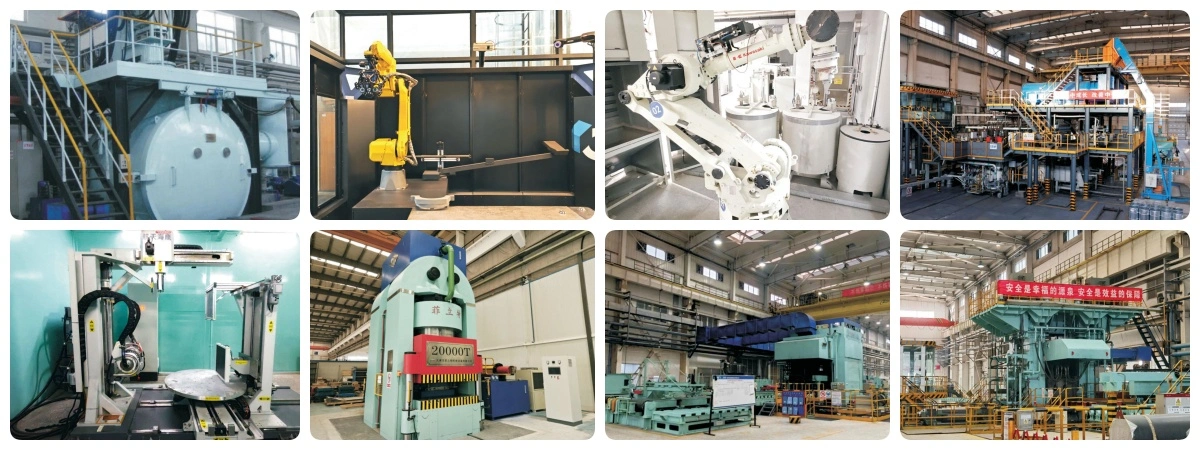
SUNRUI TITANIUM implements full-process quality control for all titanium products, covering raw material inspection, rolling processing, finished product dimensional calibration and ultrasonic flaw detection. We establish complete quality traceability records from original slabs to finished plates to ensure stable batch consistency.

FAQ
Q1: What are the differences between Grade 12 and Grade 7 titanium in cost and performance?
A1: Grade 12 adopts nickel and molybdenum alloying design without expensive palladium elements, featuring a more competitive price. Grade 7 performs better under extreme pH conditions, while Grade 12 is the most cost-effective solution for hot brine systems requiring crevice corrosion resistance.
Q2: Is Grade 12 titanium harder to weld than Grade 2?
A2: No. Grade 12 has weldability equivalent to Grade 2 titanium. The only requirement is to maintain full inert gas shielding during the whole welding process to prevent oxygen and nitrogen from invading and causing material embrittlement.
Q3: What is the maximum working temperature of Grade 12 titanium plate?
A3: It can maintain stable mechanical strength and creep resistance up to 300°C, and retains crevice corrosion resistance in brine environments at temperatures up to 260°C.
Q4: Can Grade 12 titanium plates be cold formed?
A4: Yes. The material has good ductility and supports cold bending, rolling and other forming processes. Due to higher strength, a little higher processing force is needed compared with Grade 1 titanium.
Q5: What quality documents can you provide for orders?
A5: We provide official EN 10204 3.1 MTC factory test reports, including heat number, annealing condition, full chemical composition, mechanical test results and ASTM standard compliance certificates.
Q6: Do you support customized production of Grade 12 titanium products?
A6: Yes. We provide full OEM customization services, supporting non-standard size processing for plates, coils and slabs. We can also adjust production standards according to customer project demands to provide targeted product solutions.
Contact Us
If you are looking for high-performance, cost-stable Titanium Grade 12 Plate for corrosive industrial equipment manufacturing, feel free to consult our professional team for technical parameters and customized quotations via srt@sunrui-ti.com.
