Titanium Grade 4 Plate
Slab
Forged slab: (70~300)x1400x10000
EB ingot: 200x1290/1090x(1000~6200)
Hot rolled plate: (2.5~60)x(600~2500)x(1000~8000)
Cold rolled plate: (0.4~4.0)x(600~2500)x(1000~4000)
Hot rolled coil: (3.0~12)x(1000-1500), max coil weight 7 ton
Cold rolled coil: (0.4~4.0)x(1000~1500), max coil weight 6 ton
Grades: GR5
Specification: GB, GJB, ASTM, ASME, AMS, DIN, JIS standards or industry standards and enterprise standards
Titanium Grade 4 Plate — High-Strength CP Titanium Solutions for Demanding Industrial Applications
Titanium Grade 4 Plate is the strongest commercially pure grade of titanium. It is produced in strict conformity with ASTM B265 and AMS 4901 requirements and is designated as UNS R50700. Compared to Grade 1, 2 and 3 pure titanium this grade has increased oxygen concentration (max 0.40%) and iron content (max 0.50%) providing a maximum tensile strength of 550MPa while maintaining inherent corrosion resistance of pure titanium. SUNRUI TITANIUM inherits 60 years of professional production expertise of titanium from CSSC Luoyang Ship Material Research Institute, which provides standardized and customized Titanium for worldwide industries. Our products hot rolled plates (2.5~60 mm) and cold rolled plates (0.4~4.0 mm), covering aerospace, marine, medical and chemical processing industries with steady quality and specifications.
What Makes CP Titanium Grade 4 Plate the Industrial Workhorse of Pure Titanium?
Grade 4 is often regarded as the industrial workhorse of commercially pure titanium. It bridges the gap in performance between the low strength soft CP titanium grades and the high cost alpha-beta alloy titanium such as Grade 5 (Ti-6Al-4V).
Interstitial oxygen content is tightly regulated by production. This optimized composition enhances the yield strength by 35%–40% compared to standard Grade 2 titanium, without the addition of aluminum, vanadium or other alloying metals. This benefit is important for medical equipment and food processing applications where elemental precipitation and impurity discharge are limited.
Titanium Grade 4 Plate is the answer to the age-old performance trade-off problem for the industry engineers involved in the high-pressure chemical tanks, aerospace structural brackets and marine heat exchanger component design. It has mechanical strength close to that of alloys while retaining the chemical stability and biocompatibility of pure titanium, providing additional cost-effective material alternatives for industrial design.
Technical Specifications
| Parameter | Details |
|---|---|
| Material Grade | GR4 (and GR1, GR2, GR3, GR5, GR6, GR7, GR9, GR12, Ti-6242, Ti-15333, SP-700, etc.) |
| Applicable Standards | GB, GJB, ASTM, ASME, AMS, DIN, JIS and enterprise standards |
| Forged Slab | (70~300) × 1400 × 10000 mm |
| EB Ingot | 200 × 1290/1090 × (1000~6200) mm |
| Hot Rolled Plate | (2.5~60) × (600~2500) × (1000~8000) mm |
| Cold Rolled Plate | (0.4~4.0) × (600~2500) × (1000~4000) mm |
| Hot Rolled Coil | (3.0~12) × (1000~1500) mm, max coil weight 7 ton |
| Cold Rolled Coil | (0.4~4.0) × (1000~1500) mm, max coil weight 6 ton |
| Oxygen Content (max) | 0.40% |
| Iron Content (max) | 0.50% |
| UNS Designation | R50700 |
| Supply Condition | Annealed |
Key Material Characteristics
Pure Titanium Strength Upgrade: Controlled interstitial elements of oxygen and iron provide increased tensile strength in Grade 4 titanium without the inclusion of further alloying elements. This reduces the possibility of elemental precipitation and so enables safe and stable deployment in high-standard fields such as medical devices and food processing equipment.
Corrosion Resistance: All commercial pure titanium Grade 4 have good resistance to pitting corrosion, crevice corrosion and stress corrosion cracking. It has strong corrosion resistance and steady performance in 300°C high-temperature saltwater, greatly surpassing the corrosion resistance of most stainless steel materials in chloride-rich and marine settings.
Weldability: Titanium Grade 4 Plates are acceptable for TIG and MIG welding techniques. Titanium is quite active at elevated temperatures and will oxidize, nitridize and carborize. During welding, full-process inert gas shielding with argon or helium (including tail shielding) is essential to avoid weld embrittlement and assure welding quality.
Stable Machinability Similar performance to austenitic stainless steel with little viscosity. With sharp cutting tools, low cutting speed, proper feed rate and professional coolant, work hardening and surface galling can be successfully avoided and the precision machining requirements may be met .
Non-Magnetic Property: Grade 4 titanium is paramagnetic and has no magnetic interference. This will not compromise MRI equipment and precision electronic instruments, which is a big plus for medical device manufacturing applications.
Controllable Formability: Higher Strength, 3t-4t Bending Radius, Slightly Bigger than Grade 2 Titanium It is equipped with matching professional tooling and cold forming equipment, able to perform standard bending and forming processing in response to varied production demands.
Application Areas
Aircraft and Defense: The ideal combination of lightweight performance and long-term corrosion resistance for demanding aircraft operations, including the manufacture of structural brackets, pressure shells and fuselage components.
Marine and Offshore Engineering : Used for heat exchanger shells, seawater pipe systems and desalination equipment. It overcomes the issue of corrosion failure of stainless steel in high-chloride maritime environment, and prolongs the service life of equipment.
Chemical Processing: Suitable for reaction kettles, separation towers and liner materials for corrosive working conditions such as strong acid, oxidation medium. No alloying elements means no galvanic interaction with process fluids and steady chemical synthesis.
Medical Devices: for surgical implant components, and medical instrument housings. It has perfect biocompatibility and non-toxicity, which eliminate the hidden hazards of precipitation of vanadium and aluminum element in alloy titanium.
Industrial Heat Exchangers: SUNRUI TITANIUM provides one-stop supply from raw materials of Grade 4 titanium plate to completed heat exchanger products, achieving unified quality control of raw materials and finished parts for clients.

SUNRUI TITANIUM's Manufacturing and Quality Advantage
SUNRUI TITANIUM has built a complete industrial supply chain covering titanium sponge, EB ingot smelting, plate and coil rolling, forging processing and finished heat exchanger assembly. Long-term vertical integration effectively guarantees stable batch quality and full material traceability for all products.
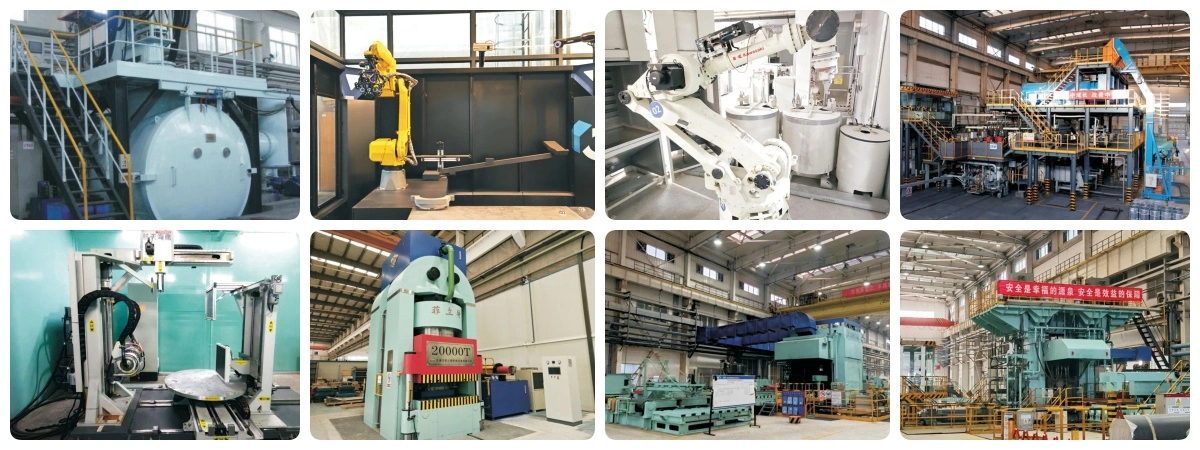
We are equipped with complete production and testing equipment including EB smelting furnaces, 1500kg vacuum casting furnaces, professional hot and cold rolling production lines, vacuum heat treatment equipment and ultrasonic flaw detection systems. Every batch of titanium plates undergoes full-process quality monitoring and complete data recording before delivery.
The company holds authoritative international certifications such as AS9100, NADCAP, PED, ABS, TUV and NORSOK. All certifications are continuously audited and maintained, fully meeting the supplier qualification and product compliance requirements of aerospace, marine and pressure equipment industries.
We support diversified customized services. Customers can adjust product dimensions, tolerance, surface finish and implementation standards according to project demands. Mature OEM customization solutions are provided for global industrial clients.

FAQ
Q1: What is the core difference between Grade 4 and Grade 2 titanium plate?
A1: Grade 4 has higher oxygen content, delivering 35%–40% higher tensile strength than Grade 2. Its ductility is slightly lower, so corresponding tooling and process adjustments are required during forming processing.
Q2: Is field welding available for Grade 4 titanium plate?
A2: Yes. TIG and MIG welding are both applicable. The key requirement is full argon inert gas shielding throughout the welding and cooling process to prevent high-temperature oxidation and nitrification that cause weld embrittlement.
Q3: Is post-weld heat treatment necessary?
A3: It is not mandatory for conventional welding. For complex structural parts after heavy welding or deep machining, stress relief annealing at 480–595°C is recommended to eliminate residual stress and ensure dimensional stability.
Q4: Why choose Grade 4 pure titanium instead of Grade 5 alloy titanium?
A4: Grade 4 features better corrosion resistance in seawater and chloride environments, cold formability and lower cost. Free of aluminum and vanadium elements, it has higher biocompatibility, which is more suitable for medical and marine high-corrosion scenarios.
Q5: Can Grade 4 titanium be used for long-term seawater service?
A5: Absolutely. It resists pitting and crevice corrosion in seawater up to 300°C, making it the preferred material for marine heat exchangers and offshore corrosion-resistant equipment.
Q6: What customized services can you provide?
A6: We support custom size, surface treatment, tolerance and standard configuration. We can also provide exclusive OEM production solutions according to your project design and application scenarios.
Contact Us
If you need high-strength Titanium Grade 4 Plate for aerospace, marine, medical and chemical industrial projects, please send your detailed specifications and inquiry to our professional team via srt@sunrui-ti.com.
