Titanium Plate Net
Ti alloys are too strong for stamping or expanding, commercially pure titanium sheets Gr1 and Gr2 per ASTM B265 are used.
Titanium offers exceptional corrosion resistance and the highest strength-to-weight ratio among metals, serving many fields such as the chemical and electronics industries.
Material: Gr1, Gr2, Gr12
According to the process, it is classified into titanium wire woven mesh, titanium plate stretched mesh and titanium plate perforated mesh
Application: Mainly used in petrochemical, chlor-alkali, electrolytic cells, equipment protection, battery electrodes, solid-liquid separation and other fields;
Performance: Titanium has a high specific strength, is resistant to corrosion and acids and alkalis, and has strong corrosion resistance in most media
Diverse specifications are available and customization is supported
Titanium Plate Net for Industrial & Electrochemical Applications — One-Piece Strength, Zero Joint Failure
Titanium Plate Net is an integral porous metal material fabricated through precision slitting and stretching of solid titanium sheets, mainly adopting Grade 1 and Grade 2 titanium that complies with ASTM B265 standards. Different from traditional woven wire mesh, this expanded titanium mesh features an one-piece molding structure with no welding joints, no wire fraying and zero contact resistance issues. Backed by over 60 years of professional titanium manufacturing experience, Sunrui Titanium supplies customized Titanium with complete grades and specifications, perfectly adapting to harsh working conditions of chemical processing, electronic manufacturing and electrochemical engineering industries.
What Makes Titanium Plate Net Different from Standard Mesh
The biggest advantage of this product lies in its integrated integral structure. Processed by one-time stretching of a single titanium sheet, it forms uniform diamond mesh holes. All mesh wires and connecting parts are continuous and integrated without any welding points or cross lap joints, completely avoiding structural failure risks at weak connection positions.
This structural advantage is extremely critical for electrochemical application scenarios. When used as MMO coated anodes and filter components in chlor-alkali industry production, Titanium Plate Net ensures uniform current distribution on the material surface. The joint-free structure eliminates local resistance hotspots, effectively extending equipment service life and improving overall production efficiency.
The diamond hole design balances smooth electrolyte circulation and stable structural rigidity. It can maintain stable dimensional performance under long-term mechanical stress, a advantage that traditional woven mesh cannot achieve.
Material Grade and Technical Specifications
Sunrui Titanium's expanded and stamped mesh starts from commercially pure titanium sheet. Because titanium alloys are generally too strong for the stamping and expanding process, Grade 1 and Grade 2 are the standard base materials for mesh production.
The full plate and sheet range that feeds mesh manufacturing covers the following specifications:
| Parameter | Specification |
|---|---|
| Forged Slab | (70–300) × 1400 × 10000 mm |
| EB Ingot | 200 × 1290/1090 × (1000–6200) mm |
| Hot Rolled Plate | (2.5–60) × (600–2500) × (1000–8000) mm |
| Cold Rolled Plate | (0.4–4.0) × (600–2500) × (1000–4000) mm |
| Hot Rolled Coil | (3.0–12) × (1000–1500) mm, max 7 tons |
| Cold Rolled Coil | (0.4–4.0) × (1000–1500) mm, max 6 tons |
| Material Grades | GR1, GR2, GR3, GR4, GR5, GR7, GR9, GR12, Ti-6242, SP-700, Ti-15333, etc. |
| Standards | ASTM, ASME, AMS, GB, GJB, DIN, JIS and enterprise standards |
Core Material Advantages
Corrosion Resistance: Titanium can develop a thick and durable passive oxide coating in oxidizing and high-chloride settings, which can effectively resist the medium erosion that is easy to harm stainless steel materials. It is a material of choice for chlor-alkali electrolyzers, chemical filtration and maritime corrosion resistant equipment.
Best Strength Weight Ratio Titanium has the best strength weight ratio of all structural metals. Its structural weight may be reduced by roughly 45% compared with steel materials, which considerably improves the lightweight design of aeronautical and mobile industrial equipment.
mechanical and thermal stability: the material can retain entire structural stability under repeated cycle load and long-term mechanical pressure, and can be used as high-stability anode substrate and precision filter element for a long period.
Controllable Machinability & Weldability: Professional processing can cut and weld the titanium plate net. Titanium welding needs complete 99.999% high quality argon shielding on both front and rear sides to prevent high temperature oxidation and nitridation. Clean and pollution-free cut edges are obtained via water jet cutting and inert gas-assisted laser cutting.
Reliability of Biocompatibility: Pure titanium grades are biologically inert and non-toxic, so they may be safely used in medical filtration and auxiliary implant equipment cases.
Applications in Industrial and Electrochemical Engineering
Chlor-alkali electrochemical industry Mainly utilized as the basic substrate of MMO and DSA coated titanium anodes. The joint-free integrated construction assures the uniform adherence of coating and the distribution of surface current, which stabilizes the electrolysis efficiency and extends the service life of anode.
Chemical Processing: Precision corrosion-resistant filter elements, configurable mesh aperture diameters to satisfy diverse particle interception needs, suitable for various corrosive chemical filtration settings.
Aerospace & Marine Engineering: Due to its lightweight and high-strength qualities, it is used for equipment structural panels, electromagnetic shielding components and fluid flow control systems.
Electronic Manufacturing: Widely used in electroplating hanging basket, electrodeposition systems. Its steady chemical qualities can prevent the precipitation of metal ions and the contamination of equipment, and ensure the high purity of electronic processing methods.

Quality Control and Supply Capability
Sunrui Titanium owns a complete industrial chain covering titanium sponge raw materials, ingot smelting, plate rolling and finished mesh processing. The whole production process realizes full material traceability, meeting the strict procurement standards of aerospace and medical industries.
We hold authoritative certifications including AS9100, NADCAP, PED, ABS, TUV and NORSOK, covering aerospace, pressure vessels, marine and oil & gas industries. Each batch of products is delivered with complete official material test reports and qualification documents.
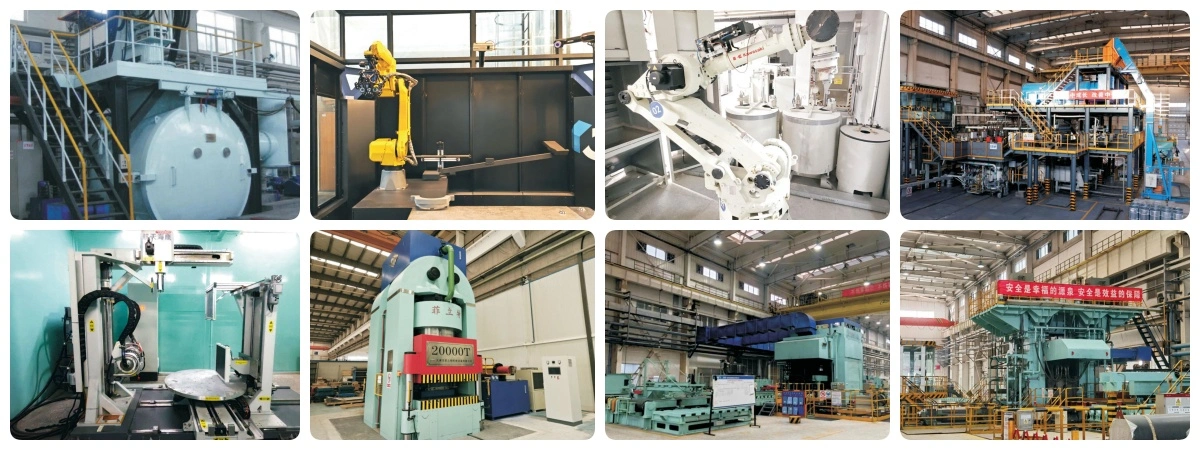
Equipped with EB smelting furnaces, vacuum casting equipment, full-range hot and cold rolling production lines and ultrasonic testing systems, we adopt automatic production lines to ensure stable batch quality and high production efficiency. We support customized mesh aperture tooling, with a conventional customization cycle of 7–10 working days. The specific production cycle is determined according to product quantity and surface treatment requirements.

FAQ
Q1: What are the advantages of expanded Titanium over traditional woven mesh?
A1: The one-piece expanded structure has no welding joints and overlapping wires, delivering more uniform conductivity, no particle accumulation, and no wire cracking under stress, with far more stable overall performance than woven mesh.
Q2: Can titanium work in hydrofluoric acid environments?
A2: No. Titanium is extremely susceptible to corrosion by hydrofluoric acid. For HF acid working conditions, special alloy or polymer materials are required instead.
Q3: Will the stretching process affect the corrosion resistance of titanium mesh?
A3: Proper post-processing including annealing and pickling can completely remove surface processing impurities and restore the passive oxide film, causing no impact on its original corrosion resistance.
Q4: How to choose between Grade 1 and Grade 2 titanium mesh?
A4: Grade 1 is suitable for deep forming and complex bending processing due to high ductility. Grade 2 features higher strength, more suitable for structural filtration and load-bearing equipment applications.
Q5: How to verify the authenticity of titanium mesh materials?
A5: Professional PMI material identification testing is the most accurate method. Field spark testing is also available: titanium produces bright white sparks, while steel produces yellow-orange sparks for quick differentiation.
Q6: What surface treatments can be provided for finished mesh?
A6: We support descaling, pickling and passivation treatments. The appropriate surface process will be selected according to your end use and subsequent coating requirements.
Contact Us
If you need high-stability, joint-free Titanium Plate Net for electrochemical, chemical, marine and aerospace projects, please send your detailed specifications and customization demands to our professional team via srt@sunrui-ti.com.
