Titanium Welded Tube Gr11
Standard: ASTM B338, ASTM B862, GB/T3625
Grades: Gr1, Gr2, Gr12, TA1, TA2, TA10
Specs: Outside diameter 6-89mm, wall thickness 0.35-2.0mm, length according to customized requirements
Heat treatment: In-line bright annealing
Key advantage: Well-proportioned wall thickness and high precision wall thickness
Titanium Welded Tube Gr11 for Corrosive Environments — High-Ductility Pd-Alloyed Tubing Solutions
Titanium Welded Tube Gr11 is a high-precision palladium-alloyed tubular product, manufactured by longitudinally welding cold-rolled titanium strips. With a controlled palladium content of 0.12%–0.25%, it delivers crevice corrosion resistance in acidic chloride and mild reducing media, solving the corrosion failure pain points of standard commercial pure titanium in harsh corrosive working conditions. Our product covers outer diameters of 6–89 mm and wall thicknesses of 0.35–2.0 mm, and is fully compliant with ASTM B338, ASTM B862 and GB/T3625 industry standards. Backed by Sunrui Titanium’s 60+ years of professional titanium manufacturing experience, this welded tube features high ductility, uniform wall thickness and in-line bright annealing treatment, ensuring stable and performance for various demanding industrial scenarios.
What Makes Titanium Welded Tube Gr11 an Alpha-Phase Alloy Worth Specifying?
The small amount of palladium changes the material's electrochemical corrosion potential and creates and maintains a thick TiO2 passive oxide film on the tube's surface. This layer of protection stays in place even in mild reducing acid environments. This gives stable anti-corrosion performance that regular Grade 2 titanium can't match, and it keeps chemical processing systems from quickly developing pitting and crevice corrosion.
Titanium Welded Tube Gr11 has a great strength-to-weight ratio because it has a low density of 4.51 g/cm³. It has a minimum tensile strength of 240 MPa (35 ksi) and a yield strength between 170 MPa and 310 MPa. This means that it can support heavy industrial equipment without making the whole system heavier.
Technical Specifications
| Parameter | Details |
|---|---|
| Executive Standard | ASTM B338, ASTM B862, GB/T3625 |
| Material Grade | Gr1, Gr2, Gr7, Gr11, Gr12, TA1, TA2, TA10 |
| Outside Diameter | 6–89 mm |
| Wall Thickness | 0.35–2.0 mm |
| Length | Customized per requirement |
| Heat Treatment | In-line bright annealing |
| Pd Content | 0.12%–0.25% |
| Density | 4.51 g/cm³ |
| Min. Tensile Strength | 240 MPa (35 ksi) |
| Yield Strength | 170–310 MPa |
| Min. Elongation | 24% |
Quality Control You Can Rely On
Before being sent out, all finished tubes are carefully inspected in multiple stages. This is called full-process quality control, and it makes sure that no defective goods get through the process and that each batch stays stable.
Non-Destructive Testing (NDT): To find longitudinal and transverse welding flaws, we do 100% Eddy Current Testing (ECT) on every tube in accordance with ASTM E426 standards. Ultrasonic Testing (UT) is also used on products with thicker walls to make sure there are no flaws inside.
Mechanical Performance Tests: Flattening, flaring, and reverse bending tests are done on each production batch to make sure that the weld seams are flexible and stable, and that the welding area has the same mechanical performance as the base material.
Pressure Integrity Testing: To make sure the tubes are safe to use, they are all tested using hydrostatic or pneumatic pressure at 1.5 times the design working pressure. There must be no leakage as a delivery standard.
Chemical Verification: The amount of palladium is carefully kept within the normal range of 0.12% to 0.25% using high-precision ICP-OES spectrometry measurement. Interstitial elements like oxygen, hydrogen, nitrogen, and carbon are carefully watched and kept to a minimum to keep the material from becoming weak and to ensure its long-term stability.
We use laser micrometer precision testing tools to set the tolerances for outer diameter and wall thickness so that we can make Titanium Welded Tube Gr11 with uniform wall thickness and high dimensional accuracy. This is our main manufacturing advantage.

Where This Tube Performs Best
This high-ductility titanium tube with palladium added is designed for a number of high-corrosion industrial settings and provides stable, long-lasting service performance:
In chemical processing plants, it is the best material for heat exchangers and reaction vessels that work with sulfuric acid, phosphoric acid, and dilute hydrochloric acid at high temperatures. The catalytic protection effect of palladium keeps the material's passive film stable in mild reducing conditions, which keeps Grade 2 titanium from failing due to corrosion.
As part of desalination and brine systems, tubes are exposed to high-temperature aerated brine and still seawater for a long time in MSF and MED multi-effect distillation desalination equipment. This means that standard titanium tubes are more likely to pit and rust. This kind of corrosion doesn't happen as easily with Gr11 titanium tubing, which means less downtime and lower replacement costs.
In the pulp and paper industry, chlorine dioxide bleaching equipment and alkaline extraction systems have environments with a lot of chloride and a cycle of oxidation and reduction. Gr11 welding tubes keep their structural integrity even when exposed to high pressure and corrosion for a long time, which increases the useful life of equipment.
Besides the main industries listed above, our titanium welded tubes are also used a lot in nuclear power, marine engineering, shipbuilding, aviation, oil processing, and metallurgy. They meet the strict requirements for high-end industrial equipment to be resistant to corrosion and light.

Why Choose Sunrui Titanium as Your Supplier?
Derived from the Titanium R&D Department of Luoyang Ship Material Research Institute (CSSC), Sunrui Titanium more than 60 years of core experience in titanium material research and metallurgical production. We have built a complete industrial supply chain covering titanium sponge, ingots, finished welded tubes and supporting heat exchanger components since 2010.
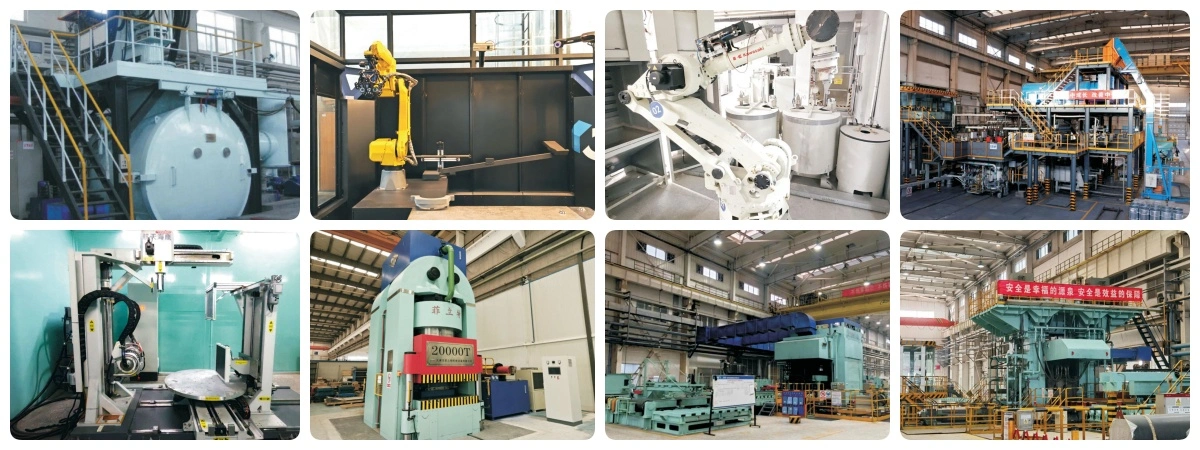
Our production base is equipped with professional cold rolling lines, special welded pipe forming units, vacuum heat treatment furnaces and high-precision testing equipment. The integrated production mode ensures stable product quality, shorter production cycles and direct one-stop technical support without intermediate distributors.
We have obtained authoritative international certifications including AS9100, NADCAP, PED, ABS, TUV and NORSOK. We support non-standard customized dimensions, OEM personalized production and flexible order quantities to meet diverse project procurement needs.
FAQ
Q1: What is the key difference between Grade 7 and Grade 11 titanium tubes?
A1: Gr11 is a low oxygen variant of Gr7. It loses some mechanical strength for much higher ductility and improved cold formability. It is more appropriate for sophisticated bending and expanding operations.
Q2: Does the weld seam have a stable palladium content and corrosion resistance?
A2: Yes. Conventional TIG/GTAW inert gas welding permits a stable dissolution of palladium in the titanium matrix so that the weld seam has the same corrosion resistance as the base material.
Q3. Is Gr11 titanium tube good for decreasing the acid service conditions?
A3: Okay. The palladium content of 0.12%–0.25% is beneficial for the production of the stable TiO 2 passive film, which is useful for preventing corrosion in dilute hydrochloric acid and sulfuric acid in a moderate reducing environment.
Q4: What industry norms do your Gr11 titanium welded tubes conform to?
A4: Our products conform with ASTM B338 (heat exchanger & condenser), ASTM B862 (industrial piping) and GB/T3625 standard, to fulfill the global industrial access requirements.
Q5: Why is Grade 11 more expensive than regular Grade 2 titanium?
A5: The price difference is due to the addition of the valuable metal palladium which is a key factor in achieving good anti-corrosion properties under harsh reducing acid and chloride conditions.
Q6: What kind of tailor made services can you provide?
A6: We support customizing the length, outside diameter and wall thickness of the tube in the normal size range. We offer exclusive OEM production and complete certification certificates as per customer project requirements.
Contact Us
If you need accurate parameter specifications, competitive quotations and professional technical guidance for Titanium Welded Tube Gr11, please get in touch with our team via srt@sunrui-ti.com.
